
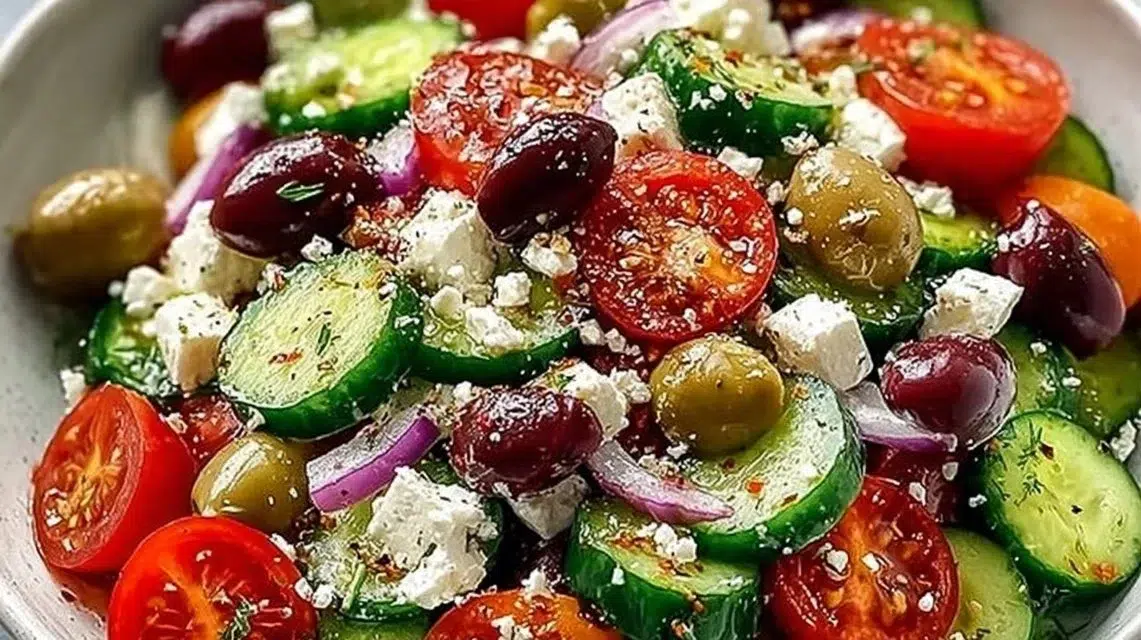
Greek salad is bright, crunchy, and salty all at once. Fresh tomatoes give sweet juiciness, cucumber adds cool crunch, and olives bring a savory bite. Crumbled feta melts slightly into the mix while a simple olive oil and red wine vinegar dressing ties everything together. This recipe is fast and low-effort — chop, toss, and serve in minutes. It makes a great side for grilled meat or a light meal on its own. For an easy protein boost, try a warm version like a fresh Greek salad with chicken that keeps the same flavors and adds substance.
Why You’ll Love This Greek Salad
- Fast to make: ready in about 10 minutes with simple chopping and whisking.
- Clean, bright flavors: tomato sweetness, salty feta, and tangy vinegar balance well.
- Great texture contrast: juicy tomatoes, crisp cucumber, and creamy feta.
- Flexible for diets: naturally vegetarian and easy to make gluten-free.
- Low-tech prep: no oven or stove needed, ideal for hot days.
- Crowd-friendly: scales up easily for parties and potlucks.
- Easy to customize with small swaps and additions.
- Stores well short-term for leftovers and tastes fresh the next day.
What Is Greek Salad?
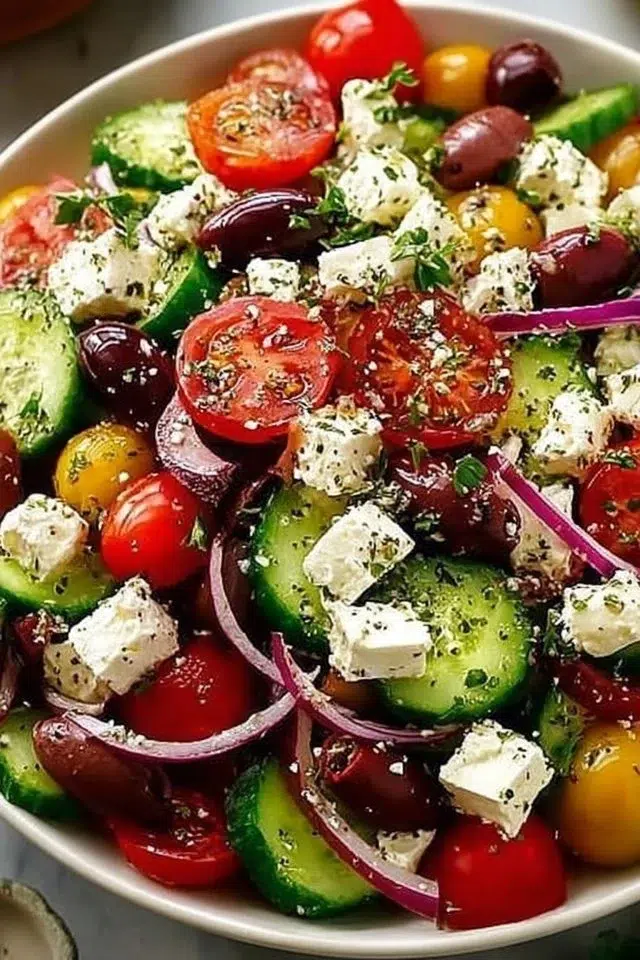
Greek salad, also called horiatiki in Greece, is a fresh vegetable salad that highlights ripe tomatoes, cucumber, olives, and blocks or cubes of feta cheese. It tastes bright and tangy, with olive oil and red wine vinegar dressing carrying the flavors. Texturally it mixes juicy, crunchy, and creamy elements. There is no cooking needed — this is a raw, tossed salad. The vibe is casual and Mediterranean: it works as a light lunch, a weeknight side, or a summer picnic dish. It is simple comfort food that feels fresh and healthy.
Ingredients for Greek Salad
For the Base
- Fresh tomatoes
- Cucumber
- Olives
- Feta cheese
For the Sauce
- Olive oil
- Red wine vinegar
- Oregano
- Salt
- Pepper
To Serve
- (Serve immediately; see serving suggestions below.)
Ingredient Notes (Substitutions, Healthy Swaps)
- Tomatoes: Use ripe beefsteak or vine-ripened tomatoes for the best texture and sweetness. If tomatoes are out of season, cherry tomatoes work well, halved.
- Cucumber: English (seedless) cucumber keeps the salad less watery. Regular cucumbers work — peel and seed if the skin is thick.
- Olives: Kalamata olives are traditional. Use pitted olives to save time. If you only have whole olives, pit and halve or slice them.
- Feta: A block of feta crumbles more naturally than pre-crumbled feta and tastes fresher. For a lower-sodium option, rinse feta briefly in cold water.
- Olive oil: Extra virgin olive oil gives richer flavor. Use a neutral olive oil if you prefer a milder taste.
- Red wine vinegar: Provides tang. You can swap with white wine vinegar or a light splash of lemon juice (optional).
- Oregano: Dried oregano is fine and classic. Fresh oregano can be used as an optional garnish if you have it.
Optional realistic swaps:
- Make it vegan: swap feta for a firm tofu marinated in a bit of olive oil and salt, or a store-bought vegan feta.
- Lower oil: reduce olive oil by half and add a splash more vinegar or a squeeze of lemon.
Step-by-Step Instructions
Step 1 – Prep the vegetables. Chop the fresh tomatoes and cucumber into bite-sized pieces. If tomatoes are very juicy, you can seed them lightly to reduce excess liquid. Visual cue: Aim for similar-sized pieces so each bite has a balanced mix.
Step 2 – Combine the base. In a large bowl, combine the chopped tomatoes, cucumber, olives, and feta cheese. Break the feta into chunks or crumble it with your fingers so it distributes through the salad.
Step 3 – Make the dressing. In a small bowl, whisk together olive oil, red wine vinegar, oregano, salt, and pepper to make the dressing. Taste and adjust the salt and vinegar to your preference.
Step 4 – Dress the salad. Pour the dressing over the salad and toss gently to combine. Toss just enough to coat the pieces and avoid breaking the tomatoes. Pro cue: Toss gently so the feta keeps some texture; overmixing will turn the salad watery.
Step 5 – Serve immediately. Serve immediately as a side dish or light meal. If making ahead briefly, wait to add the dressing until just before serving to keep vegetables crisp.
Pro Tips for Success
- Use ripe, firm tomatoes to avoid a soggy salad. Overripe tomatoes release too much juice.
- Cut vegetables into similar sizes for even bites and better texture.
- Use a block of feta and break it by hand for better texture and less powdery crumbs.
- Whisk oil and vinegar well so the dressing emulsifies and coats everything evenly.
- Taste the dressing before tossing. A pinch more salt or a splash more vinegar can lift the whole salad.
- If you must prep early, store chopped vegetables dry in separate airtight containers and combine just before serving.
- Keep olives pitted for easy eating, especially if serving to kids.
- Serve on chilled plates in hot weather to keep the salad fresh longer.
Flavor Variations
All of the following are optional and keep the base salad intact:
- Add red onion: Thinly slice red onion and soak in cold water for 5 minutes to reduce bite before adding.
- Add bell pepper: Thin strips of green or red bell pepper add crunch and color.
- Add capers: A tablespoon of capers adds salty, briny flavor similar to olives.
- Add herbs: Fresh parsley or mint can add a bright note if you have them.
- Add lemon: Replace part of the red wine vinegar with lemon juice for a citrusy lift.
- Add beans: A small can of drained chickpeas makes the salad heartier and boosts protein.
Serving Suggestions
- Serve with warm pita bread or crusty sourdough to soak up the dressing.
- Pair with grilled fish or chicken for a balanced dinner.
- Serve alongside roasted vegetables for a full vegetarian meal.
- Top the salad with a simple grilled halloumi slice for a warm, salty contrast.
- Serve on a bed of mixed greens to turn it into a larger salad.
- Bring it to picnics or potlucks in a large bowl; keep dressing separate until ready to serve.
- Plate in individual bowls and drizzle a little extra virgin olive oil on each for a restaurant-style finish.
Make-Ahead, Storage & Reheating
- Make-ahead: You can chop tomatoes, cucumber, and pit olives and store separately in airtight containers in the fridge for up to 24 hours. Keep the feta wrapped or in its own container.
- Dressing: Make the dressing up to 3 days ahead and store in the fridge in a sealed jar. Bring to room temperature before using.
- Assembly: Combine dressing and vegetables just before serving for best texture. If dressed early, vegetables will soften and become watery within a few hours.
- Reheating: This salad is best served cold or at room temperature. Do not reheat. If you want a warm element, serve warm grilled protein on top but keep the salad chilled.
- Texture changes: After dressing, tomatoes and cucumber will release water. This is normal and will slightly soften the salad over time.
Storage and Freezing Instructions
- Fridge: Store any leftovers in an airtight container in the refrigerator for 2–3 days. Keep in mind the salad will become softer and the dressing will pool as vegetables release water.
- Freezing: Do not freeze this salad. Freezing will damage the texture of tomatoes, cucumbers, olives, and feta; they become watery and mushy when thawed.
- Alternative for longer storage: If you want to save parts, freeze feta separately only if you plan to cook it later; otherwise, store fresh components and assemble when ready.
Nutrition Facts (Per Serving)
Calories | Protein | Carbs | Fat | Fiber | Sodium —|—:|—:|—:|—:|—: 240 kcal | 6 g | 7 g | 21 g | 2.5 g | 620 mg
Estimates vary by brands and portions.
FAQ About Greek Salad
Q: My salad tastes flat. What now? A: Add a small splash more red wine vinegar or a pinch more salt and toss. A little acid brightens flavors.
Q: The salad is watery after sitting. How to stop that? A: Seed very juicy tomatoes and use seedless or peeled cucumber. Also dress just before serving.
Q: Can I prep this the night before? A: Chop veggies and store separately. Keep dressing and feta apart and toss the next day.
Q: What olives are best? A: Kalamata olives are classic. Use pitted olives for easy eating.
Q: Can I add protein to make it a main dish? A: Yes. Add grilled chicken, shrimp, or chickpeas as optional extras to make it filling.
Q: Is this salad gluten-free? A: Yes. The recipe is naturally gluten-free — avoid serving with croutons or bread that contains gluten if needed.
Notes
- Serve the salad cold or at room temperature for best flavor.
- Use good-quality extra virgin olive oil — it makes a noticeable difference.
- If you like herbs, sprinkle a small amount of fresh oregano or parsley at the end.
- Break feta by hand to keep varied texture instead of over-crumbling.
- When plating for guests, add a few whole olives and feta chunks on top for a pretty finish.
- Keep a small bowl of extra dressing on the side for people who like more.
Troubleshooting
- Bland dressing: Fix with a little more vinegar and a pinch of salt. Taste as you go.
- Too salty: If feta or olives make it too salty, add extra chopped cucumber and tomato to dilute the salt.
- Watery salad: Seed tomatoes and use less dressing at first; add more just before serving.
- Soggy cucumber: Use English cucumber or remove seeds from large cucumbers.
- Too acidic: Add a small pinch of sugar or a bit more olive oil to balance sharp vinegar.
- Crumbly feta that powders: Use larger chunks instead of finely crumbled feta to keep creamier texture.
Final Thoughts
This Greek salad is simple, fresh, and reliable. It highlights fresh produce with a quick dressing and needs no cooking, making it ideal for busy days and warm weather. With a few small swaps you can suit many tastes, and it plays well with proteins and sides for a full meal.
Conclusion
If you want another take or more inspiration, try this well-loved Greek salad recipe on Love and Lemons for a slightly different approach to the same classic flavors.
Greek Salad
Ingredients
For the Base
- 4 cups Fresh tomatoes, chopped Use ripe beefsteak or vine-ripened tomatoes for best flavor.
- 1 cup Cucumber, chopped English cucumber is preferred to avoid a watery salad.
- 1/2 cup Olives, pitted Kalamata olives are traditional.
- 1 block Feta cheese Use a block and crumble by hand for better texture.
For the Sauce
- 1/4 cup Extra virgin olive oil Gives richer flavor.
- 2 tablespoons Red wine vinegar Can be substituted with white wine vinegar or lemon juice.
- 1 teaspoon Dried oregano Classic flavor; fresh can be used as garnish.
- 1/2 teaspoon Salt Adjust to taste.
- 1/4 teaspoon Pepper Adjust to taste.
Instructions
Preparation
- Chop the fresh tomatoes and cucumber into bite-sized pieces.
- In a large bowl, combine the chopped tomatoes, cucumber, olives, and feta cheese.
Making the Dressing
- In a small bowl, whisk together olive oil, red wine vinegar, oregano, salt, and pepper.
- Taste and adjust the salt and vinegar to your preference.
Serving
- Pour the dressing over the salad and toss gently to combine.
- Serve immediately as a side dish or light meal.