
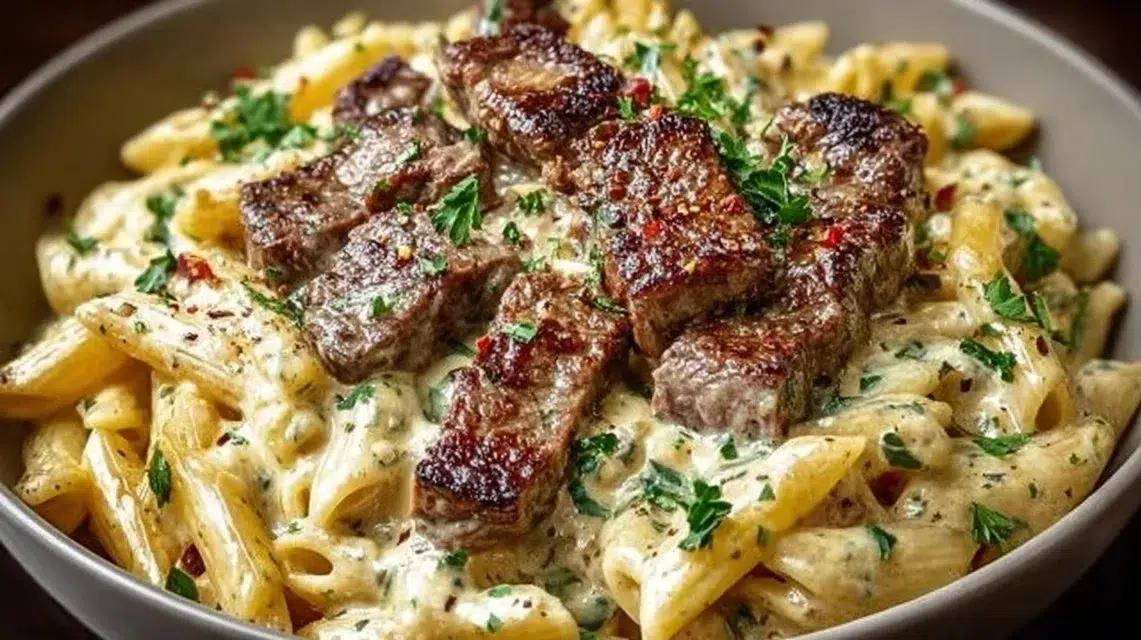
Creamy Steak Pasta brings tender slices of steak and silky cream together with garlic and pasta for a simple, satisfying meal. The dish tastes rich and savory, with a smooth, velvety sauce that coats every noodle and a slight bite from browned steak slices. The texture mixes tender meat with al dente pasta and a glossy, creamy sauce that feels decadent without being fussy. It’s quick to make and uses pantry basics, which makes it perfect for a weeknight dinner or an easy dinner party main. For a quick change, serve with a simple green salad or a handful of fresh greens tossed into the hot pasta. If you want inspiration for a spicier twist, see a similar garlic steak pasta for ideas.
Why You’ll Love This Creamy Steak Pasta
- Fast to make: simple steps let you finish the meal in about the time it takes to cook the pasta.
- Big, bold flavor: garlic and browned steak give punch without many ingredients.
- Luxurious texture: cream makes a silky sauce that clings to every strand of pasta.
- Flexible: works with many pasta shapes and steak cuts.
- Minimal cleanup: one pan for garlic and steak, one pot for pasta.
- Family-friendly: familiar flavors most people enjoy, and parmesan is optional.
- Budget-smart: uses pantry staples and small amounts of cream for a rich result.
What Is Creamy Steak Pasta?
Creamy Steak Pasta is a straightforward pasta dish where thin steak slices are quickly browned with garlic and combined with cooked pasta and cream to form a simple sauce. The taste is savory and rich, leaning on garlic and the caramelized flavor of the steak. Texture is creamy and smooth from the cream, balanced by the chew of pasta and the meaty bite of steak slices. The cooking method is quick sautéing and boiling, which keeps the steak tender and the pasta al dente. The dish gives a comfort-food vibe but is refined enough for a casual dinner with guests or a cozy weeknight meal.
Ingredients for Creamy Steak Pasta
For the Base
- Steak slices
- Pasta
For the Sauce
- Garlic
- Cream
- Olive oil
To Season & Serve
- Salt
- Pepper
- Parmesan cheese (optional)
Ingredient Notes (Substitutions, Healthy Swaps)
- Steak slices: Use any quick-cooking steak cut sliced thinly. Optional: use leftover roasted steak sliced thin for less active cook time.
- Pasta: Any shape works — spaghetti, fettuccine, penne or short pasta. Choose whole-wheat or legume pasta if you prefer more fiber or protein (note texture change).
- Garlic: Fresh garlic gives the best flavor. If you must, use 1/2 teaspoon garlic powder as an optional swap, but fresh is recommended.
- Cream: Heavy cream creates a richer sauce; light cream or half-and-half will thin the sauce slightly and reduce calories. For a lower-fat option, try a blend of light cream and a splash of low-fat milk (optional).
- Olive oil: Keeps the pan flavorful without overpowering. Use a neutral oil if you prefer, but olive oil adds a mild fruitiness.
- Parmesan cheese (optional): Adds salty, nutty depth. You can leave it out for a lactose-light meal.
Step-by-Step Instructions
Step 1 – Prep and heat the pan
- Heat a generous drizzle of olive oil in a large skillet over medium heat.
Visual cue: The oil should shimmer but not smoke.
Step 2 – Sauté the garlic
- Add minced or thinly sliced garlic to the oil and cook briefly until fragrant, about 30–60 seconds. Stir so it does not brown too dark.
Pro cue: Garlic should be soft and aromatic, not burnt — reduce heat quickly if it starts to darken.
Step 3 – Cook the steak slices
- Add the steak slices to the pan with garlic. Cook, turning as needed, until the meat is browned on the edges and cooked through to your liking.
Visual cue: Look for a golden-brown color on the steak sides and some browning where meat touched the pan.
Step 4 – Cook the pasta
- Meanwhile, cook the pasta in salted boiling water according to package instructions until al dente. Reserve a small cup of pasta cooking water before draining.
Step 5 – Combine pasta with steak and cream
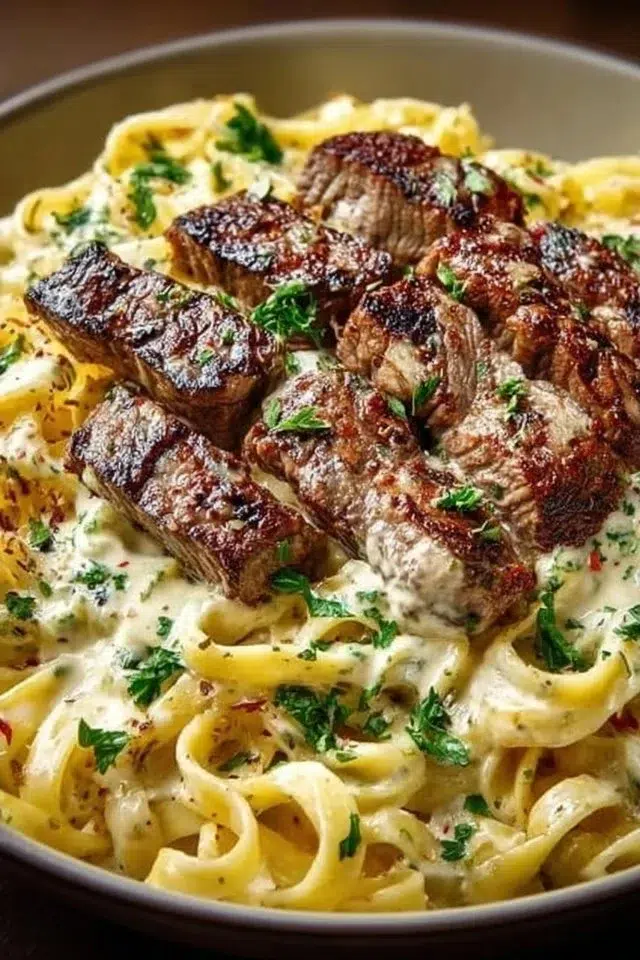
- Add the drained pasta to the skillet with the steak and garlic. Pour in the cream and stir to coat the pasta and meat. If the sauce seems too thick, add a little reserved pasta water to loosen it.
Pro cue: Stir continuously for 1–2 minutes so the cream warms and picks up pan flavors, creating a smooth sauce.
Step 6 – Season and serve
- Taste and season with salt and pepper. Serve hot, and top with parmesan cheese if you like.
Visual cue: The sauce should be glossy and coat the pasta evenly.

Pro Tips for Success
- Use medium heat when browning steak so it develops color without overcooking inside.
- Slice steak thin for fast, even cooking and tender bites.
- Salt the pasta water generously — it seasons the pasta from the inside out.
- Reserve pasta water to adjust sauce thickness; starchy water helps bind the cream to the pasta.
- Don’t overcook garlic: cook until fragrant and soft, then add steak immediately.
- Warm the cream slightly before adding if your stove cools the pan; cold cream can slow sauce formation.
- Finish with a quick toss after adding cream so the sauce and pasta marry well.
Flavor Variations
- Optional: Add a pinch of red pepper flakes for a little heat without changing the recipe.
- Optional: Stir in a small spoonful of Dijon mustard for tang and depth (keeps base ingredients the same).
- Optional: Fold in a handful of fresh greens like baby spinach at the end until wilted for a color and nutrient boost.
- Optional: Finish with freshly ground black pepper for a sharper, aromatic kick.
- Optional: Use a grated hard cheese like parmesan at the end for salt and umami; offer it on the side.
Serving Suggestions
- Pair with a simple green salad dressed with lemon and olive oil for brightness.
- Serve with steamed or roasted vegetables on the side for color and texture.
- Offer grated parmesan at the table so guests can add to taste.
- Serve in warmed bowls to keep the pasta hot longer.
- Make it part of a weekend brunch spread alongside toasted bread for dipping.
- For a lighter meal, reduce the cream slightly and add more vegetables to bulk up the dish.
Make-Ahead, Storage & Reheating
- Make-ahead: You can prep steak slices and garlic ahead, and store them chilled for one day. Cook pasta just before serving for best texture.
- Storage duration: Store leftovers in an airtight container in the fridge for 2–3 days.
- Reheating best practice: Reheat gently on the stove over low heat. Add a splash of cream or a little pasta cooking water to revive the sauce and stir until hot.
- Texture changes: Cream-based sauces thicken and can separate if overheated in the microwave. Reheat slowly and add liquid as needed to restore creaminess.
Storage and Freezing Instructions
- Freezing is not recommended for the full dish because cream sauces can separate and change texture when frozen and thawed.
- If you want to freeze components: freeze cooked steak slices separately in a vacuum bag or airtight container for up to 2 months. Freeze plain cooked pasta (tossed lightly in oil) for up to 1 month, then thaw and finish with fresh cream when reheating.
- For best results, reheat components gently and combine with fresh cream to bring back a smooth sauce.
Nutrition Facts (Per Serving)
Calories | Protein | Carbs | Fat | Fiber | Sodium
—|—:|—:|—:|—:|—:
Approx. 650 | 30 g | 60 g | 32 g | 2 g | 520 mg
Estimates vary by brands and portions.
FAQ About Creamy Steak Pasta
Q: My sauce is too thin. How can I thicken it?
A: Simmer it a minute or two more to reduce and thicken. You can also stir in a bit of grated parmesan (optional) to add body.
Q: My sauce got grainy after reheating. What went wrong?
A: High heat can make cream separate. Reheat slowly on low heat and add a splash of cream or reserved pasta water to smooth it.
Q: How do I keep the steak tender?
A: Use thin slices and cook quickly over medium heat. Avoid overcooking by watching for browning and removing from heat when done to your liking.
Q: Can I use milk instead of cream?
A: You can use milk or half-and-half, but the sauce will be thinner and less rich. Warm it gently and consider adding a little extra cheese (optional) to thicken.
Q: How much salt should I use?
A: Salt the pasta water well. For the dish itself, season to taste after combining the pasta and cream so you don’t over-salt.
Q: Can I make this vegetarian?
A: Not as written, since steak is a main ingredient. Optional vegetarian version: replace steak with hearty mushrooms or a plant-based steak alternative, but note that changes the character of the recipe.
Notes
- Let the pan work for you: good browning on steak adds a lot of flavor.
- Keep extra pasta water nearby — it’s the easiest way to fix sauce texture.
- Offer parmesan at the table so people can customize saltiness and richness.
- Warm bowls before serving to keep the pasta hot longer.
- Cut steak against the grain for the most tender bites.
Troubleshooting
- Bland flavor: Add a pinch more salt and fresh black pepper, and stir thoroughly so flavors combine.
- Overcooked steak: Slice steak thin and watch the pan closely. Cook to medium-rare or medium depending on thickness.
- Sauce too watery: Simmer briefly to reduce, or add a small spoonful of grated cheese (optional) to thicken.
- Garlic burnt: Remove garlic immediately and start with a new batch; burned garlic tastes bitter.
- Sauce separated when reheating: Reheat gently on low, stirring and adding a splash of cream or water to bring it back together.
- Pasta stuck together: Toss hot drained pasta with a tiny drizzle of olive oil before adding to the sauce.
Final Thoughts
This Creamy Steak Pasta hits the sweet spot between simple and special. With only a few ingredients you get a rich, satisfying meal that’s fast to make and easy to adapt. Keep it basic for weeknights and add optional touches for guests.
Conclusion
If you want a slightly different take or inspiration for variations, check this Creamy Steak Pasta – Skinny Spatula recipe for ideas and plating tips.