
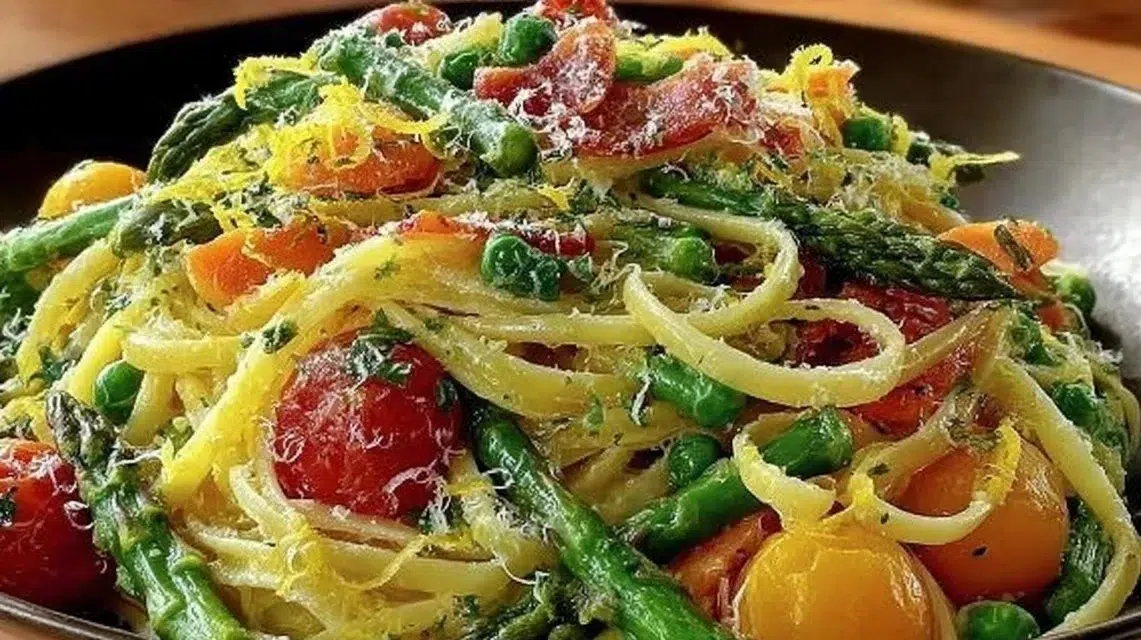
Bright, creamy, and full of spring vegetables, this pasta primavera brings a bright lemon finish to tender fettuccine or linguine. The sauce is a simple cream-lemon mix that clings to the noodles and glossy vegetables — zucchini, asparagus, peas, and sweet red pepper — giving you a mix of soft, crisp, and silky textures in every bite. It’s quick to make on a weeknight, uses one skillet for the sauce, and finishes in just a few minutes after the pasta is cooked. Serve with a lemon wedge or extra Parmesan and a light green salad for a fresh, easy meal. If you enjoy lemon pasta, try this easy Italian lemon chicken pasta as another bright option for dinner.
Why You’ll Love This Fresh Spring Vegetable Pasta Primavera Recipe with Easy Creamy Lemon Sauce
- Bright lemon flavor cuts through the creamy sauce for a fresh, balanced taste.
- Quick cook time: pasta cooks while vegetables sauté, so dinner is ready fast.
- Textural contrast: tender pasta, silky cream, and crisp-tender vegetables.
- Flexible: use fettuccine or linguine and swap veggies based on what you have.
- Simple pantry ingredients: olive oil, cream, garlic, Parmesan, and lemon.
- One-skillet sauce keeps cleanup low and flavors concentrated.
- Easy to scale up for guests or halve for two people.
- Makes a light weeknight dinner but looks pretty enough for weekend guests.
What Is Fresh Spring Vegetable Pasta Primavera Recipe with Easy Creamy Lemon Sauce?
This recipe is a pasta primavera built around fresh spring vegetables and a simple creamy lemon sauce. It tastes bright, slightly tangy from lemon, rich from cream and Parmesan, and lightly herbaceous if you add basil or parsley. The vegetables — asparagus, red bell pepper, zucchini, and peas — stay crisp-tender so you get a fresh snap against the smooth pasta. It uses stovetop cooking: boil the pasta, sauté the veggies, then simmer the cream with lemon and cheese until it just thickens. The vibe: a casual, comforting weeknight meal with a light, fresh feel that also works for brunch or a laid-back dinner party.
Ingredients for Fresh Spring Vegetable Pasta Primavera Recipe with Easy Creamy Lemon Sauce
For the Base
- 12 oz (340 g) fettuccine or linguine pasta
- 2 tablespoons extra virgin olive oil
For the Vegetables
- 1 cup fresh peas (shelled, or frozen if fresh aren’t available)
- 1 bunch asparagus, trimmed and cut into 2-inch pieces
- 1 red bell pepper, thinly sliced
- 1 small zucchini, sliced into half-moons
- 2 cloves garlic, minced
For the Sauce
- 1 cup (240 ml) heavy cream or half-and-half
- Zest and juice of 1 large lemon
- 1/2 cup (50 g) freshly grated Parmesan cheese
- Salt and freshly ground black pepper, to taste
- 1 tablespoon unsalted butter (optional)
To Serve (optional)
- 1/4 cup chopped fresh basil or parsley (optional)
- Extra grated Parmesan and lemon zest for garnish
Ingredient Notes (Substitutions, Healthy Swaps)
- Heavy cream or half-and-half: use half-and-half for a lighter sauce, but it will be less rich. To lower fat further, use 3/4 cup half-and-half plus 1/4 cup low-sodium vegetable broth and simmer to reduce slightly.
- Pasta: fettuccine or linguine work best for coating with the sauce. Use whole wheat or a legume-based pasta for more fiber and protein; cook to package directions.
- Peas: fresh peas give the best texture, but frozen peas work well and can be added straight from the freezer.
- Parmesan: use Pecorino Romano for a saltier, sharper edge, but reduce added salt. For a dairy-free option, omit Parmesan and stir in 2–3 tablespoons nutritional yeast, then skip the butter if avoiding dairy.
- Vegetables: swap broccoli florets for asparagus, or snap peas for the peas. Keep the cut sizes similar so everything cooks evenly.
- Lemon: if lemons are not available, 1–2 tablespoons white wine vinegar can add acidity, but lemon zest gives the bright aromatic lift that vinegar does not.
Step-by-Step Instructions
Step 1 – Cook the pasta
Bring a large pot of salted water to a boil. Add 12 oz (340 g) fettuccine and cook according to package instructions (usually 9–11 minutes) until al dente. Reserve 1 cup (240 ml) of pasta water before draining. Return drained pasta to the pot or a warm bowl.
Visual cue: pasta should be tender with a slight bite at the center, not mushy.
Step 2 – Sauté the garlic
While the pasta cooks, heat 2 tablespoons of extra virgin olive oil in a large skillet over medium heat. Add the 2 cloves minced garlic and sauté for about 30 seconds until fragrant but not browned. Stir constantly to avoid burning.
Pro cue: garlic will go bitter if it browns—keep the heat moderate and move to the next step quickly.
Step 3 – Cook the vegetables
Add the asparagus, bell pepper, and zucchini to the skillet. Cook for 4–5 minutes, stirring occasionally, until vegetables are crisp-tender and bright in color. Add fresh peas last and cook for another 2 minutes. If using frozen peas, add them directly and cook until warmed through.
Visual cue: asparagus should be bright green and slightly softened; peppers should have a little give but keep shape.
Step 4 – Make the lemon cream sauce
Lower heat to medium-low. Stir in 1 cup (240 ml) heavy cream, lemon zest, and juice of 1 large lemon. Let the sauce simmer gently for 3–4 minutes, stirring frequently, until slightly thickened. Avoid boiling.
Pro cue: simmer gently so the cream thickens slightly — if it boils the sauce can separate.
Step 5 – Finish the sauce with cheese and butter
Stir in 1/2 cup (50 g) grated Parmesan and 1 tablespoon unsalted butter until melted and smooth. Season with salt and freshly ground black pepper to taste. If the sauce is too thick, add reserved pasta water a little at a time until desired consistency.
Visual cue: the sauce should coat the back of a spoon and look glossy.
Step 6 – Toss pasta and serve
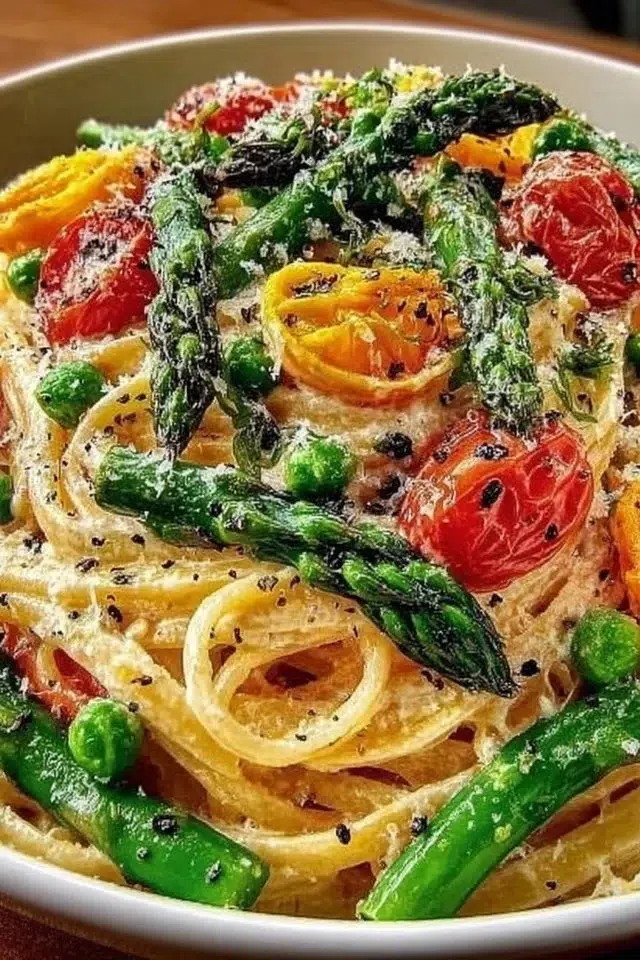
Add the drained pasta to the skillet and toss well to coat evenly. Cook together for 1–2 minutes so pasta absorbs the sauce flavors. Add 1/4 cup chopped fresh basil or parsley if using, tossing gently. Serve immediately, optionally sprinkling extra Parmesan and a few lemon zest shreds on top.
Visual cue: noodles should be slick with sauce and vegetables evenly distributed.
Pro Tips for Success
- Salt the pasta water generously. It’s the main seasoning for the pasta itself.
- Reserve pasta water. The starchy water thins and binds the sauce for a silky finish.
- Don’t overcook the vegetables. Cook them to crisp-tender to keep color and texture.
- Keep heat moderate when simmering cream to avoid curdling or separating.
- Add Parmesan off the heat if the sauce is very hot; this prevents grainy texture.
- Use fresh lemon zest for the best aromatic lift; bottled zest lacks brightness.
- If the sauce seems thin after adding pasta, simmer 30–60 seconds to reduce slightly — but don’t boil.
- Taste and adjust: add more lemon juice or salt at the end for balance.
Flavor Variations
- Optional: Add toasted pine nuts or slivered almonds on top for crunch.
- Optional: Stir in 1/2 cup cooked shrimp or shredded rotisserie chicken after step 5 for extra protein. (This is optional; the base recipe does not require it.)
- Optional: Add a pinch of red pepper flakes when sautéing garlic for mild heat.
- Optional: Swap lemon for 1 tablespoon white wine added with the cream for a different acidic note.
- Optional: Finish with 1 tablespoon of butter for extra gloss and richness (recipe already includes this as optional).
- Optional: Stir in a handful of baby spinach at the end until wilted for extra greens.
Serving Suggestions
- Pair with a simple green salad tossed in lemon vinaigrette for a bright, light meal.
- Serve with crusty bread to mop up any leftover sauce.
- Top individual plates with extra grated Parmesan and fresh basil leaves.
- Offer lemon wedges on the side for people who want more acidity.
- Add a light, chilled white wine or sparkling water with lemon for a spring meal.
- Plate in shallow bowls to show off the vegetables and make tossing easy at the table.
Make-Ahead, Storage & Reheating
- Make-ahead: Cook pasta and vegetables separately and cool. Store sauce in one container and pasta in another. Reheat together gently.
- Fridge storage: Store in an airtight container for up to 3–4 days. Keep sauce separate from pasta for best texture.
- Reheating: Warm sauce in a skillet over low heat, add a splash of pasta water or half-and-half, then toss in pasta and heat until warmed through. Heat gently to avoid breaking the cream sauce.
- Texture changes: Cream sauces thicken in the fridge and may tighten the pasta. Add liquid and reheat gently to restore creaminess.
Storage and Freezing Instructions
- Freezing is not recommended for best texture. Cream sauces can separate and vegetables can become mushy after freezing and reheating.
- If you must freeze: mix pasta with sauce and cool completely, then freeze in a sealed, freezer-safe container for up to 1 month. Thaw overnight in the fridge and reheat slowly with added milk or cream to help recombine the sauce. Expect softer vegetables after freezing.
- Best practice: store components separately in the fridge (pasta, sauce, vegetables) and combine when reheating.
Nutrition Facts (Per Serving)
Calories | Protein | Carbs | Fat | Fiber | Sodium
—|—:|—:|—:|—:|—:
670 kcal | 20 g | 64 g | 36 g | 6 g | 560 mg
Estimates vary by brands and portions.
FAQ About Fresh Spring Vegetable Pasta Primavera Recipe with Easy Creamy Lemon Sauce
Q: My sauce is too thick — how do I thin it?
A: Add reserved pasta water a tablespoon at a time and stir until you reach the right consistency.
Q: Sauce is watery — what happened?
A: Likely the cream didn’t reduce enough or vegetables released extra water. Simmer gently to reduce, or stir in a little grated Parmesan to thicken and bind.
Q: Can I use half-and-half instead of heavy cream?
A: Yes. The sauce will be lighter and less rich. Watch the heat so it doesn’t separate; simmer gently.
Q: How can I keep vegetables crisp-tender?
A: Cut them uniformly and cook over medium heat, checking at 4–5 minutes. Add peas last and warm briefly.
Q: Will the sauce separate if I boil it?
A: Boiling can break the sauce. Keep the sauce at a gentle simmer when thickening and finish over low heat.
Q: Can I make this dairy-free?
A: Yes. Use a dairy-free cream substitute and nutritional yeast for a savory flavor, but texture and taste will change.
Notes
- Use fresh lemon zest for the most vibrant flavor; add zest at the start of the sauce step for infused aroma.
- Finish with a small knob of butter off the heat for a glossy sauce and rounded flavor.
- If serving to guests, keep extra Parmesan on the table for added salt and umami.
- For a brighter look, reserve a few thin asparagus tips or pepper strips to garnish the top.
- Serve immediately to preserve the contrast between crisp vegetables and silky sauce.
Troubleshooting
- Bland flavor: Taste and add salt, more lemon juice, or extra Parmesan to boost flavor.
- Overcooked pasta: Cook to al dente and shorten simmer time when adding to the sauce.
- Burnt garlic: Start again by removing garlic from heat and using fresh garlic; cook at lower heat.
- Sauce grainy after cheese: Remove from high heat before adding Parmesan and whisk gently.
- Vegetables too soft: Reduce sauté time and cook in batches if pan is crowded to retain texture.
- Sauce separated: Lower the heat, add a little cold cream or milk, and whisk to bring it back together.
Final Thoughts
This Fresh Spring Vegetable Pasta Primavera with Easy Creamy Lemon Sauce is a quick, bright, and satisfying meal that balances rich cream with fresh lemon and crisp vegetables. It works well for weeknights and small gatherings because it’s fast, flexible, and full of color. For another tasty lemon-cream pasta idea with spring vegetables, check this recipe: Lemon Cream Pasta with Spring Vegetables.
Pasta Primavera
Ingredients
For the Base
- 12 oz fettuccine or linguine pasta Use whole wheat or legume-based pasta for more fiber and protein.
- 2 tablespoons extra virgin olive oil
For the Vegetables
- 1 cup fresh peas (shelled or frozen) Fresh peas give the best texture.
- 1 bunch asparagus, trimmed and cut into 2-inch pieces You can also use broccoli florets.
- 1 small red bell pepper, thinly sliced
- 1 small zucchini, sliced into half-moons
- 2 cloves garlic, minced Garlic can go bitter if browned.
For the Sauce
- 1 cup heavy cream or half-and-half Use half-and-half for a lighter sauce.
- 1 large lemon, zest and juice For the best flavor, use fresh lemon.
- 1/2 cup freshly grated Parmesan cheese Can substitute with Pecorino Romano.
- 1 tablespoon unsalted butter (optional)
- to taste Salt and freshly ground black pepper
To Serve (optional)
- 1/4 cup chopped fresh basil or parsley (optional)
- Extra grated Parmesan and lemon zest for garnish
Instructions
Cook the pasta
- Bring a large pot of salted water to a boil. Add the fettuccine and cook according to package instructions until al dente. Reserve 1 cup of pasta water before draining. Return drained pasta to the pot or a warm bowl.
Sauté the garlic
- Heat olive oil in a large skillet over medium heat. Add minced garlic and sauté for about 30 seconds until fragrant but not browned.
Cook the vegetables
- Add asparagus, bell pepper, and zucchini to the skillet. Cook for 4–5 minutes, stirring occasionally, until vegetables are crisp-tender. Add fresh peas last and cook for another 2 minutes.
Make the lemon cream sauce
- Lower heat to medium-low. Stir in heavy cream, lemon zest, and juice of one lemon. Let simmer gently for 3–4 minutes until slightly thickened.
Finish the sauce
- Stir in grated Parmesan and butter until melted and smooth. Season with salt and pepper. If sauce is too thick, add reserved pasta water until desired consistency.
Toss and serve
- Add the drained pasta to the skillet and toss well to coat evenly. Cook together for 1–2 minutes. Optionally, add basil or parsley and serve immediately with extra Parmesan and lemon zest.