
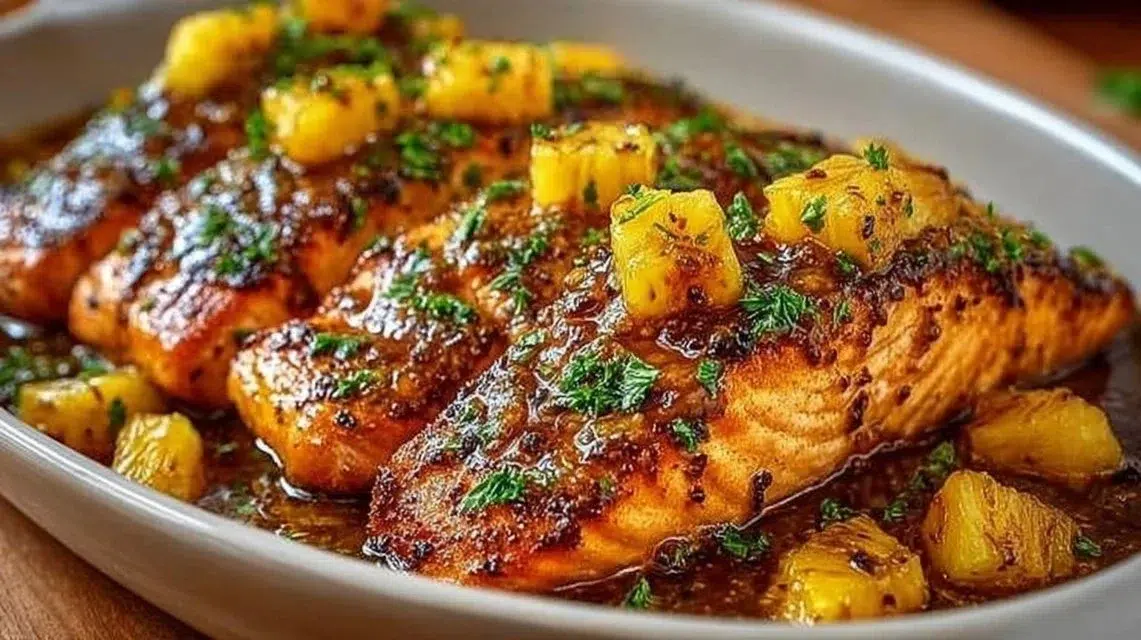
This Pineapple Glazed Salmon is bright, sweet, and lightly savory, with a glossy sticky glaze that clings to moist, tender salmon fillets. The pineapple adds juicy sweetness and a hint of tang, while brown sugar and soy sauce build a shallow caramel glaze that browns nicely in the oven. Texture is a contrast of soft flaking fish and small bites of diced pineapple. It’s easy to make for weeknights because the prep is short and the bake time is under 20 minutes. Serve it over rice or a crisp salad for a quick dinner, or pair with steamed vegetables for a light, balanced plate. For a honey-forward glazed idea you might also like this crispy honey garlic glazed salmon recipe.
Why You’ll Love This Pineapple Glazed Salmon
- Fast bake time: ready in about 25 minutes from start to finish.
- Bright, balanced flavor: sweet pineapple and brown sugar meet salty soy and garlic.
- Hands-off cooking: once glazed, the oven does the work.
- Juicy texture: short bake time keeps salmon moist and tender.
- Easy ingredients: pantry staples with simple fresh pineapple or drained canned.
- Flexible sides: pairs well with rice, greens, or roasted vegetables.
- Kid-friendly: sweet glaze and mild heat make it approachable for picky eaters.
- Fancy enough for guests: broil briefly for a caramelized finish that looks restaurant-style.
What Is Pineapple Glazed Salmon?
Pineapple Glazed Salmon is salmon fillets baked with a shiny, sweet-savory glaze made from pineapple, brown sugar, soy sauce, rice vinegar, and garlic. The pineapple adds natural sweetness and a slight tang that brightens the rich salmon. The glaze bakes and thickens, creating a sticky coating that helps the salmon look and taste like a special dish while staying easy to make. This recipe is great for weeknight dinners, casual family meals, or a simple dinner party. The overall vibe is fresh comfort food—familiar and bright without heavy sauces.
Ingredients for Pineapple Glazed Salmon
For the Salmon
- 4 salmon fillets, approximately 6 ounces each
- 1 tablespoon olive oil
- 1/2 teaspoon salt
- 1/4 teaspoon black pepper
For the Glaze
- 1 cup fresh or canned pineapple, diced and well drained
- 1/4 cup packed light brown sugar
- 2 tablespoons soy sauce
- 1 tablespoon rice vinegar
- 1 teaspoon minced garlic
- 1/2 teaspoon grated fresh ginger (optional)
To Serve
- 1 tablespoon fresh parsley, chopped (for garnish)
Ingredient Notes (Substitutions, Healthy Swaps)
- Pineapple: Fresh gives better texture; canned works fine if well drained. Reserve the can juice to thin the glaze if needed, but reduce sugar if the juice is very sweet.
- Brown sugar: Use coconut sugar for a slightly different flavor and a lower glycemic index (optional).
- Soy sauce: Use low-sodium soy sauce to cut sodium. You can also use tamari for a gluten-free option.
- Rice vinegar: Apple cider vinegar is a workable swap but use a touch less if it’s very tangy.
- Ginger: Optional but adds a fresh lift; ground ginger can stand in at 1/8 teaspoon if fresh is not available.
- Olive oil: Any neutral oil like avocado or canola is fine for rubbing the salmon.
- Salmon: Use any firm, skin-on or skinless salmon fillets; adjust bake time slightly for thicker or thinner pieces.
Step-by-Step Instructions
Step 1 – Preheat and prepare the pan
Preheat your oven to 400°F (200°C). Lightly grease a baking dish large enough to hold the salmon fillets without overcrowding. A single layer lets the glaze hit the fish evenly.
Visual cue: The oven should be fully heated before the salmon goes in so the glaze starts to set.
Step 2 – Make the pineapple glaze
In a small bowl, whisk together the brown sugar, soy sauce, rice vinegar, minced garlic, and grated ginger (if using) to make a smooth glaze. Stir in the diced and well-drained pineapple so it’s coated.
Visual cue: The glaze will be glossy and slightly runny; it will thicken as it bakes.
Step 3 – Season and oil the salmon
Pat the salmon fillets thoroughly dry with paper towels. Rub each fillet all over with olive oil, then season each with salt and black pepper.
Visual cue: Dry fish takes on seasoning better and browns more evenly.
Step 4 – Arrange and glaze
Place the seasoned salmon fillets skin-side down (if skin is on) or flat into your prepared baking dish. Spoon about two-thirds of the pineapple glaze mixture evenly over each fillet. Scatter the remaining diced pineapple around the salmon in the dish.
Pro cue: Reserve a little glaze for finishing after baking if you want extra shine.
Step 5 – Bake and finish
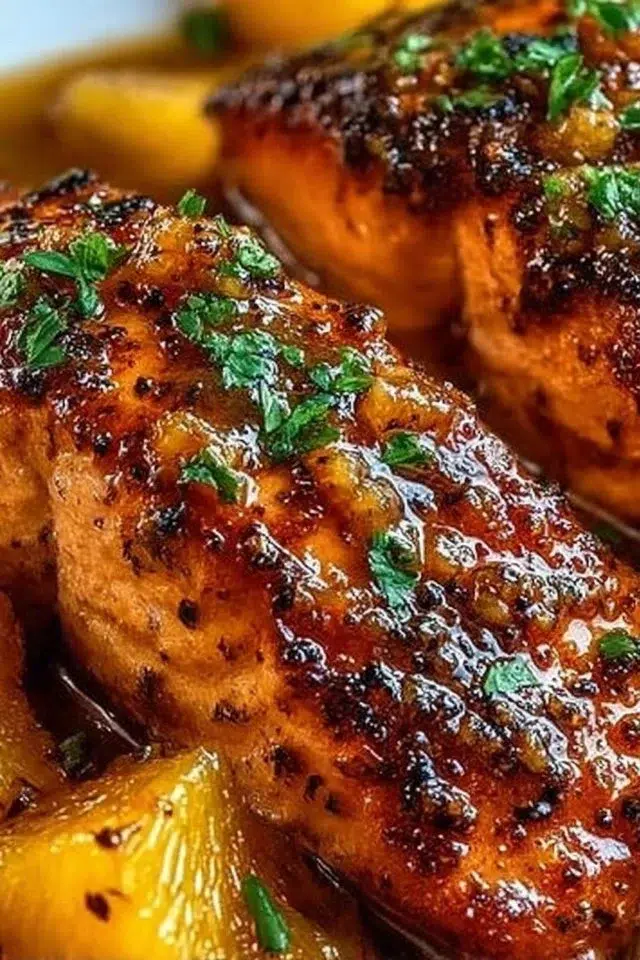
Bake for 12 to 15 minutes, or until the salmon is just cooked through and flakes easily with a fork. If you want a more caramelized top, briefly broil for 1 to 2 minutes after baking—watch very closely to prevent burning. Remove the dish from the oven and let the salmon rest in the baking dish for 5 minutes.
Visual cue: The salmon is done when it is opaque throughout and flakes when pressed gently with a fork.
Pro cue: Remove from heat the moment it flakes to avoid drying out.
Pro Tips for Success
- Dry well: Pat salmon dry before oiling to ensure even seasoning and good browning.
- Don’t overbake: Start checking at 12 minutes. Salmon continues to cook while resting.
- Drain pineapple: Excess juice can make the glaze thin and prevent caramelization.
- Reserve glaze: Keep a small amount to spoon on right before serving for fresh shine.
- Use a hot oven: 400°F gives quick cooking and helps the sugars to caramelize without drying the fish.
- Broil for color: If you want a browned top, broil for no more than 1–2 minutes and watch closely.
- Low-sodium tip: Use low-sodium soy sauce and taste before adding extra salt.
Flavor Variations
- Optional — Spicy Kick: Stir 1/2 teaspoon red pepper flakes or 1 teaspoon sriracha into the glaze for heat.
- Optional — Citrus Boost: Add 1 tablespoon fresh lime or orange juice to the glaze for a brighter tang.
- Optional — Herb Finish: Mix 1 tablespoon chopped cilantro into the parsley garnish for an herb-forward finish.
- Optional — Smoky: Add 1/4 teaspoon smoked paprika to the glaze for a warm smoky note.
- Optional — Pineapple Salsa: Use the diced pineapple as a fresh salsa with a little red onion and cilantro, served on the side.
Serving Suggestions
- Serve over steamed jasmine or basmati rice to soak up the glaze.
- Plate on a bed of mixed greens or baby spinach for a lighter meal.
- Pair with roasted asparagus or broccoli for a simple vegetable side.
- Offer lime wedges on the side to squeeze over the fish for bright acidity.
- For a tropical plate, serve with coconut rice and grilled pineapple slices.
- Present on a platter family-style for an easy weeknight or casual dinner party.
Make-Ahead, Storage & Reheating
- Make-ahead prep: Mix the glaze and dice the pineapple up to 24 hours ahead. Store covered in the fridge. Pat salmon dry and season just before baking.
- Refrigeration: Store cooked salmon in an airtight container for up to 3 days. Keep glaze juices with the fish for better flavor when reheating.
- Reheating: Reheat gently in a 275°F (135°C) oven covered with foil for 8–10 minutes, or until warmed through. You can also reheat in a skillet over low heat with a splash of water and cover for a few minutes. Avoid the microwave when possible to reduce drying.
Texture changes: Reheated salmon can become firmer and slightly drier than freshly baked fish. Reheat gently and add a splash of water, reserved glaze, or a light drizzle of olive oil to help restore moisture.
Storage and Freezing Instructions
- Refrigerator: Cooked salmon will keep well for up to 3 days in the fridge in an airtight container.
- Freezing cooked salmon: Freezing is possible but not ideal. Cooked, glazed salmon can be frozen for up to 2 months wrapped tightly in plastic and foil. Thawed salmon will lose some texture and can be slightly watery.
- Best practice instead of freezing cooked: Freeze raw fillets and store glaze separately. Thaw the salmon and apply glaze just before baking for best texture and flavor.
- If you do freeze: Thaw overnight in the fridge and reheat gently to preserve moisture.
Nutrition Facts (Per Serving)
Calories | Protein | Carbs | Fat | Fiber | Sodium
—|—:|—:|—:|—:|—:
470 | 38 g | 35 g | 26 g | 1 g | 800 mg
Estimates vary by brands and portions.
FAQ About Pineapple Glazed Salmon
Q: How do I know when the salmon is done?
A: Salmon is done when it flakes with a fork, looks opaque throughout, and reaches about 125–140°F if you use a thermometer. Remove when it flakes to keep it moist.
Q: Can I use canned pineapple?
A: Yes. Drain it very well to avoid excess juice that will thin the glaze.
Q: My glaze was too watery — what went wrong?
A: Likely excess pineapple juice or not enough brown sugar. Drain pineapple well and allow glaze to reduce a bit in a small pan before using if needed.
Q: Can I make this on the grill?
A: Optional — you can grill the salmon, but use a grill-safe dish or foil and watch for flare-ups from the sugar. Grill briefly over medium heat until just cooked.
Q: Is this recipe gluten-free?
A: Not as written. Use gluten-free tamari instead of regular soy sauce to make it gluten-free.
Q: Can I double the glaze?
A: Optional — you can double the glaze ingredients if you like extra sauce. Reserve some for serving.
Notes
- Let the fish rest 5 minutes after baking to let juices settle for a juicier bite.
- Use a metal baking dish for faster browning; ceramic works fine but may need an extra minute under broil.
- Taste the glaze before adding to fish; if it feels too salty, add a touch more brown sugar or a squeeze of rice vinegar.
- Garnish at the end with fresh parsley to keep color bright.
- If you like a thicker glaze, simmer the mixed glaze on low for 2–3 minutes to reduce before spooning over salmon.
Troubleshooting
- Bland flavor: Add a pinch more salt, a splash more soy sauce, or a squeeze of lime to balance sweetness.
- Overcooked salmon: Reduce bake time and check at 12 minutes; remove when it flakes. Use a thermometer and stop at 125–130°F for slightly medium, 135–140°F for well done.
- Watery glaze: Drain pineapple well and avoid adding pineapple juice directly to the glaze. Simmer the glaze a bit before using to thicken.
- Burned sugar: If broiling, watch closely. Move the rack down one level to reduce direct heat if browning too quickly.
- Too salty: Use low-sodium soy sauce next time or reduce added salt by half.
Final Thoughts
This Pineapple Glazed Salmon is a simple, tasty recipe that brings bright tropical flavor to tender salmon with very little fuss. It’s quick enough for weeknights but pretty enough for guests. Try the basic version first, then use the optional variations to match your taste.
Conclusion
For another take and inspiration on pineapple-glazed salmon, see Pineapple Glazed Salmon – Well Plated.
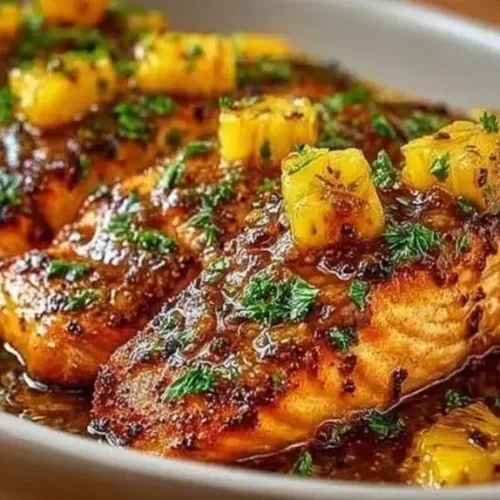
Pineapple Glazed Salmon
Ingredients
For the Salmon
- 4 pieces salmon fillets, approximately 6 ounces each Firm, skin-on or skinless
- 1 tablespoon olive oil Any neutral oil like avocado or canola is fine.
- 1/2 teaspoon salt
- 1/4 teaspoon black pepper
For the Glaze
- 1 cup fresh or canned pineapple, diced and well drained Fresh gives better texture, but canned works fine if well drained.
- 1/4 cup packed light brown sugar Use coconut sugar for a lower glycemic index.
- 2 tablespoons soy sauce Use low-sodium or tamari for gluten-free.
- 1 tablespoon rice vinegar Apple cider vinegar is a workable swap.
- 1 teaspoon minced garlic
- 1/2 teaspoon grated fresh ginger Optional, adds a fresh lift.
To Serve
- 1 tablespoon fresh parsley, chopped For garnish.
Instructions
Preparation
- Preheat your oven to 400°F (200°C). Lightly grease a baking dish large enough to hold the salmon fillets without overcrowding.
- In a small bowl, whisk together the brown sugar, soy sauce, rice vinegar, minced garlic, and grated ginger (if using) to make a smooth glaze. Stir in the diced pineapple so it’s coated.
- Pat the salmon fillets thoroughly dry with paper towels. Rub each fillet with olive oil, then season each with salt and black pepper.
- Place the seasoned salmon fillets skin-side down (if skin is on) or flat into your prepared baking dish. Spoon about two-thirds of the pineapple glaze mixture evenly over each fillet. Scatter the remaining diced pineapple around the salmon.
Cooking
- Bake for 12 to 15 minutes, or until the salmon is just cooked through and flakes easily with a fork. Optionally, broil for 1 to 2 minutes for a caramelized finish.
- Remove from the oven and let the salmon rest in the baking dish for 5 minutes before serving.