
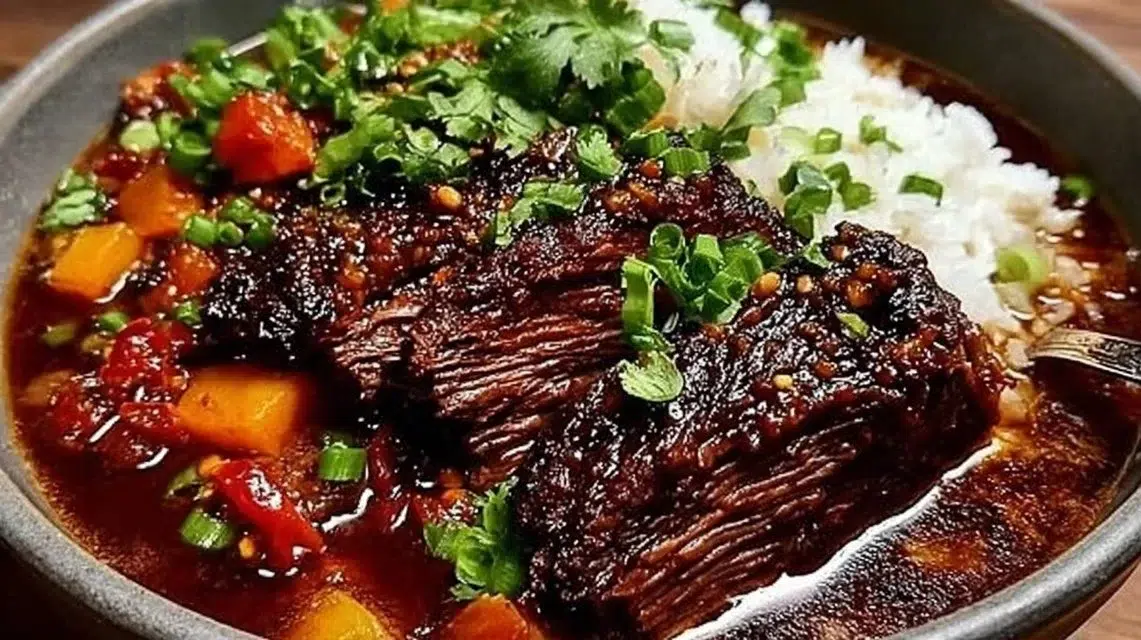
This Korean Style Pot Roast is rich, savory, and slightly spicy with tender shredded beef that melts in your mouth. The chuck roast braises low and slow in a bold mix of gochujang, soy, brown sugar, and rice vinegar, giving a deep umami-sweet heat and glossy sauce. The carrots and onion soften and soak up the sauce, adding gentle sweetness and texture. It’s easy because most of the work is hands-off once the roast is seared and in the oven, and it pairs perfectly with steamed rice, mashed potatoes, or simple noodles. If you like other hearty beef dinners, try this related recipe: bavette steak roasted garlic pan sauce with mashed potatoes & asparagus for more weeknight dinner ideas.
Why You’ll Love This Korean Style Pot Roast
- Deep, layered flavor from gochujang, soy sauce, ginger, and garlic in one pot.
- Tender, fork-ready beef after slow braising — true comfort food.
- Hands-off oven braise means easy timing for busy cooks.
- Uses affordable chuck roast yet tastes restaurant-level.
- Sauce doubles as a spoonable gravy over rice or mash.
- Simple prep with pantry staples and just a few fresh aromatics.
- Easy to scale up for guests or down for a smaller family meal.
- Garnish options let you change the final flavor quickly (cilantro, green onion, sesame).
What Is Korean Style Pot Roast?
Korean Style Pot Roast is a slow-braised beef roast cooked with Korean flavor notes — most notably gochujang (Korean chili paste), soy sauce, garlic, and ginger. It tastes savory, slightly sweet, and mildly spicy with a glossy, rich sauce. The chuck roast becomes shred-ready and juicy after long, gentle cooking. This method is classic braising: sear to build flavor, then slow-cook in a covered pot with liquid until tender. The vibe is homey and comforting — perfect for family dinners, chilly nights, or a relaxed weekend meal.
Ingredients for Korean Style Pot Roast
For the Roast
- 3–4 lbs chuck roast (about 1.4–1.8 kg)
- Salt and pepper, to taste
For the Vegetables & Aromatics
- 3 carrots, peeled and cut into chunks
- 1 large onion, sliced
- 5 garlic cloves, minced
- 1 tablespoon fresh ginger, minced
For the Sauce
- 1/4 cup soy sauce
- 2 tablespoons gochujang (Korean chili paste)
- 2 tablespoons brown sugar
- 2 tablespoons rice vinegar
- 1 tablespoon sesame oil
- 1 cup beef broth
To Serve
- 2 green onions, chopped (for garnish)
- 2 tablespoons chopped cilantro (optional)
- Rice, mashed potatoes, or noodles for serving
Ingredient Notes (Substitutions, Healthy Swaps)
- Gochujang: This gives sweetness and heat. For less heat, use 1 tablespoon or mix 1 tablespoon gochujang with 1 tablespoon tomato paste. For gluten-free, ensure gochujang brand is gluten-free.
- Soy sauce: Use low-sodium soy sauce to cut salt. Tamari works for gluten-free.
- Brown sugar: Can substitute with honey or maple syrup (use slightly less honey). Flavor will shift to a different sweetness profile.
- Sesame oil: Adds finishing aroma. If missing, omit but add a small splash of toasted sesame seeds at the end for texture.
- Beef broth: Use low-sodium to control salt. Water plus a beef bouillon cube works in a pinch.
- Vegetables: If you want more bulk, add potatoes or daikon radish (optional), but keep quantities reasonable so the roast stays the star.
Step-by-Step Instructions
Step 1 – Season and sear the roast.
Pat the chuck roast dry and season all sides with salt and pepper. Heat a Dutch oven over medium-high heat until hot. Add a small amount of neutral oil and sear the roast until browned on all sides, about 3–4 minutes per side. Transfer the roast to a plate.
Visual cue: You want a deep brown crust, not just gray — this layer adds rich flavor.
Step 2 – Sauté aromatics.
Add the sliced onion to the hot pot and sauté until it starts to soften, about 3 minutes. Stir in the minced garlic and ginger and cook until fragrant, about 30–45 seconds.
Step 3 – Add sauce ingredients.
Stir in the gochujang, soy sauce, brown sugar, and rice vinegar, mixing until the paste dissolves and the sugar begins to melt. Let the sauce bubble briefly to meld flavors.
Step 4 – Deglaze.
Pour in the beef broth and scrape up browned bits from the bottom of the pot with a wooden spoon. Those bits carry a lot of flavor into the sauce.
Step 5 – Add roast and vegetables.
Return the seared roast to the pot and tuck the carrot chunks around it. Cover the Dutch oven and transfer to a 325°F oven. Braise for 3 to 3.5 hours, until the roast is fork-tender and pulls apart easily.
Step 6 – Serve.
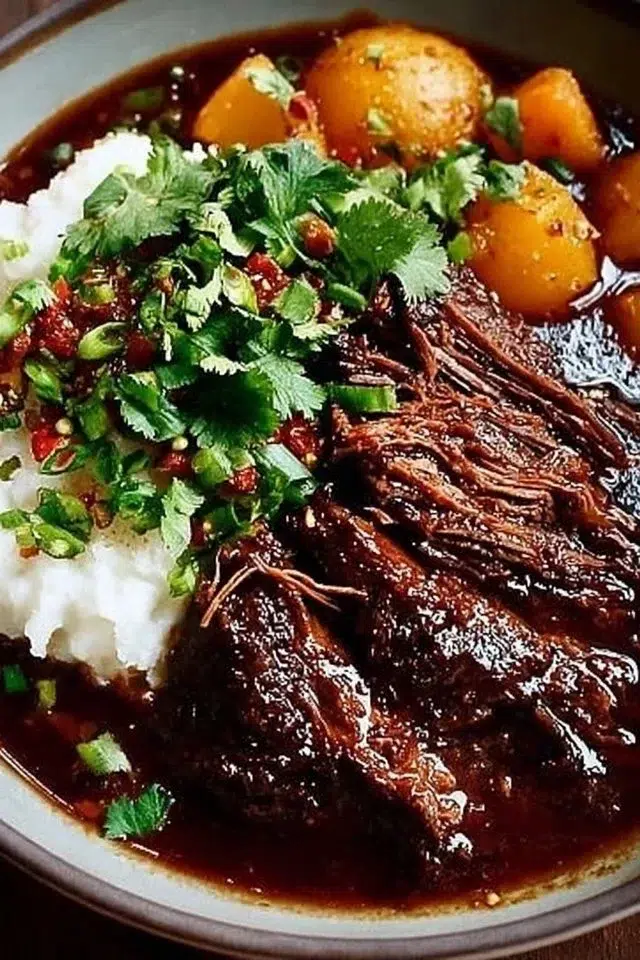
Remove the roast and vegetables to a cutting board or serving platter. Skim any excess fat from the surface of the sauce, then drizzle the sesame oil over the meat and vegetables. Garnish with chopped green onions and cilantro (optional). Serve over rice, mashed potatoes, or noodles.
Pro cue: If sauce is thin after braising, simmer uncovered on the stovetop for 5–10 minutes to reduce and thicken.
Pro Tips for Success
- Bring roast to room temperature for 20–30 minutes before searing to promote even cooking.
- Dry the roast thoroughly with paper towels before searing — moisture prevents browning.
- Don’t crowd the pot when searing; brown in batches if needed to get a good crust.
- Use a heavy, ovenproof Dutch oven for even heat distribution.
- Check roast doneness with a fork — it should shred or pull apart easily.
- Skim fat after cooking for a cleaner sauce; use a fat separator or chill briefly and remove solidified fat.
- Taste the sauce after braising and adjust seasoning: more soy for salt, more brown sugar for sweetness, a splash of vinegar to brighten.
- Leftovers gain flavor overnight — consider making this a day-ahead dinner.
Flavor Variations
- OPTIONAL — More heat: Add 1 teaspoon gochugaru (Korean red pepper flakes) or increase gochujang by 1 tablespoon.
- OPTIONAL — Smoky twist: Stir in 1 teaspoon toasted sesame seeds and 1/2 teaspoon smoked paprika to the sauce before braising.
- OPTIONAL — Citrus brightness: Add 1 tablespoon orange juice or a splash of fresh lime just before serving to brighten flavors.
- OPTIONAL — Vegetables: Add potatoes or parsnips with the carrots for a heartier pot roast.
- OPTIONAL — Low-sugar: Reduce brown sugar to 1 tablespoon and add a pinch of stevia if needed.
- OPTIONAL — Herbal: Finish with a handful of chopped cilantro or thinly sliced basil for a fresh finish.
Serving Suggestions
- Serve over steamed white or jasmine rice to soak up the sauce.
- Spoon over creamy mashed potatoes for classic comfort.
- Toss shredded roast into wide noodles with a little extra sauce and green onions.
- Make tacos: shred the beef, add pickled cucumbers, cilantro, and serve in warm tortillas (fusion-style).
- Plate with roasted or steamed broccoli and a sprinkle of sesame seeds for color and crunch.
- Great for potlucks: keep warm in a slow cooker and offer rice or mashed potatoes on the side.
Make-Ahead, Storage & Reheating
- Make-ahead: Complete the roast a day before serving and refrigerate. Reheat gently on the stovetop or in a 300°F oven until warmed through. Flavors deepen after resting overnight.
- Storage: Store cooled roast and sauce in an airtight container in the fridge for 3–4 days.
- Reheating: Reheat on low in a covered pan with a splash of broth or water to loosen the sauce. Avoid high heat to prevent drying the meat. Expect the sauce to thicken more after cooling — add liquid when reheating if needed. Texture change: the meat may firm slightly after refrigeration but will soften again when warmed slowly.
Storage and Freezing Instructions
- To freeze: Cool completely, then transfer the roast, vegetables, and sauce to freezer-safe containers or heavy-duty freezer bags. Remove as much air as possible. Freeze for up to 3 months.
- Thaw overnight in the refrigerator before reheating. Reheat gently on the stovetop with a splash of broth to revive the sauce.
- Note: Freezing is fine but can change vegetable texture (carrots may be softer after thawing). If you want crisper veggies after reheating, freeze the sauce and meat separately from fresh, par-cooked carrots and add them when reheating.
Nutrition Facts (Per Serving)
Calories | Protein | Carbs | Fat | Fiber | Sodium
—|—:|—:|—:|—:|—:
520 | 50 g | 12 g | 38 g | 3 g | 600 mg
Estimates vary by brands and portions.
FAQ About Korean Style Pot Roast
Q: My sauce is too thin after braising — what can I do?
A: Remove the roast, simmer the sauce uncovered on medium heat until it reduces and thickens, then return the meat.
Q: How do I know the roast is done?
A: It’s done when a fork slides into the meat and it pulls apart easily. That usually takes 3–3.5 hours at 325°F.
Q: Can I use a slow cooker instead?
A: Yes. Sear the roast first for flavor, then cook on low for 8 hours or high for 4–5 hours with the same liquid and aromatics.
Q: How can I reduce sodium?
A: Use low-sodium soy sauce and low-sodium beef broth. Taste and adjust at the end.
Q: What if I don’t have gochujang?
A: As an optional swap, use 1 tablespoon gochujang plus 1 tablespoon tomato paste or 1 tablespoon chili paste; adjust sweetness and heat to taste.
Q: Can I slice the roast instead of shredding it?
A: Yes. Let the roast rest 10 minutes, then slice against the grain. The sauce will still be flavorful over slices.
Notes
- Rest the roast 10 minutes before cutting to keep juices in the meat.
- Use a sharp knife to slice across the grain for the most tender bites.
- For a glossy finish, whisk a teaspoon of cornstarch with cold water and simmer into the sauce to thicken slightly.
- Garnish just before serving to keep green onions and cilantro bright.
- If serving over rice, spoon extra sauce over the rice first, then add meat for better plating.
Troubleshooting
- Problem: Bland sauce. Fix: Stir in a splash of rice vinegar or a pinch more brown sugar and soy to balance sweet, salty, and acid.
- Problem: Roast is tough. Fix: Continue braising; tougher cuts need longer low heat. Check every 30 minutes.
- Problem: Sauce is too salty. Fix: Add a cup of water or low-sodium broth, a small peeled potato to absorb salt while simmering, or a squeeze of lemon juice to balance.
- Problem: Burned bits at the bottom while searing. Fix: Lower heat, deglaze thoroughly with broth and scrape gently. If burnt flavor lingers, transfer meat to a clean pot and continue.
- Problem: Vegetables are mushy after braising. Fix: Add more delicate vegetables later in the last 45–60 minutes or roast separately for a firmer texture.
- Problem: Too spicy. Fix: Stir in a little more brown sugar or a splash of coconut milk (optional) to mellow heat.
Final Thoughts
This Korean Style Pot Roast turns an everyday chuck roast into a bold, comforting meal with minimal active time and maximum flavor. It’s flexible, easy to scale, and great for leftovers — a perfect dinner to plan for a busy week or a cozy weekend feast.
Conclusion
For an alternate take on flavorful beef dinners and side ideas, see this related recipe for inspiration: Korean Style Pot Roast | The Modern Proper
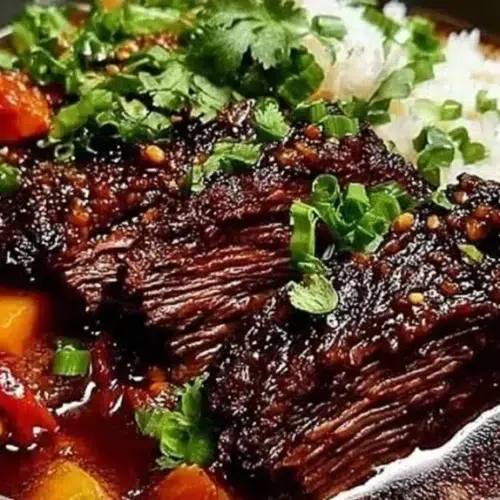
Korean Style Pot Roast
Ingredients
For the Roast
- 3–4 lbs chuck roast about 1.4–1.8 kg
- Salt and pepper to taste
For the Vegetables & Aromatics
- 3 pieces carrots peeled and cut into chunks
- 1 large onion sliced
- 5 cloves garlic minced
- 1 tablespoon fresh ginger minced
For the Sauce
- 1/4 cup soy sauce
- 2 tablespoons gochujang Korean chili paste
- 2 tablespoons brown sugar
- 2 tablespoons rice vinegar
- 1 tablespoon sesame oil
- 1 cup beef broth
To Serve
- 2 pieces green onions chopped (for garnish)
- 2 tablespoons chopped cilantro (optional)
- Rice, mashed potatoes, or noodles for serving
Instructions
Preparation
- Pat the chuck roast dry and season all sides with salt and pepper.
- Heat a Dutch oven over medium-high heat until hot.
- Add a small amount of neutral oil and sear the roast until browned on all sides, about 3–4 minutes per side.
- Transfer the roast to a plate.
Cooking
- Add the sliced onion to the hot pot and sauté until it starts to soften, about 3 minutes.
- Stir in the minced garlic and ginger and cook until fragrant, about 30–45 seconds.
- Stir in the gochujang, soy sauce, brown sugar, and rice vinegar, mixing until the paste dissolves and the sugar begins to melt.
- Pour in the beef broth and scrape up browned bits from the bottom of the pot.
- Return the seared roast to the pot and tuck the carrot chunks around it.
- Cover the Dutch oven and transfer to a 325°F oven. Braise for 3 to 3.5 hours, until the roast is fork-tender and pulls apart easily.
Serving
- Remove the roast and vegetables to a cutting board or serving platter.
- Skim any excess fat from the surface of the sauce, then drizzle the sesame oil over the meat and vegetables.
- Garnish with chopped green onions and cilantro (optional).
- Serve over rice, mashed potatoes, or noodles.