
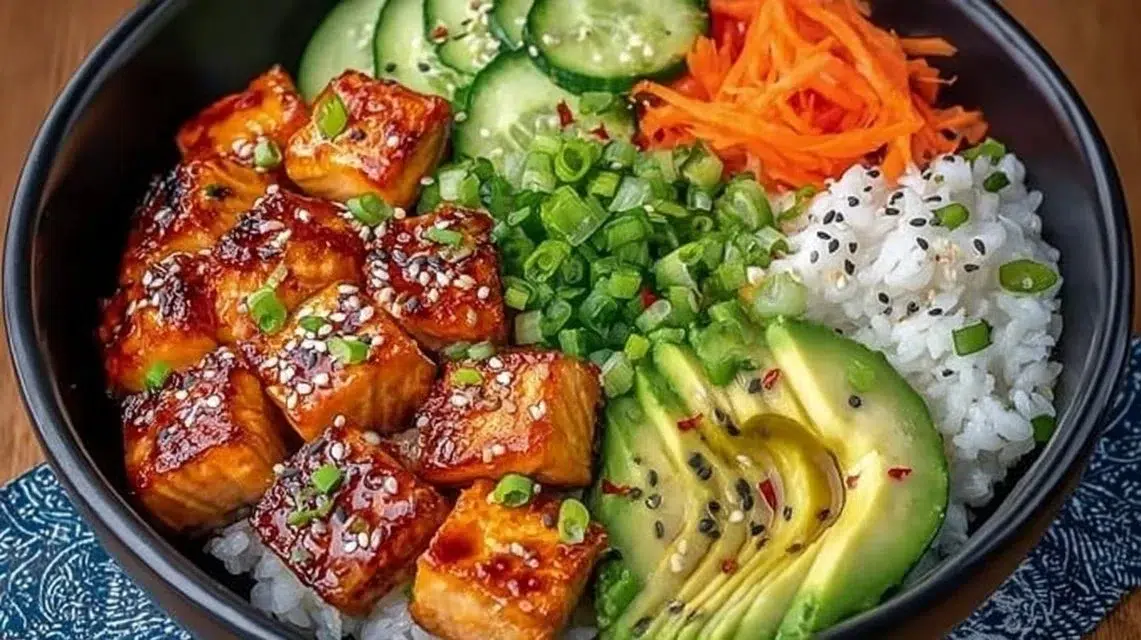
This Salmon Bowl is bright, savory, and satisfying — flaky salmon glazed with a sweet-savory soy-honey marinade, a creamy spicy mayo, and crisp fresh veggies over steamed jasmine rice. The textures balance each bite: tender fish, creamy avocado, crunchy cucumber and radish, with a little pop from edamame and sesame seeds. It’s simple to make on a weeknight and comes together in about 30 minutes with mostly hands-off rice cooking and a quick pan-sear. Serve it warm for dinner or build a chilled bowl for a picnic-style lunch. If you want a crispier finish, try a version like the crispy salmon and rice bowl for extra texture.
Why You’ll Love This Salmon Bowl
- Fast weeknight dinner: rice cooks while you prep the rest, and salmon takes just minutes to sear.
- Balanced flavors: sweet honey, salty soy, bright lime, and a touch of heat from Sriracha.
- Great texture contrast: flaky salmon, creamy avocado, crunchy vegetables, and nutty sesame seeds.
- Flexible: swap rice for quinoa or brown rice without changing the core method.
- Family friendly: you can adjust the Sriracha for kids or keep it bold for adults.
- Minimal gear: one skillet for the salmon and a pot for rice.
- Make-ahead friendly: many parts can be prepped in advance for faster assembly.
- Good for meal bowls or plated dinners — works for weeknights, meal prep, or casual entertaining.
What Is Salmon Bowl?
A Salmon Bowl is a composed meal built on a bed of steamed rice topped with cooked salmon and fresh vegetables, finished with a creamy, tangy sauce and garnishes. This version uses a quick soy-honey marinade for a glossy, flavorful fish and a simple Sriracha-mayo for cream and heat. The overall taste is savory with sweet notes, mild acidity from lime, and a toasted sesame finish. The cooking method is pan-searing the marinated salmon until golden and flaky, which keeps the center tender and gives the outside a light crust. The vibe is relaxed and homey — perfect comfort food for a busy weeknight, yet fresh and bright enough for a casual lunch or weekend meal.
Ingredients for Salmon Bowl
For the Base
- 1 cup Jasmine rice (or brown rice or quinoa)
- 2 cups Water (or chicken broth for extra flavor)
- 1 pinch Salt (optional for seasoning rice)
For the Salmon & Marinade
- 1 lb Salmon fillets (skin-on or skinless)
- 2 tbsp Soy sauce (low-sodium if preferred)
- 1 tbsp Honey (or brown sugar)
- 1 clove Garlic (minced)
- 1 tsp Sesame oil (toasted)
- 1 tsp Rice vinegar (optional for tanginess)
For the Veggies & Garnish
- 1 Avocado (sliced)
- ½ cup Cucumber (diced)
- ½ cup Edamame (shelled)
- ½ cup Carrots (julienned or shredded)
- 2 Green onions (chopped)
- 1 tbsp Sesame seeds (for garnish)
- 2 tbsp Pickled ginger
- 1 tbsp Nori strips
- ¼ cup Seaweed salad
- 2 Radishes (thinly sliced)
For the Sauce
- ¼ cup Mayonnaise (regular or light)
- 1–2 tsp Sriracha (adjust to taste)
- 1 tsp Soy sauce
- 1 tbsp Lime juice (fresh squeezed)
- 1 tsp Sesame oil
Ingredient Notes (Substitutions, Healthy Swaps)
- Rice: Use brown rice or quinoa for more fiber; cook times will increase for brown rice.
- Salmon: Any firm, skin-on or skinless fillet works. Thicker fillets may need a touch more cooking time.
- Soy sauce: Replace with tamari for gluten-free or use low-sodium soy to reduce salt. Keep the same volume.
- Honey: Brown sugar or maple syrup are fine swaps if you want a slightly different sweetness.
- Mayonnaise: Substitute Greek yogurt (same volume) for a lighter sauce, but the flavor will be tangier.
- Sriracha: Swap with chili paste or omit for no-heat versions. Add more lime if you remove heat.
- Edamame: Can be replaced with cooked peas or chickpeas for a different protein boost.
- Seaweed salad and pickled ginger: Optional, but they add restaurant-style flavor; omit if you don’t have them.
Step-by-Step Instructions
Step 1 – Cook the rice
- Rinse the jasmine rice under cold water until the water runs clear.
- Combine rice, 2 cups water (or broth), and a pinch of salt in a pot. Bring to a boil, reduce to low, cover, and simmer per package directions (about 15 minutes for jasmine).
- Remove from heat and let sit covered for 5–10 minutes before fluffing with a fork.
Visual cue: The rice grains should look plump and separate, not sticky clumped.
Step 2 – Make the marinade and marinate the salmon
- In a bowl mix 2 tbsp soy sauce, 1 tbsp honey, minced garlic, 1 tsp sesame oil, and 1 tsp rice vinegar.
- Cut salmon into bite-sized cubes and toss gently in the marinade. Let sit for 10 minutes to absorb flavor.
Step 3 – Prep vegetables and sauce
- Dice cucumber, julienne or shred carrots, chop green onions, and thinly slice radishes.
- Slice avocado just before serving to avoid browning.
- Stir together mayonnaise, 1–2 tsp Sriracha, 1 tsp soy sauce, 1 tbsp lime juice, and 1 tsp sesame oil. Taste and adjust for heat and acidity.
Step 4 – Cook the salmon
- Heat a large skillet over medium-high heat. Add a small splash of oil if your salmon is skinless or your pan is not nonstick.
- Add marinated salmon cubes in a single layer. Sear without stirring 2–3 minutes per side until golden and flaky.
Pro cue: Watch for firm edges and a slightly opaque center; salmon should flake easily with a fork.
Step 5 – Assemble the bowls
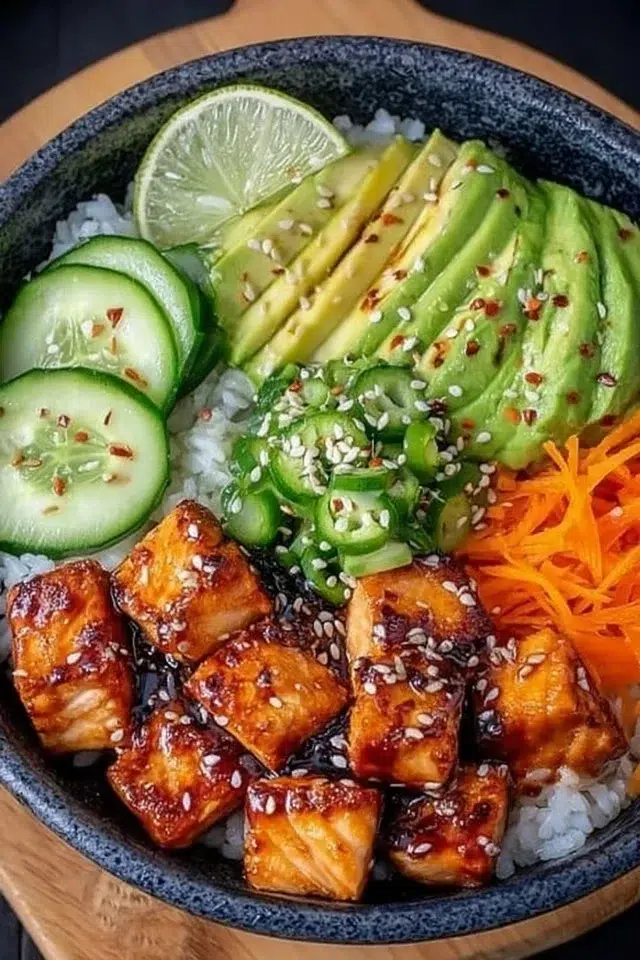
- Start with a scoop of rice, top with cooked salmon, and arrange avocado, cucumber, edamame, carrots, and radishes.
- Drizzle the Sriracha-mayo over the bowl, sprinkle sesame seeds, and add pickled ginger, seaweed salad, and nori strips as desired.
Pro Tips for Success
- Pat salmon dry before marinating if it’s very wet — it sears better and gets a nicer color.
- Don’t over-marinate salmon; 10 minutes is enough for bite-sized pieces to take on flavor without breaking down.
- Use medium-high heat for a quick sear; too low and you’ll steam the fish, too high and the exterior may burn.
- Cook in a single layer with space between pieces; overcrowding the pan lowers the heat and causes steaming.
- Warm the bowls or rice slightly before assembling to keep avocado from chilling the fish.
- Adjust Sriracha slowly — it’s easy to add heat but hard to remove it.
- Toast sesame seeds lightly in a dry pan for a minute to deepen their flavor.
- If using skin-on fillets, sear skin-side down first until crisp, then flip to finish.
Flavor Variations
- Optional: Teriyaki twist — stir 1 tbsp mirin into the marinade and swap honey for brown sugar for a richer glaze.
- Optional: Miso-lime glaze — add 1 tsp white miso to the marinade for savory depth and keep lime in the sauce for contrast.
- Optional: Ginger-forward bowl — add 1 tsp grated fresh ginger to the marinade and more pickled ginger on top.
- Optional: Spicy citrus — add 1 tsp gochujang to the mayo instead of Sriracha for a deeper, fermented heat.
- Optional: Herb freshen — mix chopped cilantro or basil into the mayo for a bright herbal note.
- Optional: Crunch boost — add toasted chopped almonds or crushed roasted seaweed crisps for extra texture.
Serving Suggestions
- Serve with extra lime wedges on the side for bright acidity.
- Offer a simple miso soup or clear broth as a light starter.
- Pair with a crisp green salad or steamed bok choy for more vegetables.
- For a lighter meal, serve salmon and veggies over a bed of mixed greens instead of rice.
- Make a DIY bowl bar: set out all toppings and let guests assemble their own bowls.
- For a picnic-friendly option, keep the sauce and avocado separate until serving to prevent sogginess.
Make-Ahead, Storage & Reheating
- Make-ahead: Cook rice and prep vegetables up to 2 days ahead. Store in separate airtight containers.
- Marinate salmon no more than 10 minutes ahead; if you must, keep it chilled and cook within 1 hour.
- Storage: Store leftover assembled bowls in the fridge for up to 2 days. Keep sauce and avocado separate if possible.
- Reheating: Reheat salmon gently in a skillet over medium-low for a few minutes, or briefly in the microwave covered to keep moisture. Reheat rice covered with a splash of water in the microwave.
- Texture changes: Cooked salmon and avocado will soften with time. For best texture, reheat salmon separately and add fresh avocado at serving.
Storage and Freezing Instructions
- Refrigerator: Store cooked salmon, rice, and vegetables in separate airtight containers for up to 2 days.
- Freezing: Freezing assembled bowls is not recommended. Cooked salmon can be frozen (in an airtight container) for up to 1 month, but texture will change after thawing and reheating.
- If you must freeze: Freeze only the cooked salmon (flaked) and rice separately, and thaw in the fridge overnight. Reheat gently and add fresh vegetables and avocado at serving.
- Pickled ginger, nori strips, and seaweed salad do not freeze well; store them in the fridge.
Nutrition Facts (Per Serving)
Calories | Protein | Carbs | Fat | Fiber | Sodium
— | —: | —: | —: | —: | —:
~620 kcal | ~29 g | ~42 g | ~31 g | ~4 g | ~690 mg
Estimates vary by brands and portions.
FAQ About Salmon Bowl
Q: How long should I marinate the salmon?
A: About 10 minutes is enough for bite-sized cubes. Longer marinating can break down the texture.
Q: Can I use frozen salmon?
A: Yes — thaw completely and pat dry before cutting and marinating.
Q: My rice is mushy. What went wrong?
A: Likely too much water or too high heat. Use the package ratio, bring to a boil, then simmer covered on low.
Q: The salmon dried out. How to avoid that?
A: Lower the heat slightly and reduce cook time. Cook just until the fish flakes; it should remain moist.
Q: Can I make this gluten-free?
A: Yes — use tamari or a gluten-free soy sauce substitute for both marinade and sauce.
Q: What if I want it less spicy?
A: Reduce Sriracha to ½–1 tsp or omit and add a dash of sweet chili sauce if you like a milder flavor.
Notes
- Slice avocado last to keep it fresh and prevent browning.
- Save a little marinade before adding fish to the pan; don’t pour used marinade over cooked fish.
- Warm bowls slightly before plating to keep everything at a pleasant temperature.
- Garnish with toasted sesame seeds and thin nori strips for a restaurant feel.
- Use lime zest in the sauce for an extra citrus lift if desired.
- For cleaner plating, place sauce in a squeeze bottle for controlled drizzling.
Troubleshooting
- Bland flavor: Increase soy or lime slightly, or add a pinch more salt. Taste sauce before serving.
- Overcooked salmon: Reduce sear time and check for flakiness; remove from heat as soon as it flakes.
- Watery sauce: Use full-fat mayo or drain extra lime juice; mix well to emulsify.
- Fish sticks to pan: Ensure pan is hot and oiled, and don’t move salmon while searing.
- Vegetables soggy: Dry them well after washing and add crunchy veggies just before serving.
- Too salty: Use low-sodium soy sauce or reduce added soy and balance with a little more honey or lime.
Final Thoughts
This Salmon Bowl is a fast, flavorful meal that balances simple cooking with bright, fresh toppings — it’s flexible, family-friendly, and reliable for busy nights. Try the variations and make-ahead tips to fit your week, and enjoy a hearty bowl that feels like a treat without the fuss. For a step-by-step take on a similar easy salmon bowl, check this helpful recipe: Salmon Bowl (Easy Healthy Dinner in 20 Minutes)