
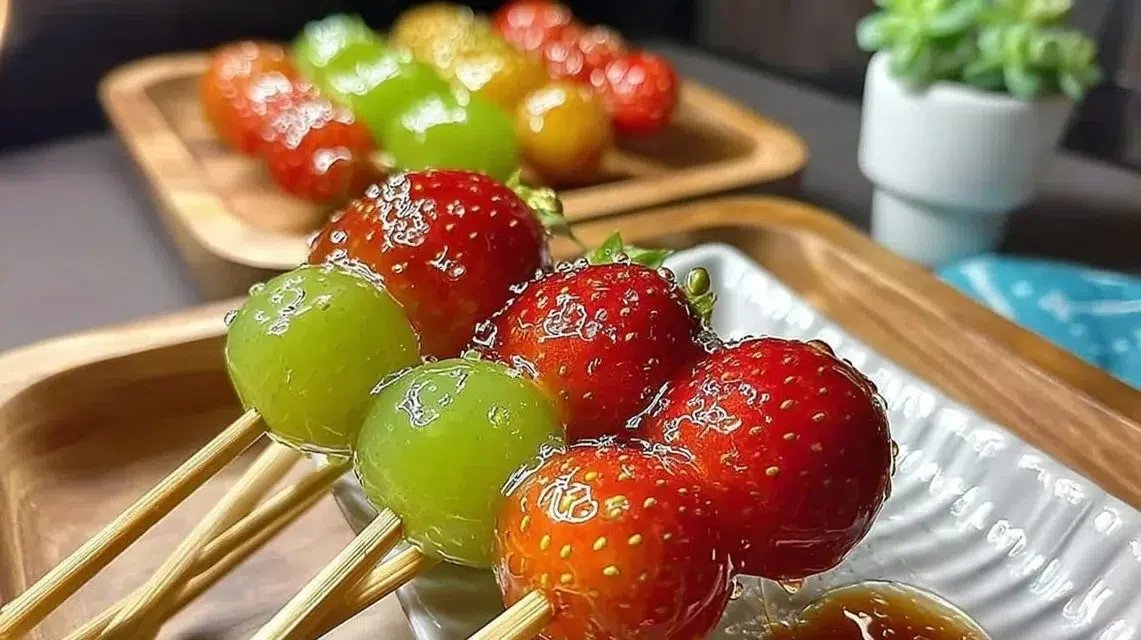
Tanghulu translates to “candied hawthorn” in English. is a simple, crunchy treat that pairs bright, tart fruit with a glassy, crunchy sugar shell. The outside snaps with a satisfying crack while the fruit inside stays juicy and fresh. It’s quick to make with just fruit, sugar, and water, so it’s perfect for snacks, parties, or a sweet finish to a meal. This recipe is easy because the syrup uses a 1:1 ratio and the process is mostly hands-off once the syrup is ready. Try serving a few skewers with tea or coffee for a fun contrast of hot and cold. The result looks special but takes very little time and skill.
Why You’ll Love This Tanghulu translates to “candied hawthorn” in English.
- Quick to make with only three ingredients: fruit, sugar, and water.
- Delightful contrast of textures: crisp candy shell and soft, juicy fruit inside.
- Hands-off cooking once the syrup is boiling — you can prep fruit ahead.
- Flexible: use strawberries or other berries depending on season and taste.
- Great for parties, kids, or a unique dessert with minimal cleanup.
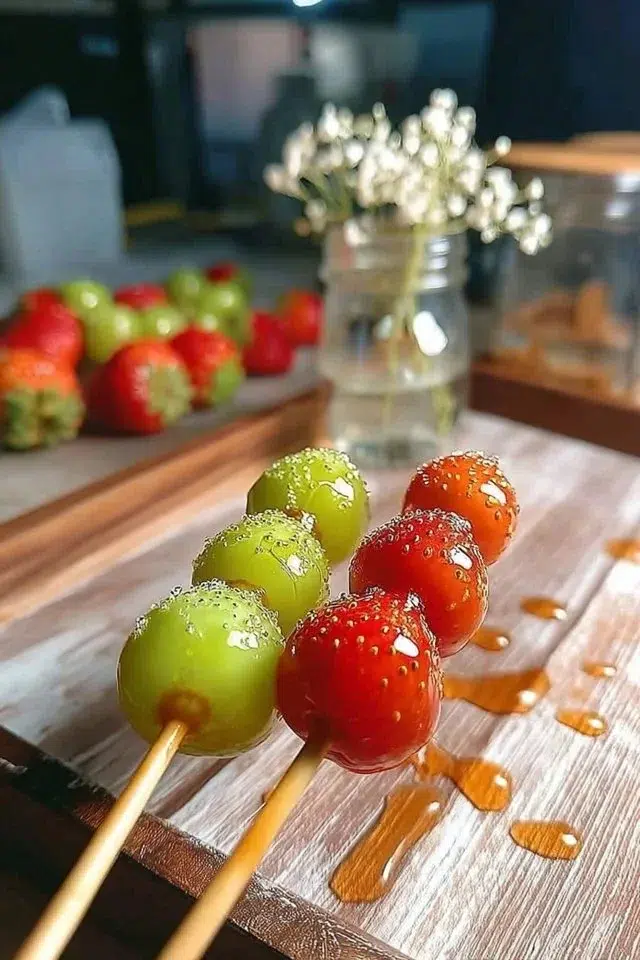
- Visual appeal: glossy, jewel-like fruit that looks like a gourmet treat.
- No special equipment needed beyond a pot and parchment paper.
- Easy to scale up for a crowd or keep small for a snack.
What Is Tanghulu translates to “candied hawthorn” in English.?
Tanghulu is a traditional Chinese snack where fruit is coated in a hard sugar shell. In this version, you use strawberries or other berries instead of hawthorn, keeping the same bright flavor and crunchy texture. The taste is a balance of tart or sweet fruit inside with pure, sweet crunch outside. You cook sugar and water into a clear syrup, then dip clean, dry fruit and let the coating set on a tray. The vibe is fun and casual — great for a weekend treat, a kid-friendly party, or a quick, impressive dessert after dinner.
Ingredients for Tanghulu translates to “candied hawthorn” in English.
Main Ingredients
- Fruit (strawberries or other berries)
- Sugar
- Water
Ingredient Notes (Substitutions, Healthy Swaps)
- Fruit: Strawberries are classic and easy to skewer. Use blueberries, raspberries, blackberries, or small grapes as optional swaps. Choose firm, ripe fruit for the best texture.
- Sugar: Granulated white sugar gives the clear, glassy shell. Do not substitute with brown sugar or powdered sugar if you want the same clear finish.
- Water: Plain water is all you need. You can use filtered water if your tap has a strong taste.
- Diet-friendly option: Use a sugar substitute designed for hard candy? Not recommended — most substitutes don’t form the same hard, clear shell. For lower sugar, make smaller coated pieces rather than changing the syrup recipe.
- Budget tip: Use in-season berries or mix smaller, less expensive fruits with a few strawberries for visual appeal.
Step-by-Step Instructions
Step 1 – Prepare the fruit
- Wash the strawberries or berries gently and dry them completely with paper towels or a clean kitchen towel.
- Remove stems if using strawberries; leave a small stem or use skewers for berries.
Visual cue: Fruit must be bone-dry before dipping — any water will cause the syrup to sputter or fail to set.
Step 2 – Make the syrup
- In a small to medium pot, combine equal parts sugar and water (1:1 ratio) over medium heat.
- Stir until the sugar dissolves, then bring the mixture to a boil.
Visual cue: The syrup should be clear and bubbling gently once it boils; it will not be very dark at this stage.
Step 3 – Simmer to the desired consistency
- Allow the syrup to simmer until it reaches the desired thickness for coating.
- Watch carefully so it does not burn.
Pro cue: You want a syrup that forms a hard shell when cooled. If you have a candy thermometer, aim for the hard crack stage (about 300°F / 149°C). If not, test by dropping a small amount into very cold water — it should harden into a brittle, glass-like piece.
Step 4 – Dip the fruit
- Working quickly and safely, dip each piece of fruit into the hot syrup so it’s well-coated.
- Place the coated fruit on a parchment-lined tray to cool and harden.
Visual cue: Turn the skewer while lifting to let excess syrup drip off for an even, glossy coat.
Step 5 – Cool and serve
- Let the tanghulu cool for several minutes until the shell snaps and hardens.
- Serve immediately for best crunch and fresh fruit texture.
Pro cue: If the syrup hardens too quickly on the pot or skewer, lower the heat slightly when dipping or work faster in small batches.
Pro Tips for Success
- Dry fruit completely: Any surface moisture causes the syrup to sputter or produce a dull coating.
- Use a candy thermometer if you can: Hitting the hard crack stage gives the best, crisp shell.
- Work in small batches: Dip a few pieces at a time so the syrup stays hot and smooth.
- Keep a bowl of cold water nearby for testing syrup doneness safely.
- Use parchment paper to prevent sticking and make cleanup easy.
- If the syrup becomes grainy, gently reheat and strain; don’t stir aggressively once it starts to boil.
- For safety, use long-handled skewers and keep hands away from hot syrup.
- If the sugar hardens on the pot sides, wipe with a wet brush between batches to prevent burning.
Flavor Variations
- Optional: Citrus twist — add a strip of orange or lemon peel to the syrup while heating, remove before dipping for subtle citrus aroma.
- Optional: Spiced shell — steep a small cinnamon stick or a few cloves in the water while heating, then remove before boiling. Keep it light so the sugar shell stays clear.
- Optional: Mixed berries — use a combination of strawberries, blueberries, and raspberries on one skewer for variety and color contrast.
- Optional: Chocolate dip — after the sugar shell sets, dip half the tanghulu in melted dark chocolate for a two-layer treat (note: this changes the pure sugar shell appearance).
- Optional: Salt finish — sprinkle a tiny pinch of flaky sea salt on the syrup right after dipping for a sweet-salty contrast.
Serving Suggestions
- Serve on skewers for easy snacking at parties or as a fun table-side treat.
- Pair with hot tea or coffee to contrast the cold, crunchy candy with a warm drink.
- Arrange on a platter with fresh mint leaves for a bright presentation.
- Offer tanghulu as a dessert at a buffet or as a surprise in lunchboxes.
- Use smaller berries as bite-sized favors at gatherings or as edible decorations on dessert plates.
- For kids’ parties, set up a dipping station and help them dip fruit in small batches.
Make-Ahead, Storage & Reheating
- Make-ahead: Prep the fruit ahead by washing, drying, and skewering up to a day in advance. Keep covered in the fridge on paper towel-lined trays.
- Storage: Store finished tanghulu in an airtight container in a cool, dry place for up to 24–48 hours. The sugar shell may begin to soften after a day as moisture from the fruit migrates to the shell.
- Reheating: Do not reheat finished tanghulu. Reheating melts the sugar shell and changes texture. If the shell softens, re-coating with fresh syrup is the best fix — remove soft shell gently and dip again.
- Texture changes: The candy shell will lose crispness over time. For best crunch, serve the same day you make them.
Storage and Freezing Instructions
- Freezing is not recommended. Freezing will cause ice crystals that break the sugar shell and change the fruit texture when thawed.
- If you must freeze fruit for later tanghulu, freeze uncoated fruit separately and fully thaw and dry before candying.
- For short-term storage, keep coated fruit in a single layer in an airtight container at room temperature (away from humidity) and consume within 24 hours for best texture.
Nutrition Facts (Per Serving)
Calories | Protein | Carbs | Fat | Fiber | Sodium
— | —: | —: | —: | —: | —:
120 kcal | 0.6 g | 30 g | 0 g | 2 g | 2 mg
Estimates vary by brands and portions.
FAQ About Tanghulu translates to “candied hawthorn” in English.
Q: Why did my sugar turn cloudy instead of clear?
A: Cloudy sugar can happen if the syrup crystallizes during cooking or if you stirred after boiling began. Reheat gently and avoid stirring once it boils.
Q: My coating is too soft. What did I do wrong?
A: The syrup likely did not reach the hard crack stage. Reheat to a higher temperature (use candy thermometer) or test in cold water until it becomes brittle.
Q: The syrup burned. Can I save it?
A: If it smells burnt or is dark brown, discard. If it’s slightly dark but not burnt, strain and use carefully — taste will tell. Better to make a fresh batch if unsure.
Q: Can I use frozen berries?
A: No. Frozen berries release water when thawed and will prevent the syrup from setting properly. Use fresh, dry fruit.
Q: How long will tanghulu stay crisp?
A: Best the same day, within 24 hours. The shell softens as fruit moisture migrates outward.
Q: Can I make this without a candy thermometer?
A: Yes. Use the cold water test: drop a small amount into cold water and see if it hardens into a brittle, glass-like piece.
Notes
- Use uniform-sized fruit for even coating and a neat look.
- For easy serving, leave a little stem on strawberries so they can be held without touching the candy shell.
- Avoid humid days for making tanghulu — humidity can prevent the sugar from setting crisp.
- If you want extra shine, work quickly: the hotter the syrup during dipping, the glossier the finish.
- Serve on parchment or silicone mats to prevent sticking and keep presentation clean.
Troubleshooting
- Sugar crystallizes while boiling: Wipe down pot sides with a wet pastry brush to dissolve crystals before they join the syrup.
- Syrup sticks to skewers and hardens too fast: Reduce heat slightly and dip in fewer pieces per batch.
- Fruit leaks juice after coating: Make sure fruit is fully dry and not overripe; choose firmer pieces.
- Burned or bitter syrup: Remove from heat immediately if it darkens and start a fresh batch — burnt sugar tastes bad and can ruin the fruit.
- Coating bubbles or sputters: This often means moisture is on the fruit or in the pan. Dry fruit thoroughly and keep water out of the boiling syrup.
- Dull or sticky shell after cooling: Likely high humidity or syrup not hot enough; serve quickly and store in a dry place.
Final Thoughts
Tanghulu translates to “candied hawthorn” in English. is a fun, simple snack that makes everyday fruit feel special. With just fruit, sugar, and water, you get a striking, crunchy treat that works for snacks, gatherings, or a quick dessert. With a little practice on timing and temperature, you’ll get shiny, crisp shells and bright, juicy fruit every time.
Conclusion
If you’d like a step-by-step visual and another take on the technique, check out this detailed guide: Tanghulu Recipe – A Cozy Kitchen.
Tanghulu
Ingredients
Main Ingredients
- 1 cup Sugar Granulated white sugar gives the clear, glassy shell.
- 1/2 cup Water Plain water is all you need.
- 2 cups Fruit (strawberries or other berries) Use firm, ripe fruit for the best texture.
Instructions
Preparation
- Wash the strawberries or berries gently and dry them completely with paper towels or a clean kitchen towel.
- Remove stems if using strawberries; leave a small stem or use skewers for berries.
- Ensure the fruit is bone-dry before dipping.
Making the syrup
- In a small to medium pot, combine equal parts sugar and water over medium heat.
- Stir until the sugar dissolves, then bring the mixture to a boil.
- Allow the syrup to simmer until it reaches the desired thickness for coating.
Coating the fruit
- Dip each piece of fruit into the hot syrup so it’s well-coated.
- Place the coated fruit on a parchment-lined tray to cool and harden.
Serving
- Let the tanghulu cool for several minutes until the shell snaps and hardens.
- Serve immediately for best crunch and fresh fruit texture.