
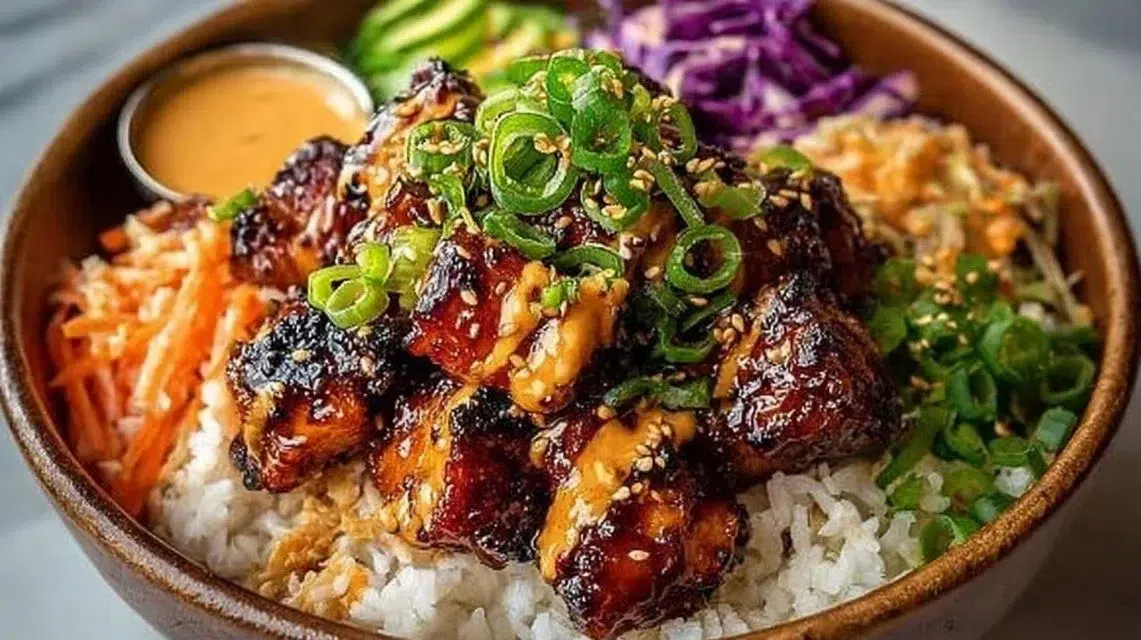
This Korean BBQ Chicken Bowls recipe delivers sweet-spicy, savory chicken with a sticky, caramelized glaze and bright, crunchy veggies over warm rice. The gochujang and brown sugar make a deep, slightly spicy sauce while sesame oil and garlic add toasty, nutty notes. Textures are a highlight: tender chicken, crisp cucumber, shredded carrots, and creamy edamame create a balanced bite every time. It’s an easy weeknight win because the sauce comes together in one bowl and the pan-cook is fast. Serve it in bowls for a quick family dinner, or portion into meal-prep containers for lunches through the week. For a slightly different twist, try this 25-minute BBQ Chicken Mango Bowl for another fast, flavorful option.
Why You’ll Love This Korean BBQ Chicken Bowls (Easy Weeknight Recipe!)
- Fast to prep: marinade takes as little as 30 minutes and the chicken cooks in minutes.
- Bold flavor: gochujang and brown sugar create a sweet-umami-spicy glaze that sticks to the chicken.
- Great texture mix: tender, caramelized chicken plus crisp cucumber and shredded carrots.
- Flexible build: swap rice for greens or cauliflower rice for a lower-carb bowl.
- Family friendly: not overly spicy—adjust gochujang to taste for kids.
- Simple pantry sauce: uses common Asian condiments—easy to make any night.
- Meal-prep friendly: cooks up in one skillet and stores well for several days.
- Customizable toppings: kimchi, sesame seeds, and green onions finish the dish with color and crunch.
What Is Korean BBQ Chicken Bowls (Easy Weeknight Recipe!)?
This is a rice bowl built around bite-sized chicken thighs tossed in a sticky Korean-style BBQ sauce made with gochujang, soy sauce, sesame oil, brown sugar, garlic, ginger, and rice vinegar. It tastes sweet, savory, slightly spicy, and richly umami with a toasted sesame finish. The chicken is pan-seared so the outside caramelizes and the inside stays juicy. The vibe is casual comfort food—perfect for weeknight dinners, quick weekend lunches, or easy meal prep. It’s inspired by Korean flavors but simplified so you can make it fast in a home kitchen.
Ingredients for Korean BBQ Chicken Bowls (Easy Weeknight Recipe!)
For the Base
- 4 cups cooked rice (for serving)
For the Chicken & Marinade
- 1.5 lbs boneless, skinless chicken thighs (cut into 1-inch pieces)
- 1/4 cup low-sodium soy sauce
- 3 tbsp gochujang (Korean chili paste)
- 2 tbsp brown sugar (packed)
- 1 tbsp sesame oil
- 3 cloves garlic (minced)
- 1 tsp fresh ginger (grated)
- 1 tsp rice vinegar
To Serve
- 1 cup cucumber (thinly sliced)
- 1 cup shredded carrots
- 1 cup cooked edamame (shelled)
- 1/2 cup kimchi (optional)
- 1 tbsp sesame seeds (for garnish)
- 2 tbsp green onions (sliced, for garnish)
Ingredient Notes (Substitutions, Healthy Swaps)
- Gochujang: If you don’t have it, mix 1–2 tbsp chili paste or Sriracha with 1 tsp miso and a touch of honey to mimic flavor. This is optional and will alter taste slightly.
- Low-sodium soy sauce: Regular soy sauce works but raises sodium. Use tamari for gluten-free.
- Sesame oil: Toasted sesame oil adds signature aroma—if you need to omit it, add a light drizzle of sesame seeds at the end.
- Chicken thighs: Keep thighs for more flavor and juiciness. For a leaner meal, use boneless skinless chicken breasts, cut into 1-inch pieces—watch cooking time.
- Rice: Use white or brown rice, or swap for quinoa, cauliflower rice, or mixed greens for lower carbs or more fiber.
- Kimchi: Optional but adds bright tang and texture; omit if you don’t like fermented foods.
- Brown sugar: Swap with honey, maple syrup, or coconut sugar for different sweet notes; reduce amount slightly if using honey.
Step-by-Step Instructions
Keep steps short and work steadily. The marinade doubles as the sauce so there’s little cleanup.
Step 1 – Make the sauce and marinade
In a medium bowl, whisk together the gochujang, low-sodium soy sauce, sesame oil, brown sugar, minced garlic, grated ginger, and rice vinegar until smooth. This is your marinade and pan sauce.
Visual cue: The sauce should be smooth and glossy with no sugar lumps.
Step 2 – Marinate the chicken
Add the bite-sized chicken pieces to the marinade and toss to coat completely. Cover and refrigerate for at least 30 minutes, or up to 4 hours. This gives the flavors time to sink in.
Pro cue: If you’re short on time, even 30 minutes will add flavor; longer marinating deepens the taste.
Step 3 – Heat the skillet
Heat a large skillet over medium-high heat. Add a thin brush of neutral oil if your skillet is not nonstick. You want the pan hot so the chicken sears on contact.
Step 4 – Cook the chicken
Add the chicken in a single layer (work in batches if needed) and cook for 3–4 minutes per side, until cooked through and caramelized. Don’t crowd the pan—crowding causes steaming instead of searing.
Pro cue: Chicken is done when internal temperature reaches 165°F (74°C) and the edges look caramelized. Total cook time per batch is about 6–8 minutes.
Step 5 – Assemble the bowls
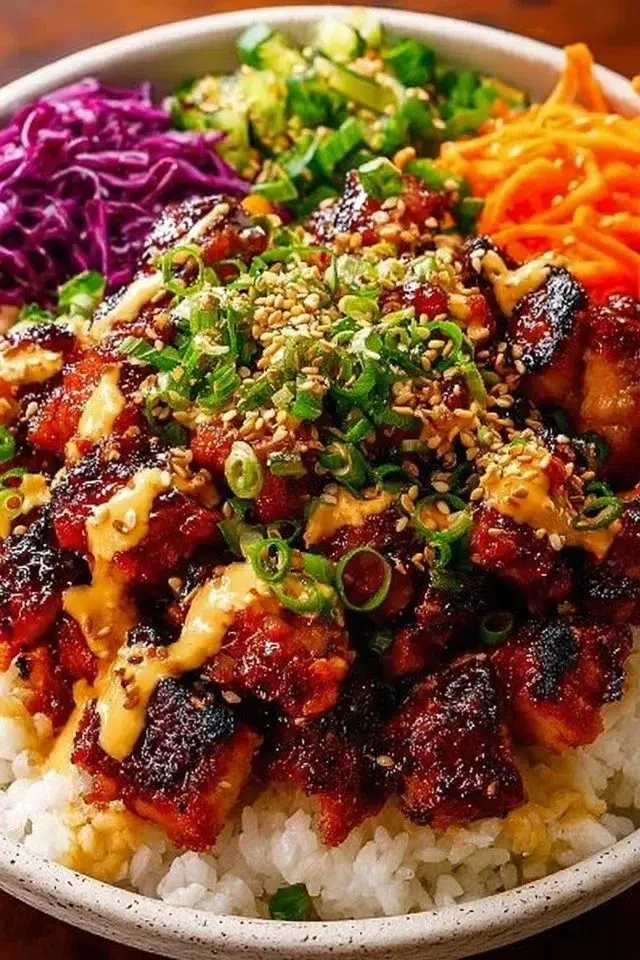
Divide the cooked rice among four bowls. Top with the Korean BBQ chicken, then arrange the cucumber, carrots, edamame, and kimchi around the chicken. Garnish with sesame seeds and green onions before serving.
Visual cue: Each bowl should show color contrast—orange carrots, green cucumber and edamame, brown glazed chicken, and white rice.
Pro Tips for Success
- Use a hot pan: Preheat the skillet so the chicken sears and caramelizes quickly.
- Don’t overfill the pan: Cook in batches if needed to get a good crust.
- Even chicken pieces: Cut pieces the same size so they cook evenly.
- Taste the marinade: Adjust gochujang or sugar to get the balance you like before adding chicken.
- Rest briefly: Let cooked chicken sit 2 minutes off the heat to let juices redistribute.
- Finish with fresh: Add green onions and sesame seeds right before serving for the best texture and aroma.
- Control spice: If you want milder bowls, start with 2 tbsp gochujang and add more to taste.
Flavor Variations
- OPTIONAL Sesame-Ginger Twist: Add 1 tbsp grated fresh ginger to the sauce (in addition to the 1 tsp) for a brighter, spicier note.
- OPTIONAL Honey-Gochujang Glaze: Replace brown sugar with 1 tbsp honey for a floral sweetness and thinner glaze.
- OPTIONAL Citrus Kick: Finish with a squeeze of fresh lime or lemon over the bowl for brightness.
- OPTIONAL Nutty Crunch: Add crushed roasted peanuts or cashews to the top for extra texture.
- OPTIONAL Veg Swap: Replace cucumbers with pickled daikon or sliced radish for crunch and tang.
- OPTIONAL Protein Swap: Use firm tofu, pressed and cubed, marinated and pan-fried to make a vegetarian version.
Serving Suggestions
- Keep it simple: Serve the bowls with extra kimchi on the side for more tang.
- Make it a spread: Offer extra gochujang, soy sauce, or sriracha so guests can adjust heat.
- Family meal: Set up a bowl bar—rice, chicken, and bowls of toppings for quick assembly.
- Party platter: Serve the chicken on a large platter with rice and veggies for casual family-style dining.
- Meal prep: Portion into containers with rice and toppings for 4 lunches. Add sesame seeds and green onions fresh before eating.
- Drink pairing: Serve with iced green tea or a light lager to balance the spice and salt.
Make-Ahead, Storage & Reheating
- Make-ahead marinade: Mix the sauce and marinate the chicken up to 4 hours ahead. Don’t marinate longer than 4 hours to avoid texture issues with the acid.
- Prep toppings: Slice cucumbers, shred carrots, and shell edamame up to 2 days ahead and store in separate airtight containers.
- Cooked storage: Store assembled bowls or components in the fridge for up to 3–4 days. Keep rice and chicken in separate containers if possible to preserve texture.
- Reheating best practice: Reheat chicken in a hot skillet for 2–3 minutes, stirring, to re-crisp edges. Reheat rice in the microwave with a damp paper towel over the container or steam briefly to restore moisture.
- Texture note: Cooked rice may firm up in the fridge; microwave with a splash of water to soften. Chicken skinless thighs stay juicier than breast after reheating.
Storage and Freezing Instructions
- Fridge: Store cooked chicken and rice separately in airtight containers for up to 3–4 days. Store fresh toppings separately to retain crunch.
- Freezing: You can freeze cooked chicken (without rice or fresh veg) for up to 2 months. Cool completely, place in freezer-safe bag, press out air, and freeze. Thaw overnight in the fridge before reheating.
- Freezing note: Rice and fresh veg do not freeze well—rice can become dry and veggies lose crunch. Instead, cook rice fresh or freeze small portions of rice if needed and reheat with added moisture.
Nutrition Facts (Per Serving)
Calories | Protein | Carbs | Fat | Fiber | Sodium
—|—:|—:|—:|—:|—:
~690 kcal | ~43 g | ~58 g | ~22 g | ~3 g | ~1100 mg
Estimates vary by brands and portions.
FAQ About Korean BBQ Chicken Bowls (Easy Weeknight Recipe!)
Q: My sauce is too thick—how do I thin it?
A: Add 1 tsp water or rice vinegar at a time and whisk until you reach the desired consistency. Heat will also thin it slightly while cooking.
Q: The sauce is too salty—what can I do?
A: Add a small spoon of brown sugar or a splash of rice vinegar to balance the salt. Using low-sodium soy sauce helps from the start.
Q: How do I know the chicken is cooked through?
A: Use an instant-read thermometer—165°F (74°C) internal temp is safe. Look for no pink in the center and juices running clear.
Q: Can I use chicken breast instead of thighs?
A: Yes—breast works, but reduce cook time slightly and watch for dryness. Cut into even pieces and don’t overcook.
Q: How spicy is this dish?
A: Gochujang adds mild to moderate heat depending on brand. Reduce to 2 tbsp if you prefer milder bowls.
Q: Can I make this gluten-free?
A: Yes—use tamari or a gluten-free soy sauce substitute and check that gochujang is gluten-free (some brands are).
Notes
- Toast sesame seeds briefly in a dry pan for extra aroma before garnishing.
- For extra gloss, return cooked chicken to the pan with a splash of the reserved marinade and reduce for 1 minute.
- Slice green onions on a sharp angle for better presentation.
- If you like contrast, add a small scoop of plain yogurt or cucumber raita for cooling creaminess.
- Use a nonstick or well-seasoned skillet to reduce the need for extra oil and get a nice sear.
Troubleshooting
- Bland flavor: Add a pinch more gochujang or a splash of rice vinegar to lift the sauce.
- Chicken overcooked or dry: Reduce heat slightly and cook until just done; thighs are forgiving but still can dry if overcooked.
- Sauce burns in pan: Lower heat and add a splash of water to loosen; avoid sugar burning by not leaving too high a flame.
- Sauce too watery: Simmer briefly in the pan to reduce and thicken, or mix a small slurry of cornstarch and water and stir in to thicken.
- Crowded pan causes steaming: Cook in batches so pieces sear, not steam—this gives better color and flavor.
- Veggies soggy: Store sliced cucumber and shredded carrots in separate containers and add right before serving.
Final Thoughts
This Korean BBQ Chicken Bowls recipe brings bold, balanced flavors and quick, hands-on cooking that makes weeknights easier and more exciting. The sticky gochujang glaze and crisp toppings work together to create satisfying bowls you can customize for family meals or meal prep.
Conclusion
If you want more inspiration for chicken bowls with bold flavors, this Korean Chicken Bowls – Damn Delicious recipe offers a great variation and extra ideas to try at home.
Korean BBQ Chicken Bowls
Ingredients
For the Base
- 4 cups cooked rice for serving
For the Chicken & Marinade
- 1.5 lbs boneless, skinless chicken thighs, cut into 1-inch pieces
- 1/4 cup low-sodium soy sauce can substitute with regular soy sauce or tamari for gluten-free
- 3 tbsp gochujang Korean chili paste
- 2 tbsp brown sugar packed
- 1 tbsp sesame oil toasted is preferred
- 3 cloves garlic, minced
- 1 tsp fresh ginger, grated
- 1 tsp rice vinegar
To Serve
- 1 cup cucumber, thinly sliced
- 1 cup shredded carrots
- 1 cup cooked edamame, shelled
- 1/2 cup kimchi optional
- 1 tbsp sesame seeds for garnish
- 2 tbsp green onions, sliced for garnish
Instructions
Preparation
- In a medium bowl, whisk together the gochujang, low-sodium soy sauce, sesame oil, brown sugar, minced garlic, grated ginger, and rice vinegar until smooth to create the marinade and pan sauce.
- Add the bite-sized chicken pieces to the marinade and toss to coat completely. Cover and refrigerate for at least 30 minutes, or up to 4 hours.
Cooking
- Heat a large skillet over medium-high heat and add a thin brush of neutral oil if your skillet is not nonstick.
- Add the chicken in a single layer (work in batches if needed) and cook for 3–4 minutes per side, until cooked through and caramelized.
Assembly
- Divide the cooked rice among four bowls. Top with the Korean BBQ chicken, then arrange the cucumber, carrots, edamame, and kimchi around the chicken.
- Garnish with sesame seeds and green onions before serving.