
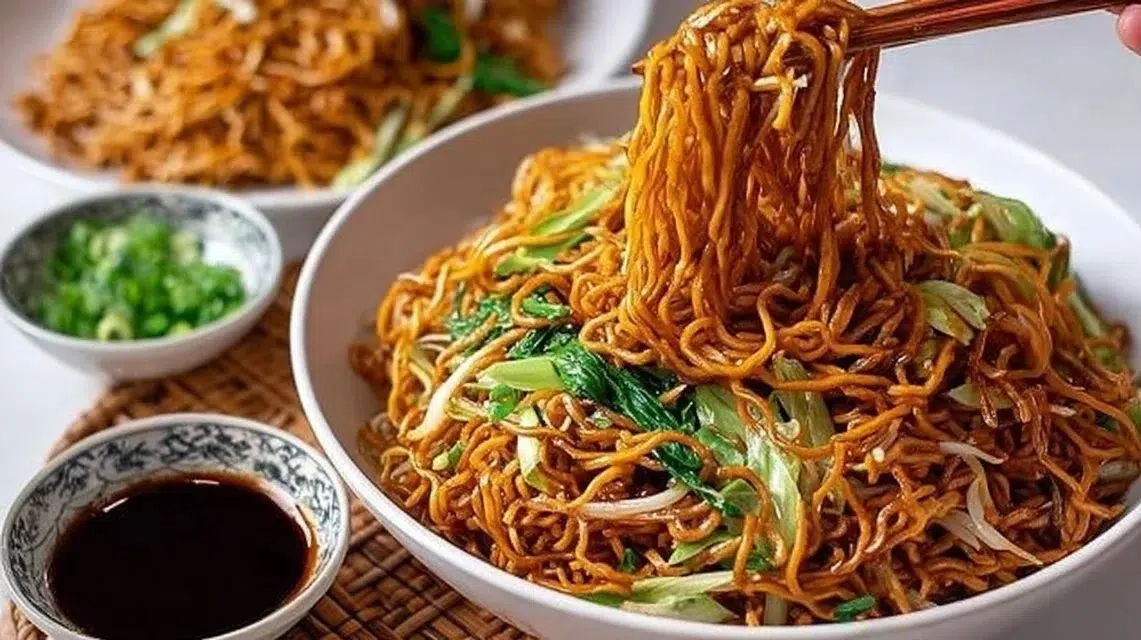
Classic Chinese fried noodles are a warm, savory dish with chewy, lightly charred noodles, tender-crisp vegetables, and a bright soy-savoury finish. The texture mixes soft noodles with a little bite from mixed vegetables and a flash of garlic and ginger. This recipe is quick, low-fuss, and perfect for a weeknight when you want big flavor with little work. Toss in green onions at the end for freshness, and serve with a simple side salad or pickles for crunch. If you like crunchy sides, try the air fryer fried pickles that get super crispy every time for a fun contrast.
Why You’ll Love This Classic Chinese Fried Noodles
- Fast to make: cooks in about 15–20 minutes once ingredients are ready.
- Big, balanced flavors from soy, ginger, and garlic with simple seasoning.
- Great texture: chewy noodles with tender-crisp vegetables.
- Flexible: swap vegetables to use what you have on hand.
- Minimal equipment: a single large skillet or wok is all you need.
- Family friendly: mild, savory, and easy to adapt for picky eaters.
- One-pan clean-up keeps weeknight cooking simple.
What Is Classic Chinese Fried Noodles?
Classic Chinese fried noodles are a simple stir-fry of cooked chow mein noodles with mixed vegetables, garlic, ginger, and soy sauce. The noodles are tossed in a hot skillet or wok and cooked just long enough to heat through and pick up a little color. The taste is savory and slightly umami from the soy sauce, with fresh notes from garlic and ginger. Texture is key: you want chewy noodles and crisp vegetables. This dish feels like comfort food and works well as a quick weeknight meal or a simple lunch. It’s not heavy, and it comes together fast.
Ingredients for Classic Chinese Fried Noodles
For the Base
- 8 oz chow mein noodles
- 2 tablespoons vegetable oil
For the Vegetables & Flavor
- 1 cup mixed vegetables (bell peppers, carrots, cabbage, etc.)
- 2 cloves garlic, minced
- 1 teaspoon ginger, minced
For the Sauce & Seasoning
- 3 tablespoons soy sauce
- Salt and pepper to taste
To Serve
- Green onions for garnish (optional)
Ingredient Notes (Substitutions, Healthy Swaps)
- Noodles: If you can’t find chow mein noodles, use thin egg noodles or lo mein noodles. Rice noodles will work but change the texture.
- Vegetables: Use any crunchy vegetables you like—snap peas, broccoli florets, or thinly sliced onions. Frozen mixed vegetables can be used in a pinch; thaw and drain first.
- Oil: Vegetable oil has a neutral flavor and a high smoke point. Swap with canola or peanut oil if you prefer.
- Ginger and garlic: Fresh is best for bright flavor. Use 1/2 teaspoon each of powdered ginger and garlic only if fresh is not available (optional).
- Soy sauce: Low-sodium soy sauce reduces salt; taste and add salt only if needed.
- Make it lighter: Use less oil and increase the vegetable ratio to make a lower-fat, more veg-forward dish.
Step-by-Step Instructions
Step 1 – Cook the noodles
Cook the chow mein noodles according to package instructions; drain and set aside. Rinse briefly under warm water if recommended on the package, then toss lightly with a teaspoon of oil to prevent sticking.
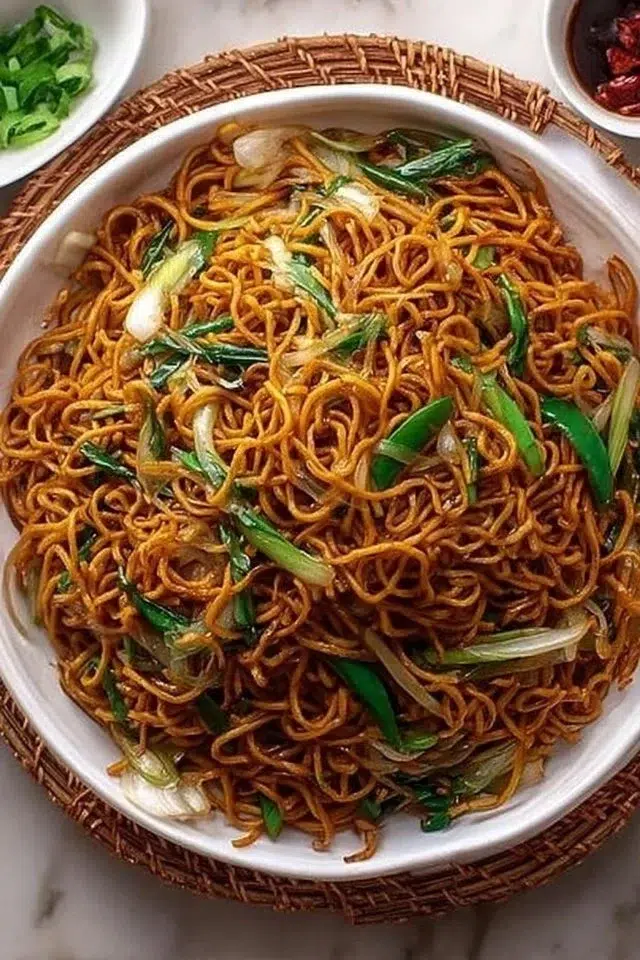
Visual cue: Noodles should look separated and silky, not clumped.
Step 2 – Heat the pan
In a large skillet or wok, heat the 2 tablespoons of vegetable oil over medium-high heat until shimmering but not smoking.
Step 3 – Stir-fry the vegetables
Add the mixed vegetables and stir-fry for 3–4 minutes until tender-crisp. Move them often so they cook evenly and keep a little crunch.
Visual cue: Vegetables should soften slightly and still hold color.
Step 4 – Add garlic and ginger
Add the minced garlic and ginger, cooking for an additional 30 seconds while stirring. Do this quickly so the garlic does not burn.
Step 5 – Combine noodles and sauce
Stir in the cooked noodles and 3 tablespoons soy sauce; toss to combine and let heat through for 1–2 minutes. Make sure the sauce coats the noodles and vegetables evenly.
Pro cue: Use a spatula to lift and toss the noodles so they get hot all the way through and pick up a little sear on the pan.
Step 6 – Season and finish
Season with salt and pepper to taste. If using green onions, add them as a garnish when serving for a fresh finish.
Pro Tips for Success
- Cook noodles al dente: follow package times and stop just before they get soft so they hold up in the stir-fry.
- Dry and toss: after draining, toss noodles with a little oil to keep them from sticking.
- High heat matters: use medium-high heat to get a quick sear without overcooking vegetables.
- Don’t overcrowd the pan: stir-fry in a large pan so the veggies and noodles can move and heat evenly.
- Add sauce at the end: add soy sauce after the main cooking so it coats rather than stews the ingredients.
- Quick garlic and ginger: add them last among aromatics to avoid burning and bitterness.
- Taste as you go: soy sauce has varying salt levels—season lightly and adjust at the end.
Flavor Variations
(All variations are optional and keep the base recipe intact.)
- Simple sesame: add 1 teaspoon toasted sesame oil at the end and sprinkle 1 tablespoon toasted sesame seeds.
- Spicy kick: add 1 teaspoon chili garlic sauce or a pinch of red pepper flakes when you add soy sauce.
- Citrus lift: finish with a squeeze of lime or lemon for brightness.
- Protein boost: add cooked chicken, tofu, shrimp, or thin-sliced beef—cook it first and remove, then return at the end.
- Sweet-salty: mix 1 teaspoon brown sugar with the soy sauce for a touch of sweetness.
- Garlic lovers: stir in an extra clove of garlic or a small spoon of garlic paste for stronger aroma.
Serving Suggestions
- Serve hot as a main dish with a side of steamed greens or a cucumber salad.
- Plate with a simple egg drop or miso soup to make it a fuller meal.
- Pair with pickled vegetables to balance the savory noodles.
- Garnish with chopped green onions and a sprinkle of toasted sesame seeds for color and texture.
- Offer small bowls of soy sauce, chili oil, or hoisin so guests can adjust flavors.
- Serve at a casual gathering—this dish is easy to double for a crowd.
Make-Ahead, Storage & Reheating
- Make-ahead: Cook the noodles and prep the vegetables up to 1 day in advance. Keep them separate in airtight containers.
- Storage: Store leftover fried noodles in an airtight container in the refrigerator for up to 3–4 days.
- Reheating best practice: Reheat in a hot skillet over medium-high heat for 2–3 minutes, adding a splash of water or a teaspoon of oil to loosen the noodles. Microwave reheating works but may soften vegetables more.
- Texture note: Noodles will soften and lose some crispness after refrigeration; quick stir-fry reheating helps restore some texture.
Storage and Freezing Instructions
- Fridge: Keep leftovers in an airtight container for 3–4 days. Reheat in a skillet for best texture.
- Freezing: Freezing the fully cooked dish is not recommended because the vegetables and noodles can become mushy when thawed. If you must freeze, freeze only the cooked noodles (no sauce or vegetables) in a single layer, then use within 1 month. Thaw in the fridge and reheat quickly in a hot pan, adding fresh vegetables if possible.
Nutrition Facts (Per Serving)
Calories | Protein | Carbs | Fat | Fiber | Sodium
—|—:|—:|—:|—:|—:
480 kcal | 12 g | 70 g | 15 g | 5 g | 900 mg
Estimates vary by brands and portions.
FAQ About Classic Chinese Fried Noodles
Q: My noodles are clumped together after cooking. How do I fix that?
A: Rinse briefly under warm water, then toss with 1 teaspoon of oil and gently separate with a fork.Q: The noodles taste dry. What happened?
A: You likely need a bit more sauce or oil. Add a splash of soy sauce or a teaspoon of oil while stirring.Q: Vegetables are too soft after stir-frying. How can I keep them crisp?
A: Cut vegetables thin and cook only 3–4 minutes over high heat. Don’t stir too often, but keep things moving so nothing burns.Q: Can I use different noodles?
A: Yes. Thin egg noodles or lo mein noodles work well. Rice noodles are okay but give a different texture.Q: Can I add meat or tofu?
A: Yes. Cook the protein first, remove it, then add back at the end so it stays tender.Q: How do I reduce the sodium?
A: Use low-sodium soy sauce and taste before adding salt. You can also dilute with a small splash of water and finish with a squeeze of citrus.
Notes
- Use a roomy skillet or wok so ingredients can move freely and cook evenly.
- Slice vegetables uniformly so they cook at the same rate.
- If using frozen vegetables, thaw and drain them to avoid extra water in the pan.
- For a glossy finish, toss hot noodles with a small drizzle of sesame oil right at the end (optional).
- Garnish at the last minute—green onions and sesame seeds add color and texture.
Troubleshooting
- Issue: Bland noodles. Fix: Add a bit more soy sauce, a pinch of salt, or a squeeze of lime. Taste and adjust slowly.
- Issue: Burnt garlic. Fix: Reduce heat and add garlic later in the cooking process, or finely mince so it cooks faster without burning.
- Issue: Watery pan from vegetables. Fix: Cook vegetables first and remove them; raise heat and let the pan dry, then add noodles and vegetables back.
- Issue: Soggy noodles after storage. Fix: Reheat quickly in a hot pan with a small splash of oil to restore texture.
- Issue: Noodles sticking together. Fix: Toss with oil right after draining and separate gently with fork before stir-frying.
Final Thoughts
This classic fried noodle recipe is a simple, reliable dish that brings comforting flavor with minimal effort. It’s flexible, quick, and forgiving—perfect for weeknights or a relaxed weekend meal. Once you learn the basic steps, you can easily change ingredients and flavors to suit your taste.
Conclusion
If you want a crispy take or inspiration to vary your noodle texture, check out the takeout-style approach in this helpful guide to Chinese Crispy Noodles: Takeout-Style.