
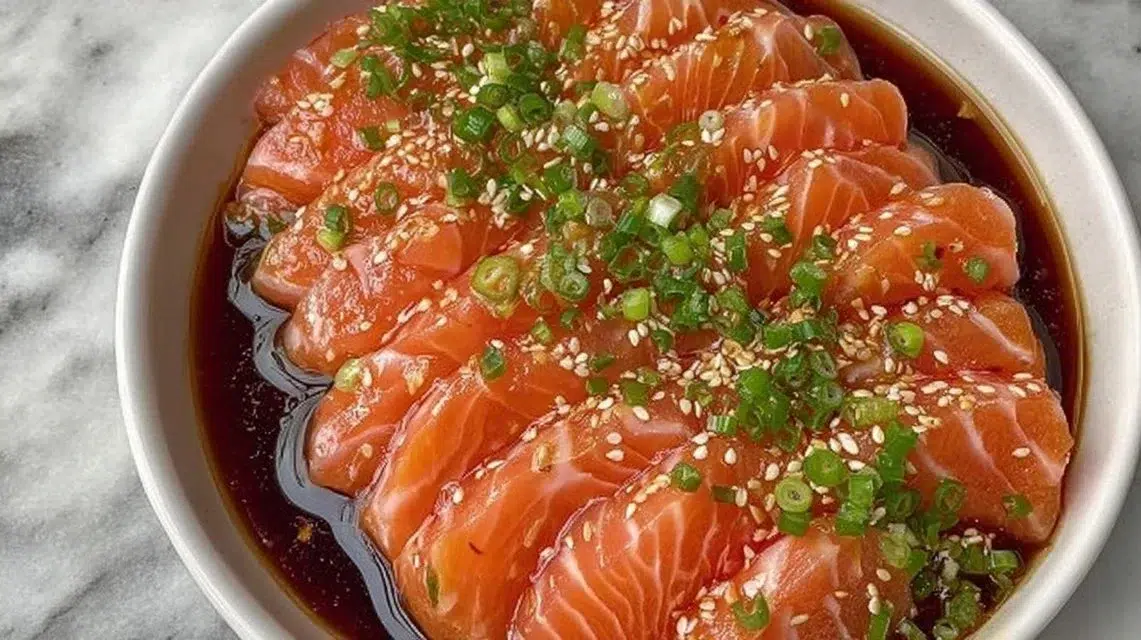
Fresh, silky salmon slices meet a bright soy-citrus splash in this Soy Citrus Salmon Sashimi that feels both light and deeply flavorful. The texture is tender and melt-in-your-mouth, while the soy and lime or orange add salty, tangy lift without overpowering the fish. It’s quick to make and low-effort: thinly slice the salmon, whisk soy and citrus, briefly marinate, and plate with scallions and sesame. This dish is perfect for a simple starter, a light dinner, or a chilled course at a small gathering. For more salmon ideas that pair well with citrus and soy, see this smoked salmon recipes roundup.
Why You’ll Love This Soy Citrus Salmon Sashimi
- Hands-off preparation: no cooking, just clean slicing and a short marinade.
- Bright, balanced flavors: salty soy meets citrus brightness for a fresh finish.
- Smooth, silky texture from fresh salmon with a light citrus lift.
- Fast to plate: ready in about 10–15 minutes from start to finish.
- Minimal ingredients: uses pantry staples and fresh scallions and sesame seeds.
- Flexible for occasions: elegant enough for guests, simple enough for weeknights.
- Easy to scale: make a small appetizer or increase portions for a larger party.
- Low cleanup: one bowl for marinade and a cutting board for the salmon.
What Is Soy Citrus Salmon Sashimi?
Soy Citrus Salmon Sashimi is thinly sliced raw salmon dressed briefly in a soy-and-citrus marinade and served chilled with scallions and sesame seeds. The taste is a clean, savory-sour balance: the soy sauce gives salty umami, while lime or orange juice adds bright acidity and a subtle fruit note. The texture is delicate and silky — each slice should feel soft and almost buttery on the tongue. This is not a cooked dish; it’s a quick raw preparation that leans into freshness and simplicity. The vibe is light and modern: a relaxed starter for dinner, a refreshing course for a warm evening, or a crisp addition to a brunch spread.
Ingredients for Soy Citrus Salmon Sashimi
For the Fish
- Fresh salmon
For the Marinade
- Soy sauce
- Citrus juice (lime or orange)
To Serve
- Scallions (chopped)
- Sesame seeds (toasted or raw)
Ingredient Notes (Substitutions, Healthy Swaps)
- Fresh salmon: Use sashimi-grade salmon whenever possible for raw preparations. If you can’t find sashimi-grade, buy the freshest fillet from a trusted fish counter and ask when it was caught. Freezing at -4°F (-20°C) for seven days can kill parasites if sashimi-grade is unavailable.
- Soy sauce: Regular or low-sodium soy sauce both work. Use low-sodium if you want to control salt; taste the marinade before adding the fish.
- Citrus juice: Lime gives bright, sharp acidity and a classic sashimi vibe; orange adds sweeter, rounder citrus notes. Both are fine — choose by mood.
- Scallions: White and green parts add a mild onion bite and a color pop. Slice thin for a delicate finish.
- Sesame seeds: Toasted sesame seeds add nuttiness and crunch; raw seeds still add visual contrast. Toast briefly in a dry pan for extra aroma.
Optional swaps (keep them optional):
- Replace scallions with thinly sliced chives or microgreens for a different look.
- Use a splash of sesame oil as an OPTIONAL finishing drizzle — small amount only so it does not overpower the soy-citrus balance.
Step-by-Step Instructions
Step 1 – Prepare the Salmon
- Use a very sharp knife and a clean cutting board. Slice the fresh salmon thinly against the grain into uniform pieces for an even texture.
- Visual cue: each slice should be nearly translucent at the edges and about the thickness of a stacked credit card.
Step 2 – Make the Soy-Citrus Marinade
- In a small bowl, mix soy sauce and your chosen citrus juice (lime or orange) until blended. Taste and adjust: more citrus for brightness, more soy for salt.
- Visual cue: the dressing will look thin and glossy.
Step 3 – Briefly Marinate the Salmon
- Place the salmon slices in the bowl or arrange them on a plate and spoon the soy-citrus mixture over them. Let sit for a few minutes, no longer than 5–10 minutes. This allows flavor without "cooking" the fish fully with acid.
- Pro cue: 3–5 minutes is perfect for delicate texture; over-marinating can make the flesh firm and tangy.
Step 4 – Plate and Garnish
- Arrange the marinated salmon on chilled plates. Sprinkle chopped scallions over the top and finish with a light sprinkle of sesame seeds.
Step 5 – Serve Immediately
- Serve right away, preferably chilled. The dish tastes best fresh and cold.
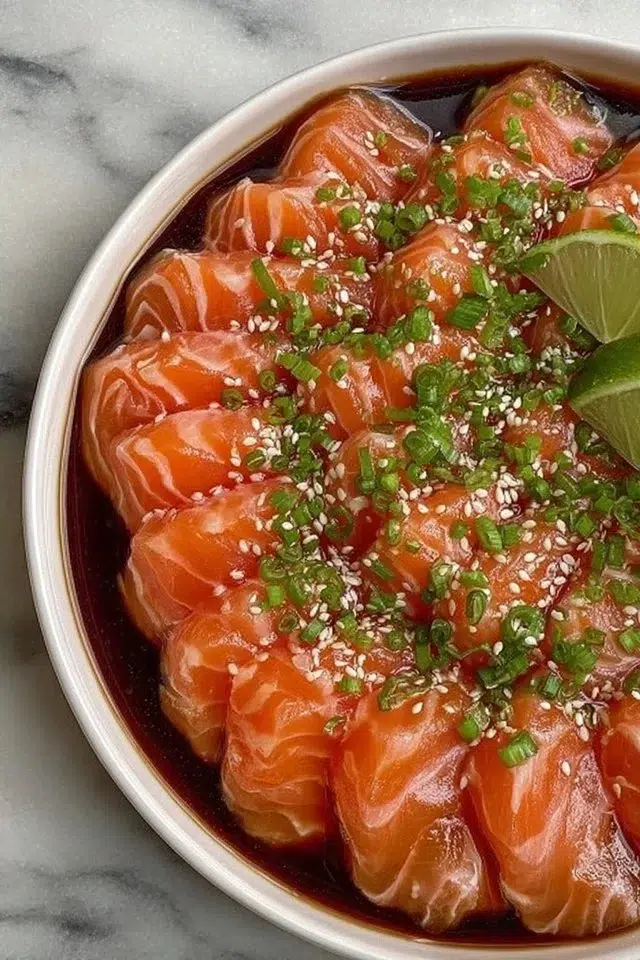
- Visual cue: glossy marinade, bright green scallions, and a light dusting of sesame seeds make an inviting plate.
Pro Tips for Success
- Use a very sharp knife and single, steady strokes to get clean, even slices that feel silky in the mouth.
- Keep fish cold until just before slicing; chilled salmon holds shape and texture better.
- Marinate briefly — too long in citrus can turn flesh rubbery or overly "cured."
- Taste the marinade before adding fish to balance salty and tart. Start with a 1:1 ratio and adjust to preference.
- Dry the salmon lightly with paper towel before slicing if it’s very wet; excess moisture can dilute the marinade.
- Toast sesame seeds in a small pan over medium heat for 1–2 minutes until fragrant for better flavor.
- Plate on chilled dishes to keep the sashimi cold through serving.
Flavor Variations
- Optional: Add a thin slice or two of fresh ginger on top of each piece for warm, spicy notes.
- Optional: Use orange juice instead of lime for a sweeter, fruitier citrus profile.
- Optional: Finish with a light sprinkle of crushed red pepper flakes for gentle heat.
- Optional: Add a tiny drizzle of toasted sesame oil right before serving for a nutty finish (use sparingly).
- Optional: Replace scallions with thinly sliced shallot for a sharper onion flavor.
Serving Suggestions
- Serve as an elegant starter on chilled plates with pickled cucumber slices on the side.
- Add as part of a small Japanese-style tasting menu with miso soup and steamed rice.
- Offer with steamed edamame and a cold noodle salad for a light dinner.
- Plate on a bed of thinly shaved daikon or mixed microgreens for color and mild crunch.
- Pair with a crisp white wine, a cold lager, or a non-alcoholic sparkling citrus beverage.
- Serve as a fresh course during a summer dinner party or as a refined appetizer at holiday meals.
Make-Ahead, Storage & Reheating
- Make-ahead options: Prepare the soy-citrus dressing up to one day ahead and keep chilled. Chop scallions and toast sesame seeds and store separately. Do not slice or marinate the salmon in advance.
- Storage duration: Once assembled, consume within 24 hours if refrigerated; ideally eat immediately.
- Reheating: Do not reheat raw sashimi. If you need a warm salmon option, cook a separate portion and serve warm instead.
- Texture changes: Marinated salmon will change texture the longer it sits. Expect firmer flesh and stronger citrus flavor after 10–15 minutes.
Storage and Freezing Instructions
- Freezing the prepared sashimi is not recommended because freezing and thawing will alter texture and quality. The raw sashimi loses its silky mouthfeel after freezing.
- If you must freeze salmon, do so before slicing and use for cooked dishes later. Wrap tightly and freeze for up to 2 months. Thaw in the refrigerator and cook thoroughly.
- For the ready-to-serve raw sashimi, keep refrigerated and consume the same day for best safety and flavor.
Nutrition Facts (Per Serving)
Calories | Protein | Carbs | Fat | Fiber | Sodium
— | —: | —: | —: | —: | —:
≈250 kcal | 25 g | 2 g | 15 g | 0 g | 600 mg
Estimates vary by brands and portions.
FAQ About Soy Citrus Salmon Sashimi
Q: How thin should I slice the salmon?
A: Thin enough to be tender and almost translucent at the edges — about 1/8 to 1/4 inch thick. Use a sharp knife and one clean slice per piece.Q: Can I use bottled citrus juice?
A: Fresh juice is best for brightness, but bottled will work in a pinch. Adjust amount to taste.Q: How long can the marinated salmon sit?
A: Keep it short — 3–10 minutes. Beyond that, acid changes the texture and the fish firms up.Q: Is it safe to eat raw salmon at home?
A: Use sashimi-grade salmon when possible and buy from a trusted source. If sashimi-grade isn’t available, freezing at -4°F (-20°C) for seven days helps reduce risk.Q: What if the dish tastes too salty?
A: Use low-sodium soy sauce or dilute with a bit more citrus juice. Rinse is not recommended; simply balance with more citrus.Q: Can I substitute other fish?
A: Sashimi-grade tuna or yellowtail can work, but follow the same brief marinating method and safety guidance.
Notes
- Serve on chilled plates to keep the fish cold and fresh longer.
- Use a clean, dedicated cutting board for raw fish to avoid cross-contamination.
- For a refined look, fan the slices slightly or stack them overlapping in a neat row.
- Sprinkle sesame seeds just before serving so they stay crisp.
- If using orange juice, consider a light grate of orange zest as an optional garnish for aroma.
Troubleshooting
Problem: Salmon tastes too bland.
Fix: Brighten with a touch more citrus juice and add a pinch more soy sauce to taste. Add scallions for extra bite.Problem: Salmon becomes overly firm or “cooked” by the citrus.
Fix: Reduce marinating time to 3–5 minutes. Slice thinner if needed.Problem: Marinade is too salty.
Fix: Use low-sodium soy sauce or increase citrus to balance. Do not rinse the fish.Problem: Slices fall apart or are ragged.
Fix: Sharpen your knife and dry the fillet lightly before slicing. Use steady, single strokes.Problem: Sesame seeds taste bitter or burnt.
Fix: Toast seeds only briefly over medium-low heat until they smell nutty; remove at first color change.
Final Thoughts
Soy Citrus Salmon Sashimi is a simple, elegant dish that highlights fresh fish with bright, balanced flavors and a smooth texture. It’s fast to prepare, low on fuss, and ideal for anyone who enjoys clean, fresh seafood dishes. Try small tweaks and keep the fish quality high for the best results.
Conclusion
For another raw salmon idea with citrus and soy flavors, check this take on salmon crudo: Salmon Crudo with Citrus Soy Dressing – Legally Healthy Blonde.