
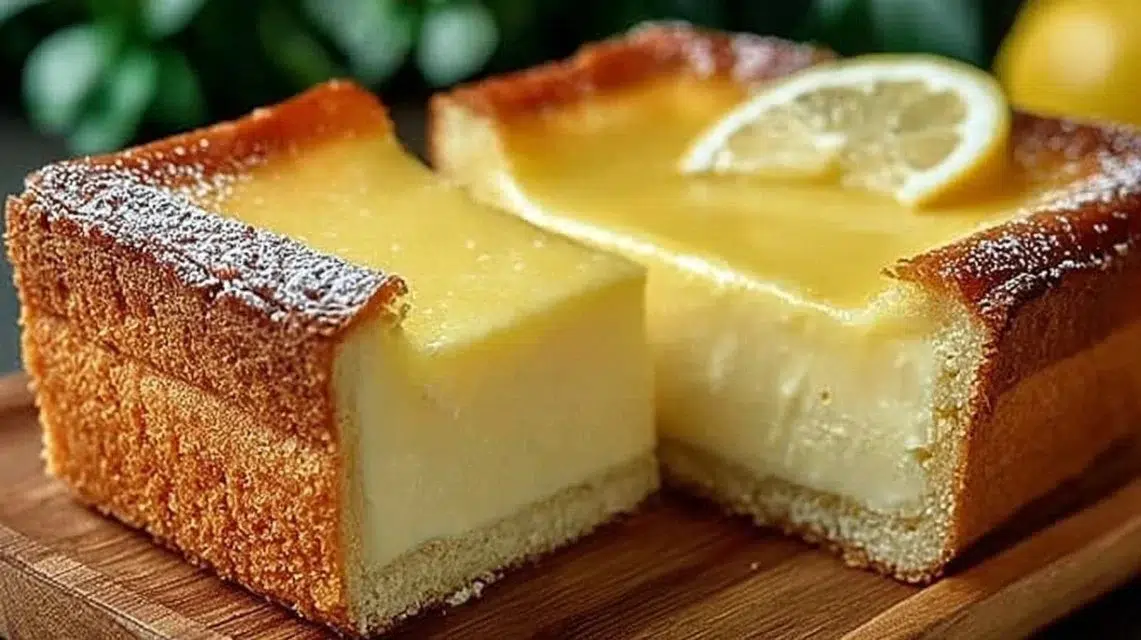
This lemon custard cake is bright, tender, and quietly old-school — a soft cake with a light, lemony custard folded in so it feels moist and a little silky. The crumb is gentle, the lemon zest gives fresh snap, and a dusting of powdered sugar finishes it like a warm memory. It’s simple to make with everyday pantry items and comes together in one pan, so it’s easy enough for a weeknight and special enough for brunch. Serve a thin slice with a cup of coffee or a spoon of plain yogurt for contrast. For another citrus twist, try pairing it with a lemon-blueberry loaf recipe like our best lemon-blueberry cake for a full brunch spread.
Why You’ll Love This Italian Grandma’s Lemon Custard Cake
- Hands-off baking: make the batter quickly and let the oven do the rest.
- Bright lemon flavor from both juice and zest — fresh, not fake.
- Soft, custardy texture that feels both cake-like and slightly creamy.
- Uses simple, pantry-friendly ingredients you likely already have.
- One 9-inch pan, easy to slice and share for family or guests.
- Light powdered sugar finish keeps it elegant without extra fuss.
- Works for brunch, dessert, or an afternoon treat with tea or coffee.
- Flexible to adapt with extra fruit or a simple glaze if desired (optional).
What Is Italian Grandma’s Lemon Custard Cake?
Italian Grandma’s Lemon Custard Cake is a home-style cake with a gentle, custard-like interior and a simple, tender crumb. It tastes of real lemon — a balance of bright acidity from lemon juice and warm citrus notes from fresh zest — and the cake itself stays moist thanks to the milk and eggs. The cooking method is straightforward: mix, alternate flour with milk, add lemon juice, and bake until set. The vibe is classic and comforting — imagine a family kitchen, a warm pan cooling on the counter, and a slice with coffee. It’s not overly sweet and keeps a rustic, honest feel that fits weeknight desserts, brunches, or casual entertaining.
Ingredients for Italian Grandma’s Lemon Custard Cake
For the Cake
- 1 cup unsalted butter, softened
- 1 cup granulated sugar
- 1 cup all-purpose flour
- 4 large eggs
- 1 cup whole milk
- 1/2 cup freshly squeezed lemon juice
- Zest of 2 lemons
- 1 teaspoon vanilla extract
- 1/4 teaspoon salt
To Serve
- Powdered sugar for dusting
Ingredient Notes (Substitutions, Healthy Swaps)
- Butter: you can use salted butter but reduce or skip added salt. Unsalted keeps control over sodium.
- Granulated sugar: to lower sweetness slightly, reduce to 3/4 cup — texture will be similar. For a 1:1 sugar swap, use coconut sugar, though color will be darker.
- All-purpose flour: swap half the flour for whole wheat pastry flour for a nuttier flavor (use by weight if possible). Too much whole wheat will make the cake denser.
- Eggs: large eggs are standard. If using extra-large, beat gently and watch bake time.
- Whole milk: milk can be replaced with 2% in a pinch; texture will be only slightly less rich. For dairy-free, use full-fat canned coconut milk (not watery), but this changes flavor.
- Lemon juice & zest: fresh lemon juice is key for real flavor. Bottled juice will work but tastes flatter. Increase zest for more aroma.
- Vanilla: pure vanilla extract adds depth; imitation will still work but may lack complexity.
- Salt: do not omit entirely — it brightens the flavors.
Step-by-Step Instructions
Step 1 – Prep the oven and pan
Preheat your oven to 350°F (175°C). Grease and flour a 9-inch round cake pan, tapping out excess flour so the cake releases cleanly.
Step 2 – Cream butter and sugar
In a large bowl, cream together the softened butter and granulated sugar until light and fluffy. Use a hand mixer or stand mixer for about 2–3 minutes on medium speed.
Visual cue: mixture should look lighter in color and slightly airy.
Step 3 – Add eggs and flavor
Add the eggs one at a time, mixing well after each addition so the batter stays smooth. Stir in the lemon zest and vanilla extract until evenly mixed.
Step 4 – Alternate flour and milk
Gradually add the flour and salt, alternating with the milk. Start and end with the flour. Mix just until smooth; do not overmix.
Pro cue: stop mixing when no streaks of flour remain — overworking the batter can make the cake tough.
Step 5 – Add lemon juice and bake
Stir in the lemon juice until combined. Pour the batter into the prepared pan and smooth the top. Bake for 40–45 minutes, or until a toothpick inserted in the center comes out clean or with a few moist crumbs.
Pro cue: the cake should spring back lightly when touched. A jiggle in the middle is okay if it’s very slight; a wet batter means more time is needed.
Step 6 – Cool and finish
Let the cake cool in the pan for about 10 minutes before transferring to a wire rack to cool completely. Dust with powdered sugar before serving.
Pro Tips for Success
- Use room-temperature butter, eggs, and milk for even mixing and better rise.
- Zest lemons before juicing to avoid losing zest into the juice; zest adds aroma.
- Measure flour correctly: spoon into the cup and level off, or better yet, weigh it. Too much flour dries the cake.
- Don’t overmix after adding flour — fold gently when possible.
- Check doneness at 40 minutes; ovens vary. If the top browns too fast, tent with foil.
- Cool in pan for 10 minutes to help the cake set and then remove to avoid soggy bottom.
- For sharper lemon flavor, add an extra half-teaspoon of zest (optional).
Flavor Variations
- Optional: Lemon Glaze — whisk 1 cup powdered sugar with 1–2 tablespoons lemon juice and drizzle over the cooled cake.
- Optional: Blueberry fold-in — fold 1 cup fresh or frozen blueberries into the batter gently before pouring (may increase bake time by 5–10 minutes).
- Optional: Almond twist — add 1/2 teaspoon almond extract and sprinkle sliced almonds on top before baking.
- Optional: Lighter citrus — use half lemon and half orange juice for a softer, rounder citrus flavor.
- Optional: Vanilla custard swirl — reserve 1/4 cup batter, mix with 1 egg yolk and 1 tablespoon extra milk, swirl on top before baking for a decorative look.
Serving Suggestions
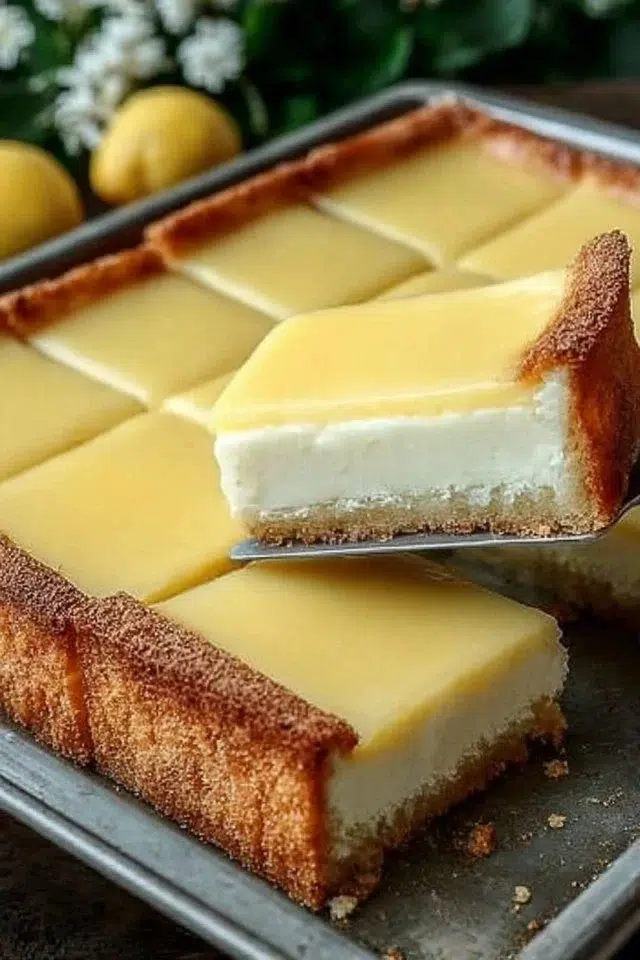
- Serve slices dusted with powdered sugar and a thin lemon slice for garnish.
- Pair with plain Greek yogurt or a small scoop of vanilla gelato for contrast.
- Offer fresh berries or a bowl of mixed fruit on the side for a brunch spread.
- Plate with strong coffee or an herbal tea like chamomile; the citrus wakes up rich drinks.
- Bring to potlucks — cut into squares and place on a platter for easy sharing.
- For dessert, serve warm with a spoon of whipped cream and a small mint leaf.
Make-Ahead, Storage & Reheating
- Make-ahead: Bake the cake a day ahead and store at room temperature well wrapped or in an airtight container. The flavor develops overnight.
- Refrigeration: Store in the fridge up to 4 days in an airtight container. Wrap tightly to prevent drying.
- Reheating: Warm single slices in a microwave for 8–12 seconds or in a 300°F oven for 5–8 minutes until just warm. Avoid overheating to keep the custardy texture.
- Note on texture: the cake is best within the first 48 hours for tender crumb and fresh lemon brightness; it will firm slightly over time.
Storage and Freezing Instructions
- To freeze: cool the cake completely, then wrap whole cake or individual slices tightly in plastic wrap and foil. Freeze up to 2 months.
- Thawing: thaw in the refrigerator overnight, then bring to room temperature before serving. For a warm slice, reheat gently in a low oven.
- If you plan to freeze, avoid dusting with powdered sugar until after thawing to prevent clumping.
- Freezing is recommended over long refrigeration to preserve moisture and lemon flavor.
Nutrition Facts (Per Serving)
Calories | Protein | Carbs | Fat | Fiber | Sodium
—|—:|—:|—:|—:|—:
320 | 5 g | 36 g | 18 g | 1 g | 150 mg
Estimates vary by brands and portions.
FAQ About Italian Grandma’s Lemon Custard Cake
Q: Why is my cake too dense?
A: Likely overmixing or too much flour. Measure flour correctly and mix just until combined.
Q: Why did my cake come out wet in the center?
A: It may need more bake time. Test with a toothpick; if it comes out wet, bake 5–10 minutes more and tent with foil if the top browns too fast.
Q: Can I use bottled lemon juice?
A: Yes, but fresh lemon juice gives brighter, fresher flavor. Bottled works if fresh isn’t available.
Q: How do I keep the cake from sticking to the pan?
A: Grease and flour the pan well, or use parchment paper under the bottom. Let cool 10 minutes before removing.
Q: Can I halve the recipe for a smaller cake?
A: Yes, scale ingredients proportionally and use a smaller pan. Check baking time — it may be shorter.
Q: What if the top browns before it’s done?
A: Tent loosely with aluminum foil and continue baking until set.
Notes
- Zesting tip: use a microplane for fine zest that blends into the batter.
- Presentation: dust with powdered sugar just before serving for a fresh look.
- Slice cleanly: use a sharp knife warmed under hot water and wiped dry between cuts.
- Room temp eggs: place eggs in warm (not hot) water for 5–10 minutes if you forget to bring them to room temp.
- Adjust sweetness: powdered sugar dusting allows you to keep the cake less sweet if desired.
Troubleshooting
- Bland flavor: add more lemon zest or a touch more vanilla to lift flavors.
- Overcooked and dry: next time reduce oven time slightly and test earlier; check oven accuracy with a thermometer.
- Cake sinks in the middle: underbaked center or opening the oven early can cause sinking. Avoid opening oven door until at least 30 minutes in.
- Too wet or gummy inside: underbaked or too much liquid — check measurements and bake until a toothpick has only moist crumbs.
- Edges too brown: oven too hot or pan placed too close to heating element; move rack to middle and reduce heat by 10–15°F if needed.
- Sticky top after dusting: store uncovered until sugar sets, or dust right before serving.
Final Thoughts
This Italian Grandma’s Lemon Custard Cake is an easy, comforting dessert that highlights fresh lemon and a soft, slightly custardy crumb. It’s forgiving in the kitchen and rewarding on the table, perfect for simple family meals or small gatherings.
Conclusion
For a classic take and extra background on the Italian tradition behind this style of lemon custard cake, see the Torta della Nonna recipe.
Italian Grandma’s Lemon Custard Cake
Ingredients
For the Cake
- 1 cup unsalted butter, softened Can use salted butter but reduce or skip added salt.
- 1 cup granulated sugar Can reduce to 3/4 cup for less sweetness.
- 1 cup all-purpose flour Can swap half for whole wheat pastry flour for a nuttier flavor.
- 4 large eggs If using extra-large, watch bake time.
- 1 cup whole milk Can be replaced with 2% or full-fat canned coconut milk for dairy-free option.
- 1/2 cup freshly squeezed lemon juice Fresh lemon juice is key for real flavor.
- 1 teaspoon vanilla extract Pure vanilla adds depth.
- 1/4 teaspoon salt Brightens flavors, do not omit.
To Serve
- Powdered sugar for dusting
Instructions
Preparation
- Preheat your oven to 350°F (175°C). Grease and flour a 9-inch round cake pan, tapping out excess flour.
- In a large bowl, cream together the softened butter and granulated sugar until light and fluffy. Use a mixer for about 2–3 minutes on medium speed.
- Add eggs one at a time, mixing well after each addition. Stir in lemon zest and vanilla extract until evenly mixed.
- Gradually add flour and salt, alternating with milk, starting and ending with flour. Mix just until smooth.
- Stir in the lemon juice until combined. Pour batter into the prepared pan and smooth the top.
Baking
- Bake for 40–45 minutes, or until a toothpick inserted comes out clean or with a few moist crumbs.
- Let the cake cool in the pan for about 10 minutes before transferring to a wire rack to cool completely.
- Dust with powdered sugar before serving.