
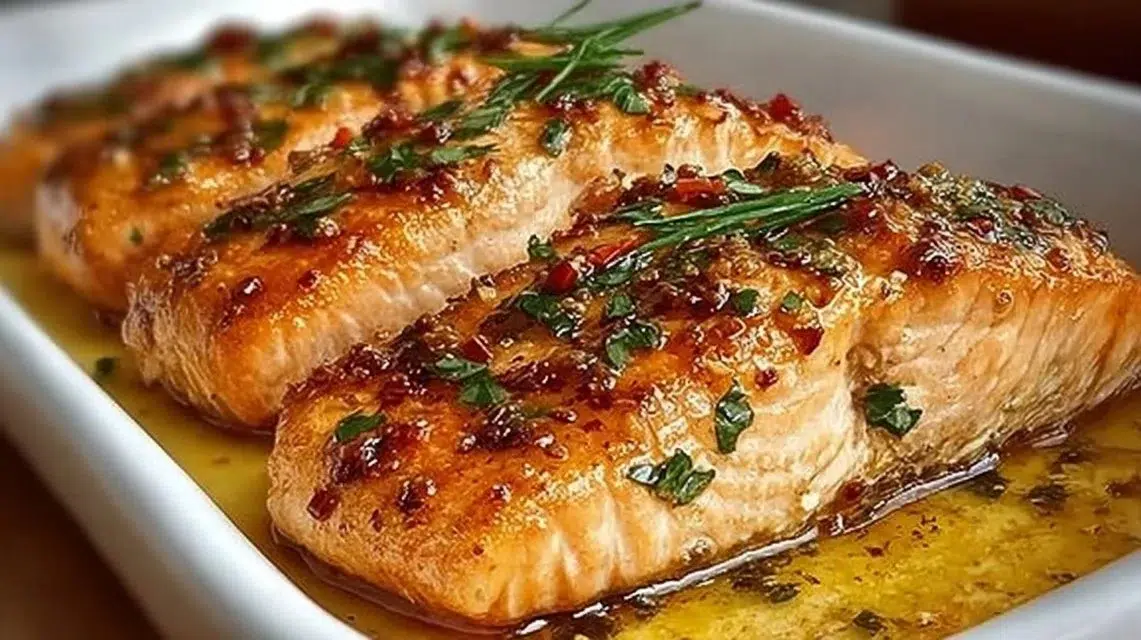
This Texas Roadhouse-Inspired Baked Salmon has a bold, savory crust with bright lemon and garlic notes and a tender, flaky interior. The olive oil and paprika give the outside a warm color and slight smokiness while the lemon juice keeps the fish bright and fresh. It cooks fast and clean on a parchment-lined sheet so you get a restaurant-style finish with very little fuss. This recipe is easy enough for a weeknight but polished enough for guests — serve with simple roasted potatoes or a crisp green salad for a full meal. For a quicker spin, try the quick 30-minute version that keeps the same flavors and cuts hands-on time.
Why You’ll Love This Texas Roadhouse-Inspired Baked Salmon
- Hands-off cooking: pop it in the oven and let it bake while you prepare sides.
- Bold but simple flavor: garlic, lemon, and paprika balance each other without many ingredients.
- Fast: 12–15 minutes baking time for reliably tender fish.
- Low cleanup: parchment-lined sheet keeps the pan clean.
- Flexible: works with different salmon cuts and side dishes.
- Kid-friendly: mild, flaky salmon is broadly appealing.
- Fresh finish: parsley and lemon wedges add a bright, fresh touch optional at the end.
What Is Texas Roadhouse-Inspired Baked Salmon?
Texas Roadhouse-Inspired Baked Salmon is a simple, oven-baked salmon fillet dressed with an easy lemon-garlic-olive oil mix and a touch of paprika. The result is a flaky, moist center with a lightly seasoned exterior that looks and tastes homey and comforting. It mirrors the bold, straightforward flavors often associated with Texas Roadhouse-style dishes—warm paprika, garlic, and bright lemon—without complicated steps. The cooking method is quick baking at 400°F (200°C), which seals in juices and keeps the texture tender. This dish fits weeknight dinners, casual weekend meals, and simple entertaining where you want reliable, crowd-pleasing results.
Ingredients for Texas Roadhouse-Inspired Baked Salmon
For the Salmon
- 4 salmon fillets
- Salt and pepper to taste
For the Olive Oil Mixture
- 2 tablespoons olive oil
- 2 tablespoons lemon juice
- 2 cloves garlic, minced
- 1 teaspoon paprika
To Serve (optional)
- Fresh parsley for garnish
- Lemon wedges for serving
Ingredient Notes (Substitutions, Healthy Swaps)
- Salmon fillets: Use center-cut fillets about 5–6 oz each for even cooking. Skin-on or skinless both work; leave skin on for easier handling and crisping, then serve skin-side down.
- Olive oil: Swap for avocado oil if you prefer a neutral oil with a high smoke point. For lower fat, use 1 tablespoon and add a splash of low-sodium chicken or vegetable broth.
- Lemon juice: Bottled lemon juice works in a pinch, but fresh lemon gives a brighter flavor. You can use lime for a slightly different citrus note.
- Garlic: Use 1/2 teaspoon garlic powder if you don’t have fresh garlic; add it directly to the oil mix.
- Paprika: Use smoked paprika for a deeper smoky flavor (optional). If you don’t have paprika, a pinch of chili powder or cayenne will add heat—use sparingly.
- Salt: If watching sodium, reduce the added salt and rely on lemon and paprika for flavor. Serve with lemon wedges so diners can add salt at the table.
Step-by-Step Instructions
Step 1 – Prep the oven and salmon
Preheat your oven to 400°F (200°C). Line a baking sheet with parchment paper. Pat salmon fillets dry with paper towels and place them skin-side down if skin is on.
Visual cue: The fillets should look dry on the surface before you brush them so the oil mix adheres.
Step 2 – Make the olive oil mixture
In a small bowl, whisk together 2 tablespoons olive oil, 2 tablespoons lemon juice, minced garlic, 1 teaspoon paprika, salt, and pepper until blended.
Visual cue: The mixture should be smooth and slightly runny so it spreads easily.
Step 3 – Brush the salmon
Place the salmon fillets on the prepared baking sheet. Brush the olive oil mixture over the top and sides of each fillet. If the fillets are thick, brush the underside briefly as well.
Pro cue: Don’t skimp—coating both sides helps the seasoning penetrate and gives even color.
Step 4 – Bake
Bake the salmon for 12–15 minutes, depending on thickness, until the fish flakes easily with a fork and the interior is opaque. Start checking at 12 minutes for thinner fillets.
Pro cue: Salmon is done when it reaches an internal temperature of 125–130°F (52–55°C) for medium-rare or 140°F (60°C) for well done.
Step 5 – Garnish and serve
Garnish with fresh parsley if using and serve with lemon wedges on the side for squeezing.
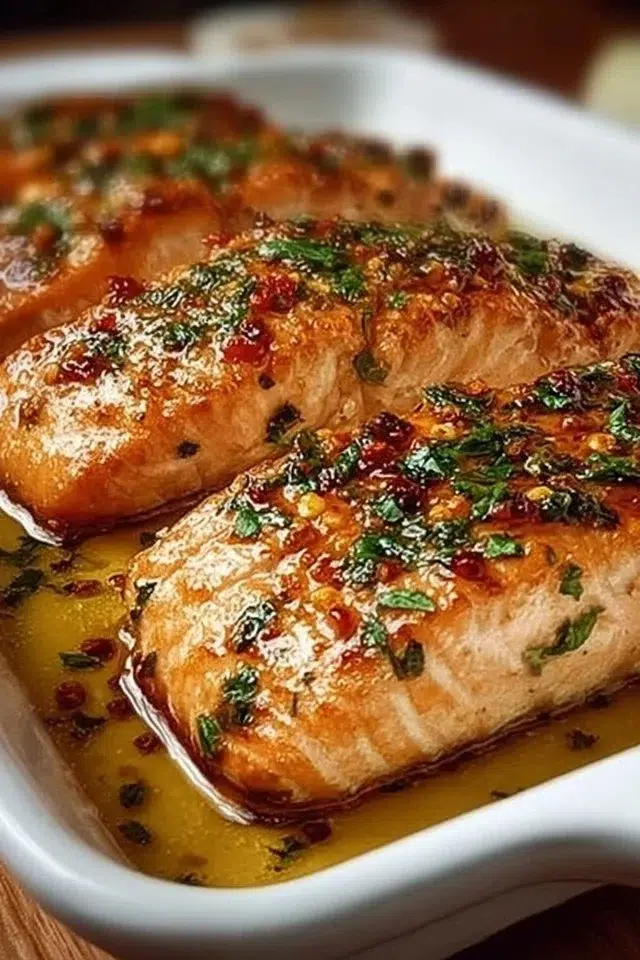
Visual cue: The surface should have a warm golden tint from the paprika and a moist, flaky texture inside.
Pro Tips for Success
- Use room-temperature salmon: Take fillets out 15–20 minutes before baking to promote even cooking.
- Dry before seasoning: Pat dry to help the oil mixture stick and create a better exterior.
- Even-size fillets: Try to use similar-sized fillets so they finish at the same time.
- Check early: Start checking doneness at 12 minutes to avoid overcooking.
- Let it rest: Allow cooked salmon to rest 2–3 minutes to redistribute juices.
- Use a thermometer: For precise doneness, use an instant-read thermometer.
- Skip overcrowding: Give fillets space on the sheet so heat circulates and they cook evenly.
Flavor Variations
- Optional: Smoky Paprika Twist — swap regular paprika for smoked paprika for a richer, smoky note.
- Optional: Herb Butter Finish — top warm fillets with a small slice of herb butter (butter mixed with parsley and lemon zest) for a silky finish.
- Optional: Spicy Kick — add 1/4 teaspoon cayenne to the oil mixture for heat.
- Optional: Honey Lemon Glaze — stir 1 teaspoon honey into the olive oil mix for a sweet-tangy glaze (adds a caramel note when baked).
- Optional: Garlic-Butter Swap — replace half the olive oil with melted butter for a richer flavor.
- Optional: Citrus Mix — add a teaspoon of orange juice to the lemon juice for a brighter, fruitier edge.
Serving Suggestions
- Serve over steamed rice or a simple pilaf for a complete plate.
- Pair with roasted or mashed potatoes and steamed green beans for a classic combo.
- Place on a bed of mixed greens, cucumbers, and cherry tomatoes for a light salad.
- Add a side of garlic butter asparagus or sautéed spinach for a green vegetable.
- Serve with warm crusty bread to mop up any juices and olive oil.
- For a special meal, serve with a lemon-herb quinoa and a sprinkle of toasted almonds.
Make-Ahead, Storage & Reheating
- Make-ahead: Mix the olive oil, lemon, garlic, paprika, salt, and pepper up to 24 hours in advance and store in the fridge. Pat fillets dry and store separately; brush and bake when ready.
- Fridge storage: Cooked salmon keeps well in an airtight container for up to 3 days. Raw, seasoned fillets should be cooked within 24 hours.
- Reheating: Reheat gently in a 275–300°F oven for 8–12 minutes, covered loosely with foil to prevent drying. You can also reheat briefly in a skillet over low heat with a splash of broth.
- Texture: Reheated salmon will be firmer and slightly drier than freshly baked. Add a squeeze of lemon or a small pat of butter to restore moisture.
Storage and Freezing Instructions
- Freezing raw salmon fillets: If you need to freeze raw salmon, wrap each fillet tightly in plastic wrap and place in a freezer bag for up to 3 months. Thaw overnight in the fridge before seasoning and baking.
- Freezing cooked salmon: You can freeze cooked salmon wrapped tightly for up to 2 months, but expect some texture loss on thawing. Thaw in the fridge and reheat gently.
- Recommendation: For best texture, freeze raw portions and cook from thawed instead of freezing after cooking. If you prefer not to freeze, keep raw fillets in the coldest part of the fridge and use within 24–48 hours.
Nutrition Facts (Per Serving)
Calories | Protein | Carbs | Fat | Fiber | Sodium
—|—:|—:|—:|—:|—:
Approx. 350 kcal | 34 g | 1 g | 22 g | 0 g | 220 mg
Estimates vary by brands and portions.
FAQ About Texas Roadhouse-Inspired Baked Salmon
Q: My fillets are very thick. How long should I bake them?
A: Thicker fillets (1–1.5 inches) may need 15–18 minutes. Check for a flaky interior or use an instant-read thermometer.
Q: The top looks pale. Should it be browned?
A: A light golden tint from paprika is expected. If you want more color, broil for 30–60 seconds at the end—watch closely to avoid burning.
Q: Can I use frozen salmon?
A: Thaw fully in the fridge before following the recipe. Pat dry to remove excess water so the oil mixture sticks.
Q: My salmon is watery after baking. Why?
A: Excess moisture often comes from thawing or not patting dry. Dry fillets before seasoning and avoid stacking them on the sheet.
Q: Can I skip the lemon juice?
A: You can, but lemon brightens the dish. If you skip it, add a tiny splash of vinegar or serve lemon wedges on the side.
Q: How can I tell when salmon is done without a thermometer?
A: Check for opaque flesh that flakes easily with a fork and separates into layers. If it still looks glossy or translucent, it needs more time.
Notes
- Use a light hand with salt; you can always add more at the table.
- For a neat presentation, bake skin-side down and serve with the skin intact; diners can remove it easily.
- If serving for guests, warm plates slightly so the salmon stays hot longer.
- Add lemon zest to the olive oil mixture for a more intense citrus aroma.
- If you like fresh herbs, sprinkle chopped dill or chives instead of parsley for a different flavor profile.
Troubleshooting
- Bland flavor: Increase the lemon juice and garlic slightly, or add a pinch more paprika and salt.
- Overcooked, dry salmon: Reduce oven time and check at 12 minutes; rest salmon briefly after baking.
- Uneven cooking: Use fillets of similar thickness and place them evenly spaced on the sheet.
- Sauce slides off: Ensure the salmon surface is dry before brushing the oil mixture so it adheres.
- Burnt garlic flavor: Mince garlic finely and mix with the oil; avoid broiling too long which can scorch garlic.
- Fish sticks to parchment: Use a small brush of oil on the parchment or leave the skin on to prevent sticking.
Final Thoughts
This Texas Roadhouse-Inspired Baked Salmon gives you big, familiar flavors with very little effort. It’s fast, forgiving, and easy to adapt to what you have in the kitchen. Follow a few pro tips and you’ll have a moist, flavorful salmon that works for weeknights or a simple dinner with friends.
Conclusion
If you want more background on the classic Texas Roadhouse-style salmon that inspired this version, check this detailed write-up for additional ideas and tweaks: Texas Roadhouse Salmon – The Food Hussy.
Baked Salmon
Ingredients
For the Salmon
- 4 fillets salmon fillets Use center-cut fillets about 5–6 oz each for even cooking.
- to taste N/A Salt and pepper Use to taste.
For the Olive Oil Mixture
- 2 tablespoons olive oil Can swap for avocado oil.
- 2 tablespoons lemon juice Fresh lemon gives a brighter flavor. Bottled works in a pinch.
- 2 cloves garlic, minced Or use 1/2 teaspoon garlic powder.
- 1 teaspoon paprika Can use smoked paprika for a deeper flavor.
To Serve (optional)
- to taste N/A Fresh parsley For garnish.
- to taste N/A Lemon wedges For serving.
Instructions
Preparation
- Preheat your oven to 400°F (200°C). Line a baking sheet with parchment paper. Pat salmon fillets dry with paper towels and place them skin-side down if skin is on.
- In a small bowl, whisk together olive oil, lemon juice, minced garlic, paprika, salt, and pepper until blended.
Baking
- Place the salmon fillets on the prepared baking sheet. Brush the olive oil mixture over the top and sides of each fillet.
- Bake the salmon for 12–15 minutes, depending on thickness, until the fish flakes easily with a fork and the interior is opaque.
- Garnish with fresh parsley if using and serve with lemon wedges on the side.