
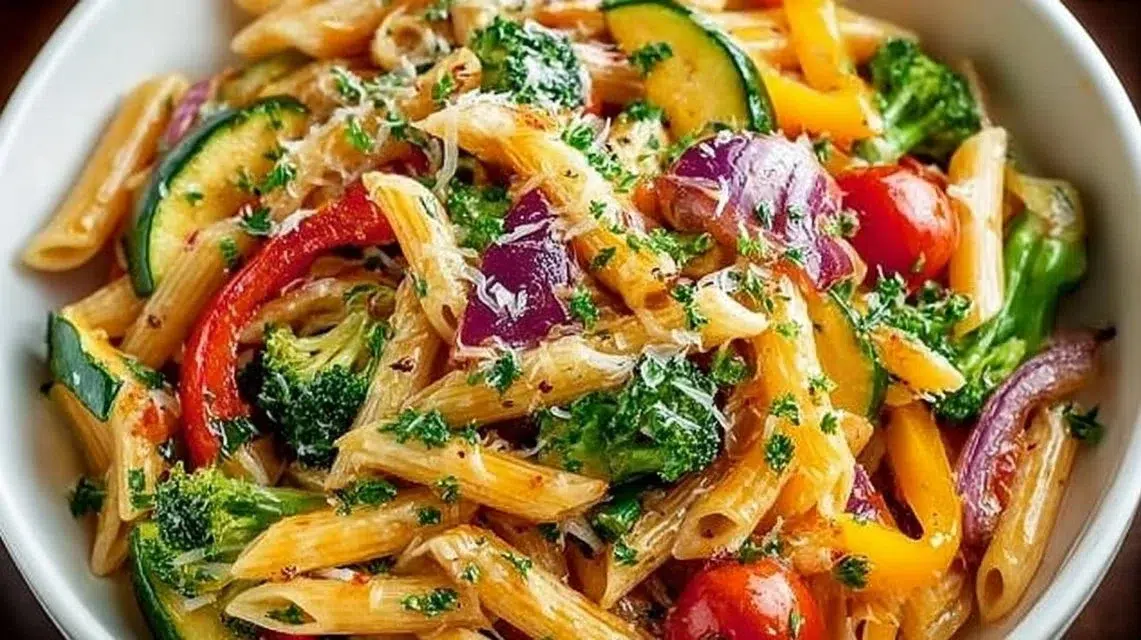
Vegetarian Pasta Primavera is a bright, fresh pasta dish that mixes tender pasta with crisp-tender vegetables and a touch of garlic and olive oil. The taste is light and fresh with sweet tomatoes, crunchy bell pepper and carrot, and mild zucchini all balanced by salty Parmesan if you choose to add it. Texture plays nicely here: al dente pasta, wilted spinach, and slightly crisp sautéed veggies make every bite interesting. It’s easy because it uses simple pantry staples and one skillet after the pasta cooks. Serve it warm with a sprinkle of cheese or a lemon wedge for extra brightness, and check out more quick ideas for veggie pastas in this helpful guide: quick vegetarian pasta recipes.
Why You’ll Love This Vegetarian Pasta Primavera
- Fast to make: pasta cooks while you chop, so dinner is ready in about 20–30 minutes.
- Fresh flavor: cherry tomatoes and spinach add brightness and a juicy finish.
- Balanced texture: al dente pasta with crisp sautéed vegetables and wilted greens.
- Simple ingredients: pantry staples plus common vegetables you likely have on hand.
- Flexible: swap vegetables or type of pasta without changing the main method.
- Light but satisfying: olive oil and veggies keep it lighter than cream-based sauces.
- Kid-friendly: mild flavors and familiar pasta shapes make it easy for picky eaters.
- Easy to scale: double the ingredients for a crowd without changing the technique.
What Is Vegetarian Pasta Primavera?
Vegetarian Pasta Primavera is a simple pasta dish that highlights fresh vegetables tossed with cooked pasta. It’s not heavy like cream sauces; instead, it uses olive oil, garlic, and the natural juices from tomatoes and spinach for flavor. The dish is bright and slightly sweet from cherry tomatoes, with a savory lift from garlic and optional Parmesan. Cooking is mostly sautéing vegetables and tossing them with pasta, so it fits well into weeknight dinners, light weekend lunches, or easy brunches. The vibe is relaxed, fresh, and homey — comfort food that feels healthy.
Ingredients for Vegetarian Pasta Primavera
For the Base
- 8 oz pasta (e.g., penne or fettuccine)
- Salt (for the boiling water)
For the Vegetables
- 2 tablespoons olive oil
- 1 bell pepper, sliced
- 1 zucchini, sliced
- 1 carrot, julienned
- 1 cup cherry tomatoes, halved
- 2 cups spinach
- 2 cloves garlic, minced
To Serve
- Salt and pepper to taste
- Grated Parmesan cheese (optional)
Ingredient Notes (Substitutions, Healthy Swaps)
- Pasta: Use whole wheat or legume-based pasta to add fiber and protein. Cooking time may vary slightly.
- Olive oil: Use avocado oil as a neutral substitute if you prefer a milder oil.
- Bell pepper: Any color works. Red or yellow peppers are sweeter; green is more bitter.
- Zucchini: Yellow squash is a direct swap and cooks the same way.
- Carrot: If you don’t have a julienne peeler, thin slices or matchsticks work fine.
- Cherry tomatoes: Grape tomatoes or diced Roma tomatoes work. If tomatoes are not in season, use sun-dried tomatoes (optional) but reduce added salt.
- Spinach: Baby kale or arugula can replace spinach. If using kale, remove stems and sauté a bit longer.
- Garlic: Garlic powder may be used in a pinch (about 1/4 tsp), but fresh garlic gives the best flavor.
- Parmesan: For a vegan option, skip the cheese or use a plant-based grated cheese.
Step-by-Step Instructions
Step 1 – Cook the pasta
- Bring a large pot of salted water to a boil. Add the pasta and cook according to package instructions until al dente.
- Drain and set aside.
Visual cue: The pasta should be tender but still slightly firm in the center when you bite it.
Step 2 – Heat the pan
- In a large skillet, heat 2 tablespoons olive oil over medium heat until shimmering.
- Tilt the pan; the oil should move freely and look glossy.
Step 3 – Sauté the firmer vegetables
- Add the sliced bell pepper, zucchini, and julienned carrot to the skillet.
- Sauté for about 5–7 minutes, stirring occasionally, until tender but still firm.
Step 4 – Add garlic and tomatoes
- Stir in the minced garlic and halved cherry tomatoes.
- Cook for another 2–3 minutes until fragrant and the tomatoes soften.
Pro cue: Watch the garlic closely; it browns fast. Lower the heat if it starts to brown too quickly.
Step 5 – Add greens and pasta
- Add the spinach and cooked pasta to the skillet.
- Toss until the spinach wilts and everything is heated through.
Step 6 – Finish and serve
- Season with salt and pepper to taste.
- Serve hot, topping with grated Parmesan if desired.
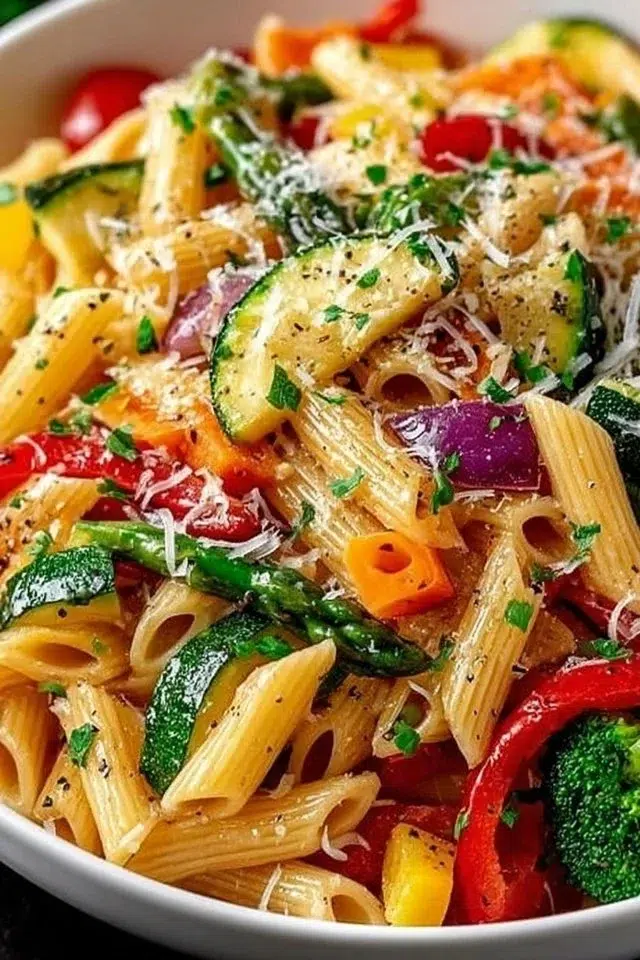
Visual cue: The spinach should be fully wilted and glossy, and the pasta should be evenly coated with the vegetable juices and oil.
Pro Tips for Success
- Salt the pasta water generously — it’s your main chance to season the pasta itself.
- Don’t overcook the vegetables; keep them tender-crisp for the best texture contrast.
- Use a large skillet so you can toss pasta and vegetables without crowding.
- Reserve a small cup of pasta water before draining; a splash can help bind the sauce if the dish seems dry.
- Add Parmesan after you remove the pan from heat to keep the cheese from clumping.
- If garlic smells strong or bitter, lower heat and add a bit of the reserved pasta water to cool the pan slightly.
- Taste and adjust salt at the end; tomatoes and cheese can change how much seasoning you need.
- For even cooking, try to slice vegetables to similar thickness so they cook at the same rate.
Flavor Variations
- OPTIONAL: Lemon and herbs — add 1–2 teaspoons of fresh lemon juice and 1 tablespoon chopped basil or parsley at the end for bright herb flavor.
- OPTIONAL: Red pepper flakes — add 1/4 to 1/2 teaspoon while sautéing for a mild kick.
- OPTIONAL: Creamy twist — stir in 2–3 tablespoons of cream cheese or a splash of heavy cream off heat for a richer sauce.
- OPTIONAL: Pesto boost — toss 1–2 tablespoons of pesto with the pasta and vegetables for a basil-parmesan lift.
- OPTIONAL: Nut crunch — sprinkle toasted pine nuts or chopped walnuts on top for texture.
- OPTIONAL: Swap protein — add cooked chickpeas or white beans for extra protein without changing the core recipe.
Serving Suggestions
- Serve with a simple green salad and lemon vinaigrette for a complete meal.
- Pair with crusty bread or garlic bread to soak up the juices.
- Add a light soup like tomato basil as a starter for a cozy dinner.
- Plate it in a wide shallow bowl and finish with extra grated Parmesan.
- Offer lemon wedges on the side for guests who like extra brightness.
- Serve warm for dinner or at room temperature for a picnic or potluck.
Make-Ahead, Storage & Reheating
- Make-ahead: Cook the pasta and sauté the vegetables separately. Store them in separate airtight containers. Combine and warm just before serving.
- Storage: Keep leftovers in the fridge for up to 3–4 days in an airtight container.
- Reheating: Reheat gently in a skillet over medium-low heat with a splash of water or reserved pasta water to loosen the sauce. Stir often until heated through.
- Texture changes: Spinach will become softer after storage, and pasta can absorb more liquid. Toss with a bit of olive oil or reserved pasta water when reheating to restore a fresh texture.
Storage and Freezing Instructions
- Freezing is not recommended for best texture. The vegetables, especially the tomatoes and spinach, can become watery and lose their fresh texture after thawing.
- If you must freeze: combine pasta and vegetables in a freezer-safe container, cool quickly, and freeze for up to 1 month. Thaw overnight in the fridge and reheat gently with a splash of water; expect some texture loss.
- Best practice: Refrigerate for short-term storage and plan to eat within 3–4 days for the best taste and texture.
Nutrition Facts (Per Serving)
Calories | Protein | Carbs | Fat | Fiber | Sodium
— | —: | —: | —: | —: | —:
Approximately 420 kcal | 12 g | 58 g | 14 g | 6 g | 350 mg
Estimates vary by brands and portions.
FAQ About Vegetarian Pasta Primavera
- Q: My pasta is dry after tossing with vegetables. What can I do?
A: Add a few tablespoons of reserved pasta water or a drizzle of olive oil to loosen and coat the pasta. - Q: How do I keep vegetables from getting soggy?
A: Sauté over medium heat and stop cooking as soon as they are tender but still firm. Cook in batches if the pan is crowded. - Q: Can I use frozen vegetables?
A: Yes, but thaw and drain excess water first. Frozen veggies may release more water, so cook a bit longer to evaporate it. - Q: What if my garlic burns?
A: Remove the pan from heat, let it cool for a moment, and continue on lower heat. Burnt garlic tastes bitter; you may need to discard and start with fresh garlic if too dark. - Q: Can I make this vegan?
A: Yes — skip the grated Parmesan or use a plant-based alternative. - Q: How do I get more flavor without cheese?
A: Finish with lemon juice, fresh herbs, toasted nuts, or a spoonful of pesto to add depth.
Notes
- Finish with a few twists of fresh black pepper for a simple, bright finish.
- For a more even bite, cut the cherry tomatoes in half so their juices mix into the pasta.
- Use a wide bowl to toss and serve; it helps the pasta and vegetables mix without spilling.
- Taste while seasoning — a little salt at each stage prevents under-seasoning at the end.
- If you like texture, reserve a few cherry tomato halves to add fresh at the end as a bright contrast.
Troubleshooting
- Bland flavor: Add a pinch more salt, a squeeze of lemon, or a splash of reserved pasta water to concentrate flavors.
- Overcooked veggies: Next time, cook on higher heat for less time and slice vegetables thicker to avoid over-softening.
- Watery sauce: Cook vegetables a bit longer to evaporate excess water or add a spoonful of grated Parmesan to help thicken.
- Burnt garlic: Lower the heat immediately and stir in the tomatoes to cool the pan. If too bitter, discard burnt garlic and start fresh.
- Pasta clumping: Toss pasta with a little olive oil or some reserved pasta water right after draining to keep it loose.
- Too salty: Add more cooked pasta or a splash of cream (optional) to balance, or add a peeled potato to a simmering sauce to absorb salt (remove before serving).
Final Thoughts
This Vegetarian Pasta Primavera is a fast, fresh dish that works for weeknights and casual gatherings. It highlights simple ingredients and clean flavors, and it’s easy to adapt to what you have on hand. Try the basic version first, then experiment with small optional swaps to make it your own.
Conclusion
If you want another version or more ideas to expand on this dish, check out this classic Pasta Primavera Recipe – Love and Lemons for inspiration and different ways to serve similar flavors.
Vegetarian Pasta Primavera
Ingredients
For the Pasta
- 8 oz pasta (e.g., penne or fettuccine) Use whole wheat or legume-based pasta for added fiber and protein.
- to taste Salt For boiling water.
For the Vegetables
- 2 tablespoons olive oil Avocado oil can be used as a substitute.
- 1 bell pepper, sliced Any color works; red or yellow are sweeter.
- 1 zucchini, sliced Yellow squash is a good swap.
- 1 carrot, julienned Thin slices or matchsticks work fine.
- 1 cup cherry tomatoes, halved Grape or Roma tomatoes can be substituted.
- 2 cups spinach Baby kale or arugula can replace spinach.
- 2 cloves garlic, minced Garlic powder may be used in a pinch.
To Serve
- to taste Salt and pepper
- to taste Grated Parmesan cheese (optional) For a vegan option, skip or use plant-based cheese.
Instructions
Cooking the Pasta
- Bring a large pot of salted water to a boil.
- Add the pasta and cook according to package instructions until al dente.
- Drain and set aside.
Heating the Pan
- In a large skillet, heat olive oil over medium heat until shimmering.
Sautéing Vegetables
- Add the sliced bell pepper, zucchini, and julienned carrot to the skillet.
- Sauté for about 5–7 minutes, stirring occasionally, until tender but still firm.
Adding Garlic and Tomatoes
- Stir in minced garlic and halved cherry tomatoes.
- Cook for another 2–3 minutes until fragrant and the tomatoes soften.
Combining Ingredients
- Add the spinach and cooked pasta to the skillet.
- Toss until the spinach wilts and everything is heated through.
Seasoning and Serving
- Season with salt and pepper to taste.
- Serve hot, topping with grated Parmesan if desired.