
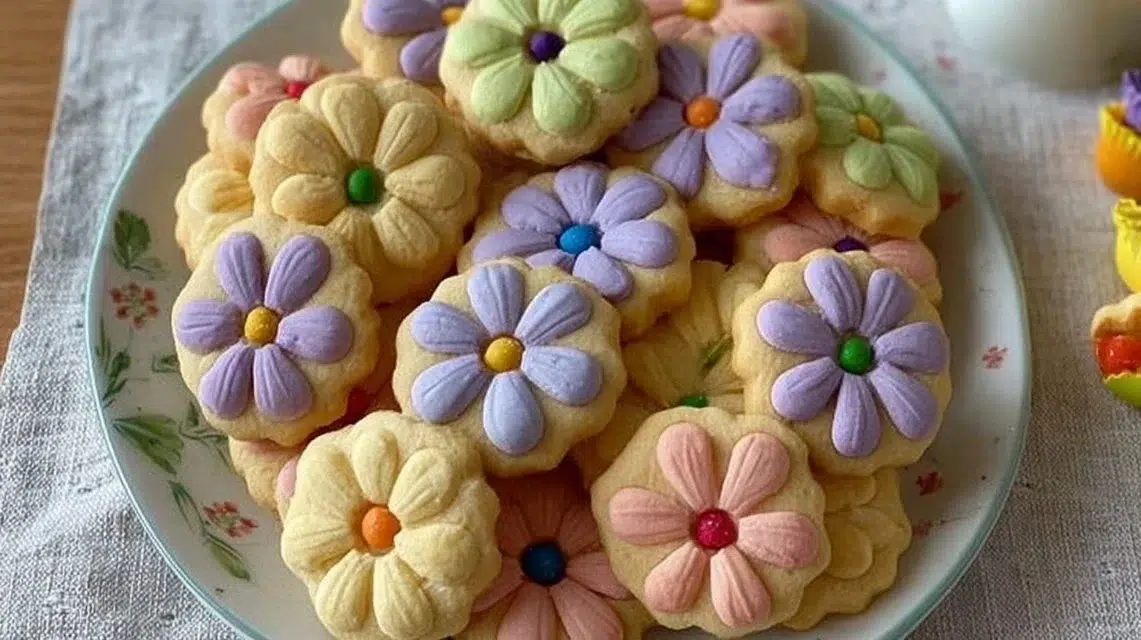
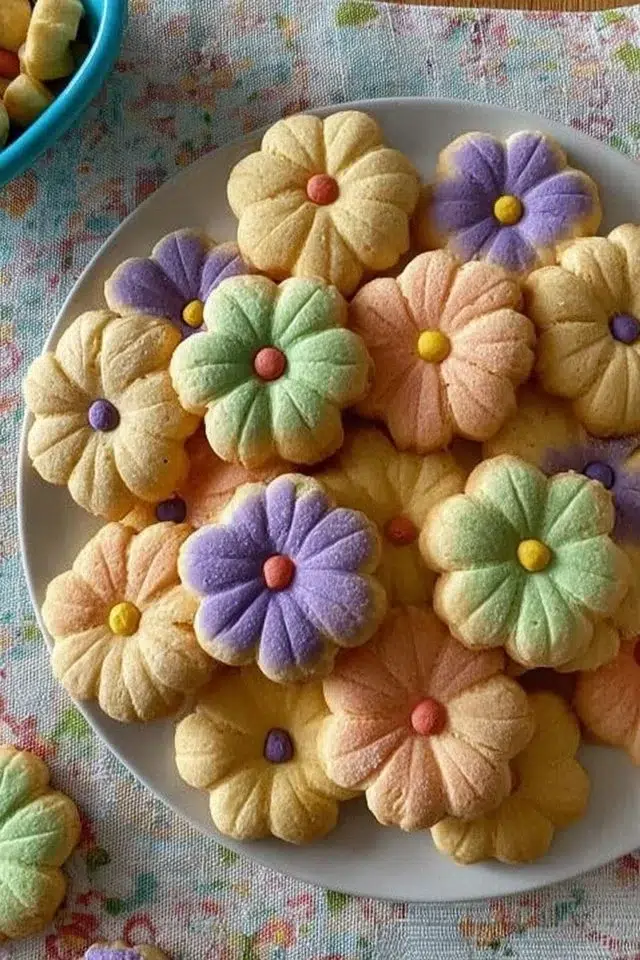
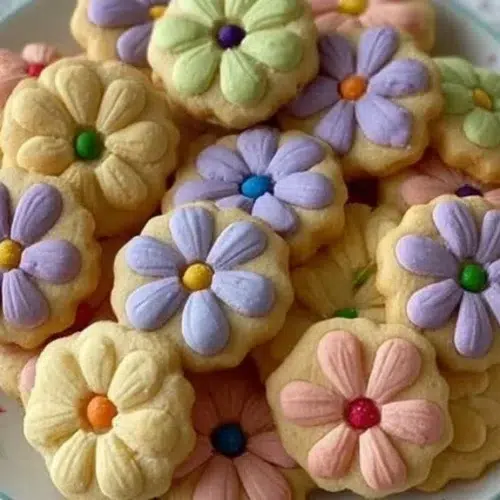
These spring flower shortbread cookies are buttery, tender, and melt-in-your-mouth. They taste like classic shortbread with a soft crumb and a faintly sweet finish, with a hint of vanilla and optional citrus or almond notes. The cookies are simple to make and require just a handful of ingredients and one bowl, which makes them ideal for busy bakers or a relaxed afternoon project. Cut them with a flower cookie cutter for a pretty look, then dust with powdered sugar or add a small dollop of jam in the center for color. For more pastel decorating ideas, try an easy spring blossom cookie idea that pairs well with these flavors.
Why You’ll Love This Spring Flower Shortbread Cookies
- Simple pantry ingredients: butter, powdered sugar, flour, and a little salt and vanilla.
- Classic melt-in-your-mouth texture that is crisp at the edges and tender inside.
- Quick to make: dough chills only 20–30 minutes and bakes in about 12–15 minutes.
- Easy to cut and decorate — great for kids, parties, or gift boxes.
- Flexible flavor options: lemon, orange, or almond extract are optional and easy to add.
- Low fuss: one bowl, minimal equipment, and no complicated techniques.
- Keeps shape well — the flower cutter yields neat edges and a pretty finish.
- Perfect for tea time, brunch, or as a simple homemade gift.
What Is Spring Flower Shortbread Cookies?
Spring Flower Shortbread Cookies are classic shortbread cookies shaped like flowers. They have a rich butter flavor, a fine crumb, and a gentle sweetness from powdered sugar. The texture is slightly crumbly but holds together when pinched, which is the hallmark of a good shortbread. This recipe uses creamed butter and powdered sugar, then folds in flour and a pinch of salt. The dough is chilled, rolled, and cut before baking. The vibe is light and cheerful — perfect for spring gatherings, a cozy afternoon tea, or a casual bake with friends.
Ingredients for Spring Flower Shortbread Cookies
Main Ingredients
- 1 cup (2 sticks) unsalted butter, softened
- 1/2 cup powdered sugar, sifted
- 1/2 teaspoon salt
- 1 teaspoon vanilla extract
- 2 cups all-purpose flour
Optional
- 1 teaspoon lemon or orange zest
- 1/4 teaspoon almond extract
Ingredient Notes (Substitutions, Healthy Swaps)
- Butter: Use unsalted butter to control salt. If you only have salted butter, reduce the added salt to 1/8 teaspoon.
- Powdered sugar: Sifting helps eliminate lumps. You can pulse granulated sugar in a blender to make it finer, but powdered sugar gives a smoother shortbread.
- Flour: All-purpose flour is best. For a slightly softer cookie, replace up to 1/4 cup of the flour with cornstarch (optional).
- Salt: If using salted butter, reduce or skip the 1/2 teaspoon of added salt.
- Flavor options: The recipe lists lemon or orange zest and almond extract as optional. Use only one optional extract at a time so flavors remain clean.
- Lower-fat swap: Shortbread relies on butter for texture and taste, so full replacements are not recommended. Use half butter and half high-quality margarine only if needed, but texture and flavor will change.
- Gluten-free option: Substitute a 1:1 gluten-free flour blend that includes xanthan gum. Chilling may need to be longer to help the dough hold together.
Step-by-Step Instructions
Step 1 – Preheat and prepare
Preheat the oven to 325°F (160°C). Line a baking sheet with parchment paper and set aside.
Visual cue: The oven should be fully heated before you bake so the cookies start to set immediately.
Step 2 – Cream the butter and sugar
In a large bowl, cream together the softened butter and sifted powdered sugar until the mixture looks light and pale, about 2–3 minutes. Add the vanilla and any optional lemon or orange zest or almond extract, and mix briefly to combine.
Visual cue: The mixture should appear whipped and lighter in color, not oily.
Step 3 – Add the dry ingredients
Gradually add the 2 cups all-purpose flour and 1/2 teaspoon salt to the creamed butter mixture. Mix until just combined. The dough should be slightly crumbly but will hold together when you press a pinch of it between your fingers.
Pro cue: Avoid overmixing. Stop once there are no large streaks of flour.
Step 4 – Chill the dough
Shape the dough into a disk, wrap it tightly in plastic wrap, and chill in the refrigerator for 20–30 minutes. Chilling firms the butter so the cookies keep their flower shape while baking.
Visual cue: The dough should be cool and slightly firm but still pliable when rolled.
Step 5 – Roll, cut, and arrange
Lightly flour a work surface and roll the chilled dough to about 1/4 inch thick. Use a flower-shaped cookie cutter to cut out cookies. Transfer the cookies to the prepared baking sheet, leaving a small gap between each one. If you want a jam center, leave a small well in the middle or add the jam after baking.
Pro cue: If the dough becomes soft while cutting, return it to the fridge for 5–10 minutes.
Step 6 – Bake and cool
Bake the cookies for 12–15 minutes, or until the edges show a faint golden hue. Cool the cookies on the baking sheet for 5 minutes, then transfer to a wire rack to cool completely. When cool, dust with powdered sugar or add a small dollop of jam to each flower center.
Visual cue: Edges should be just turning pale gold; do not let them brown deeply.
Pro Tips for Success
- Soften butter just until pliable: Over-softened butter makes greasy dough and flat cookies.
- Sift powdered sugar for a smooth shortbread texture and to prevent clumps.
- Chill the dough: A quick 20–30 minute chill keeps cookies from spreading and improves flavor.
- Roll evenly: Use thickness guides or marked dowels to keep all cookies the same height for even baking.
- Use a light hand when mixing the flour. Overworking develops gluten and will make cookies tougher.
- If cutting many cookies, chill the unused dough between batches to keep it firm.
- Bake on the middle rack for even heat and color.
- Cool on the sheet for a few minutes so cookies set, then move to a rack to avoid soggy bottoms.
Flavor Variations
- Optional Lemon Zest Shortbread: Add 1 teaspoon lemon zest to the butter mixture for a bright, citrus note.
- Optional Orange Zest + Jam: Use 1 teaspoon orange zest and top centers with orange marmalade for a classic pairing.
- Optional Almond Extract Twist: Substitute the vanilla with 1/4 teaspoon almond extract for a nutty fragrance.
- Optional Vanilla Bean Upgrade: Split a vanilla bean and scrape the seeds into the butter for a deep vanilla flavor (still keep the vanilla extract).
- Optional Jam-Filled Centers: After cooling, add 1/2 teaspoon of your favorite jam to the center of each flower.
- Optional Powdered Sugar Finish: Dust generously with powdered sugar for a snowy spring look.
Serving Suggestions
- Serve on a small platter with a pot of hot tea or coffee for a simple gathering.
- Arrange with fresh berries for a bright spring dessert plate.
- Package in a box with tissue paper for a homemade gift.
- Add a small edible flower or a dot of colored glaze to the center for a festive look.
- Pair with lightly sweetened whipped cream for a dessert display.
- Use as a cookie sandwich: spread a thin layer of jam or lemon curd between two cookies.
Make-Ahead, Storage & Reheating
- Make-ahead: You can make the dough up to 2 days ahead. Keep wrapped tightly in the refrigerator.
- Baked cookies: Store at room temperature in an airtight container for up to 5 days.
- Reheating: Shortbread is best at room temperature. If you want a slightly warm cookie, warm in a 300°F oven for 5 minutes, but note the texture will soften slightly.
- Texture changes: Shortbread becomes crisper at room temperature after resting. Refrigeration can make cookies firmer; let them sit at room temperature before serving to restore tenderness.
Storage and Freezing Instructions
- Freeze dough: Wrap the disk of dough tightly in plastic and then foil. Freeze for up to 3 months. Thaw in the refrigerator overnight before rolling.
- Freeze baked cookies: Layer between parchment paper in an airtight container and freeze for up to 2 months. Thaw at room temperature for 30–60 minutes.
- Not recommended: Refrigerating baked cookies for more than a week will dry them out. Freezing is better for long-term storage.
Nutrition Facts (Per Serving)
Calories | Protein | Carbs | Fat | Fiber | Sodium
— | —: | —: | —: | —: | —:
140 | 1 g | 10 g | 10 g | 0 g | 80 mg
Estimates vary by brands and portions.
FAQ About Spring Flower Shortbread Cookies
Q: Why is my dough too crumbly and won’t come together?
A: The dough should be slightly crumbly but hold when pinched. If it won’t bind at all, add a teaspoon of cold water and mix briefly, then chill.
Q: Why did my cookies spread too much?
A: Likely the butter was too soft or dough was too warm. Chill the dough longer and bake with the oven fully preheated.
Q: How do I know when the cookies are done?
A: They are done when the edges show a faint golden hue. Do not wait for browning across the top.
Q: Can I use granulated sugar instead of powdered sugar?
A: Powdered sugar gives a smoother texture. Using granulated sugar will change the texture and may make them less tender.
Q: Can I make the dough ahead?
A: Yes. Dough can chill in the refrigerator for up to 2 days or freeze for up to 3 months.
Q: My cookies are too dry and crumbly after baking. What happened?
A: You may have overbaked or overmixed the dough. Reduce bake time slightly and mix only until combined.
Notes
- Use a light, floral cookie cutter for an elegant presentation.
- If you add jam, warm it slightly so it’s easy to spoon without breaking the cookie.
- For even rolling, chill the disk for 10 minutes after pressing to flatten it before rolling.
- For shiny centers, brush a tiny amount of apricot jam on cooled cookies and top with a tiny candied peel.
- Rotate your baking sheet halfway through baking if your oven has hot spots.
Troubleshooting
- Problem: Cookies are greasy or spread. Fix: Chill dough longer and use firmer butter.
- Problem: Cookies are too tough. Fix: Stop mixing as soon as dough holds together; avoid overworking.
- Problem: Burned edges with pale centers. Fix: Lower oven rack one level and reduce temperature by 10–15°F.
- Problem: Dough sticks to cutter. Fix: Dip cutter in flour between cuts or chill dough briefly.
- Problem: Cookies fall apart when moved. Fix: Let cool on the baking sheet for the full 5 minutes before transferring.
- Problem: Flavor is flat. Fix: Add a pinch more salt or a touch of citrus zest to brighten the profile.
Final Thoughts
These Spring Flower Shortbread Cookies are simple, pretty, and dependable. They deliver classic shortbread flavor with minimal effort and small, optional twists to suit your taste. Try them for tea, gifts, or a weekend baking session—you’ll enjoy how easily they come together and how well they please a crowd.
Conclusion
For a creative take on flower-shaped shortbread and decorating ideas, see this lovely example of floral shortbread from a talented baker: Loria Stern’s Shortbread Flower Cookies Are an Artistic Delight.
Spring Flower Shortbread Cookies
Ingredients
Main Ingredients
- 1 cup unsalted butter, softened Use unsalted butter for better control of salt.
- 1/2 cup powdered sugar, sifted Sifting helps eliminate lumps.
- 1/2 teaspoon salt Reduce if using salted butter.
- 1 teaspoon vanilla extract
- 2 cups all-purpose flour Can replace up to 1/4 cup with cornstarch for softer cookies.
Optional Flavor Variations
- 1 teaspoon lemon or orange zest Add for citrus flavor.
- 1/4 teaspoon almond extract Use only one optional extract at a time.
Instructions
Preparation
- Preheat the oven to 325°F (160°C) and line a baking sheet with parchment paper.
- In a large bowl, cream together the softened butter and sifted powdered sugar until light and pale, about 2-3 minutes. Add the vanilla and any optional zest or almond extract, mixing briefly.
- Gradually add the flour and salt to the creamed mixture, mixing until just combined. The dough should be crumbly but hold together when pinched.
- Shape the dough into a disk, wrap in plastic wrap, and chill in the refrigerator for 20-30 minutes.
Baking
- Lightly flour a work surface and roll the chilled dough to about 1/4 inch thick. Use a flower cookie cutter to cut out cookies.
- Transfer cookies to the prepared baking sheet, leaving gaps between them. If desired, create a small well in the center for jam.
- Bake for 12-15 minutes or until edges show a faint golden hue. Cool on the baking sheet for 5 minutes, then transfer to a wire rack to cool completely.
- Dust with powdered sugar or add jam to the centers if using.