

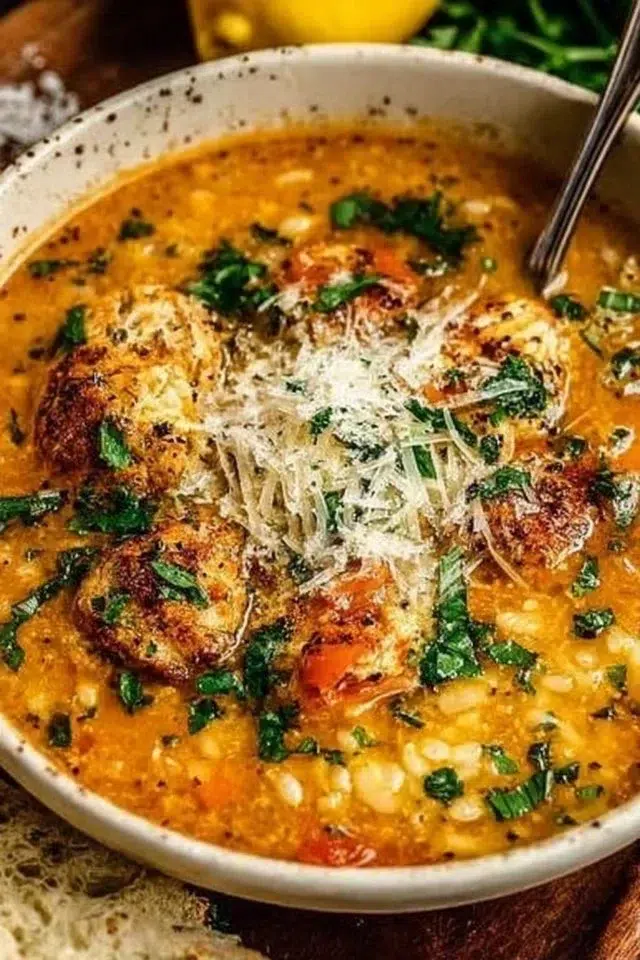
Italian Penicillin Soup is a warm, lemon-bright chicken soup with tender shredded chicken, small pasta, and a savory, garlicky broth. It balances silky broth and soft vegetables with a little bite from red pepper flakes and a bright finish of fresh lemon and parsley. The texture is comforting: tender chicken, al dente pasta, and soft carrots and celery in a clear, flavorful broth. It’s easy to make on a weeknight because most of the work is hands-off simmering, and it reheats well for lunches. Serve with grated Parmigiano-Reggiano and crusty Italian bread for dipping, or drizzle a little extra virgin olive oil on top for extra richness. For a quick visual reference while cooking, see the detailed recipe page at Italian Penicillin Soup recipe source.
Why You’ll Love This Italian Penicillin Soup
- Hands-off simmering: add the chicken and let it cook while you do other things.
- Bright finish: fresh lemon juice lifts the broth and keeps it from tasting heavy.
- Simple pantry ingredients: uses common items like pasta, carrots, celery, and broth.
- Comforting texture: tender shredded chicken, al dente small pasta, and soft vegetables.
- Flexible: easy to make vegetarian by swapping broth and omitting chicken (optional).
- Fast weeknight dinner: ready in about 45 minutes, including pasta time.
- Crowd-pleaser: mild, familiar flavors that work for kids and adults.
- Easy to scale: double the recipe to feed a group or make extra for leftovers.
What Is Italian Penicillin Soup?
Italian Penicillin Soup is a classic-style chicken and pasta soup with a bright lemon finish and a garlicky, herb-scented broth. It tastes savory and fresh — the chicken and broth supply deep, homey notes while lemon and parsley add brightness. Small pasta shapes like ditalini or orzo give bite and soak up the broth for a filling bowl. The cooking method is stove-top simmering: you sauté aromatics, simmer a whole chicken breast in the broth until tender, shred it, return it to the pot, and finish with pasta. The vibe is pure comfort food — ideal for a weeknight dinner, a soothing lunch, or a cold-weather remedy. It pairs well with crusty bread and a simple salad.
Ingredients for Italian Penicillin Soup
For the Base
- 2 tablespoons extra virgin olive oil
- 1 large onion, diced (about 1 cup)
- 3 medium carrots, sliced into rounds
- 3 celery stalks, chopped
- 4 garlic cloves, minced
For the Soup
- 8 cups low-sodium chicken broth (or vegetable broth for vegetarian option)
- 1 whole chicken breast, bone-in and skin-on (about 1 pound)
- 2 bay leaves
- 1 teaspoon dried oregano
- 1/2 teaspoon dried thyme
- 1/4 teaspoon red pepper flakes (optional)
- 1 cup small pasta (ditalini, orzo, or small shells)
- Salt and freshly ground black pepper to taste
To Finish & Serve
- 2 tablespoons fresh lemon juice
- 1/4 cup fresh parsley, chopped
- Freshly grated Parmigiano-Reggiano cheese (for serving)
- Extra virgin olive oil for drizzling
- Crusty Italian bread for serving
Ingredient Notes (Substitutions, Healthy Swaps)
- Broth: Low-sodium chicken broth keeps salt under control. Use vegetable broth for a vegetarian version (omit the chicken).
- Chicken: Bone-in skin-on breast adds flavor; you can use boneless skinless breast if preferred, but adjust simmer time to avoid drying.
- Pasta: Ditalini, orzo, or small shells all work. Use whole-wheat pasta for more fiber (may need 1–2 minutes more cooking).
- Herbs: Fresh oregano or thyme can replace dried; use three times the amount if substituting fresh.
- Heat: Omit red pepper flakes for no heat, or add more for spice.
- Cheese: Parmigiano-Reggiano adds umami. Nutritional yeast is an option for a dairy-free finish.
- Oil: Use the extra virgin olive oil listed; you can reduce to 1 tablespoon for lower fat.
Step-by-Step Instructions
Step 1 – Sauté the vegetables
Heat 2 tablespoons extra virgin olive oil in a large pot over medium heat. Add the diced onion, sliced carrots, and chopped celery. Cook for about 5–7 minutes, stirring occasionally, until softened. Stir in the minced garlic and cook for an additional minute.
Visual cue: Vegetables should be soft and fragrant, not browned.
Step 2 – Add the broth and chicken
Pour in 8 cups low-sodium chicken broth and add the whole chicken breast, 2 bay leaves, 1 teaspoon dried oregano, 1/2 teaspoon dried thyme, and 1/4 teaspoon red pepper flakes (optional). Bring to a gentle boil, then reduce heat to a simmer.
Step 3 – Simmer until the chicken is cooked through
Simmer for 25–30 minutes, until the chicken is fully cooked and shreds easily. Remove the chicken to a plate and set aside to cool slightly. Remove and discard the bay leaves.
Step 4 – Shred the chicken and return it
Shred the chicken with two forks, discarding the bone and skin if desired, then return the shredded chicken to the pot. Season the broth with salt and freshly ground black pepper to taste.
Step 5 – Cook the pasta
Bring the soup back to a boil and add 1 cup small pasta (ditalini, orzo, or small shells). Cook until al dente according to package directions, usually 7–10 minutes, stirring occasionally so the pasta doesn’t stick.
Step 6 – Finish and serve
Stir in 2 tablespoons fresh lemon juice and 1/4 cup chopped fresh parsley. Adjust seasoning if needed. Serve bowls topped with freshly grated Parmigiano-Reggiano, and drizzle with extra virgin olive oil if you like. Offer crusty Italian bread on the side.
Pro cue: Taste the broth after you add lemon — the acidity should brighten but not overpower. Add a little more lemon if it needs life.
Pro Tips for Success
- Use low-sodium broth to control salt; always salt to taste at the end.
- Keep the simmer gentle when cooking the chicken so it stays tender and moist.
- Don’t overcook the pasta in the pot — aim for al dente because it will absorb broth if left to sit.
- Remove bay leaves before serving to avoid bitter bites.
- Shred the chicken while it’s warm — it pulls apart more easily.
- If using boneless chicken, check earlier for doneness to avoid dry meat.
- For even cooking and flavor, bring the soup to a gentle boil before reducing to a simmer.
- Save some fresh parsley for garnish to keep the color bright on the plate.
Flavor Variations
- Optional: Lemon-Garlic Boost — add an extra clove of roasted garlic and another tablespoon of lemon juice for a stronger citrus-garlic profile.
- Optional: Spicy Kick — increase red pepper flakes to 1/2 teaspoon or finish each bowl with a drizzle of chili oil.
- Optional: Herby Twist — stir in 2 tablespoons chopped fresh basil or a few leaves of fresh sage along with the parsley.
- Optional: Creamy Finish — stir in 1/4 cup heavy cream or a spoonful of mascarpone just before serving for a richer broth (this changes the light character).
- Optional: Veg-Forward — add a cup of chopped zucchini or a handful of spinach in the last 5 minutes for more vegetables.
- Optional: Protein Swap — use shredded rotisserie chicken instead of cooking a whole breast; add it at Step 4 and heat through.
Serving Suggestions
- Serve with crusty Italian bread to soak up the broth.
- Top with a generous sprinkle of freshly grated Parmigiano-Reggiano.
- Drizzle a little extra virgin olive oil over each bowl for shine and richness.
- Pair with a simple green salad dressed with lemon vinaigrette for a light meal.
- For a heartier bowl, add a side of roasted vegetables or garlic bread.
- Serve in deep bowls and pass additional lemon wedges for guests to add more brightness.
Make-Ahead, Storage & Reheating
- Make-ahead: Chop the vegetables and store them in an airtight container in the fridge for up to 2 days. You can simmer the soup and stop before adding pasta; cool and refrigerate.
- Storage: Store the finished soup in an airtight container in the refrigerator for 3–4 days. Keep pasta slightly undercooked if you plan to store to avoid it becoming mushy.
- Reheating: Reheat gently on the stove over low-medium heat. If the soup is too thick after refrigeration, add a splash of water or broth and bring to a simmer to loosen it.
- Texture changes: Pasta absorbs broth over time and will soften. To keep pasta al dente, reheat with a little extra broth or add freshly cooked pasta to portioned bowls.
Storage and Freezing Instructions
- Freezing soup with cooked pasta is not recommended because the pasta will become very soft and change texture. Instead, freeze the soup base without pasta. Cool the soup completely, then transfer to freezer-safe containers and freeze for up to 3 months.
- To freeze: cool the soup, remove shredded chicken (optional to leave in), and freeze in airtight containers or heavy-duty freezer bags. Label with date.
- To reheat from frozen: thaw overnight in the fridge, reheat on the stove until simmering, then cook fresh pasta separately and add to each bowl when serving.
- If you must freeze cooked pasta in soup, know the texture will be softer after thawing and reheating.
Nutrition Facts (Per Serving)
Calories | Protein | Carbs | Fat | Fiber | Sodium
≈ 500 kcal | 41 g | 45 g | 11 g | 3 g | 700 mg
Estimates vary by brands and portions.
FAQ About Italian Penicillin Soup
Q: Why is my soup bland?
A: Taste and season at the end. Add salt in small amounts, then lemon to brighten. Parmigiano-Reggiano also adds savory depth.
Q: Why is the chicken dry?
A: Simmer gently and avoid overcooking. Bone-in, skin-on breast helps keep moisture. Shred and return to the hot broth to finish gently.
Q: Can I use rotisserie chicken?
A: Yes. Add shredded rotisserie chicken at Step 4 and heat through. Omit the initial chicken-simmer time.
Q: My pasta absorbed all the broth. How do I stop that?
A: Cook pasta al dente and serve immediately. For leftovers, store pasta separately or undercook pasta slightly so it keeps texture on reheating.
Q: Can I make this vegetarian?
A: Optional: Use vegetable broth and omit the chicken. Add extra firm tofu or white beans for protein if desired.
Q: How long does leftovers keep?
A: Store in the refrigerator for 3–4 days. Freeze the broth (without pasta) for up to 3 months.
Notes
- Finish each bowl with a squeeze of fresh lemon for extra brightness.
- Keep grated Parmigiano-Reggiano in a small bowl so guests can add their own.
- For clearer broth, skim any foam that rises during the first few minutes of simmering.
- Use a ladle to portion pasta evenly so every bowl has good balance.
- If you like more texture, reserve half the cooked carrots and celery and stir them in at the end.
Troubleshooting
- Bland soup: Add salt, a squeeze of lemon, and a small handful of grated cheese to boost flavor.
- Overcooked chicken: Use gentler heat and check at 20 minutes if using smaller breasts. Shred and simmer briefly to rehydrate.
- Watery soup: Simmer uncovered for 5–10 minutes to reduce and concentrate flavors, or cook the pasta separately and add less to the pot.
- Mushy pasta: Undercook the pasta by 1–2 minutes, or cook it separately and add to bowls when serving.
- Bitter broth: Remove bay leaves before serving and avoid burning the garlic during the sauté step.
- Too spicy: Add a spoonful of lemon juice or a small splash of cream to mellow heat.
Final Thoughts
This Italian Penicillin Soup is a simple, reliable bowl of comfort with bright lemon and savory chicken broth. It’s easy to make, flexible to adapt, and perfect for a quick dinner or a restorative meal when you need something soothing. Try the recipe as written and then tweak the finish to make it your own — a little lemon, parsley, and good cheese go a long way. For another version and extra tips, see the full community recipe on Italian Penicillin Soup Recipe – Allrecipes.

Italian Penicillin Soup
Ingredients
For the Base
- 2 tablespoons extra virgin olive oil
- 1 large onion, diced (about 1 cup)
- 3 medium carrots, sliced into rounds
- 3 stalks celery, chopped
- 4 cloves garlic, minced
For the Soup
- 8 cups low-sodium chicken broth (or vegetable broth for vegetarian option)
- 1 whole chicken breast, bone-in and skin-on (about 1 pound)
- 2 leaves bay leaves
- 1 teaspoon dried oregano
- 1/2 teaspoon dried thyme
- 1/4 teaspoon red pepper flakes (optional)
- 1 cup small pasta (ditalini, orzo, or small shells)
- Salt and freshly ground black pepper to taste
To Finish & Serve
- 2 tablespoons fresh lemon juice
- 1/4 cup fresh parsley, chopped
- Freshly grated Parmigiano-Reggiano cheese (for serving)
- Extra virgin olive oil (for drizzling)
- Crusty Italian bread (for serving)
Instructions
Preparation
- Heat 2 tablespoons extra virgin olive oil in a large pot over medium heat. Add the diced onion, sliced carrots, and chopped celery. Cook for about 5–7 minutes, stirring occasionally, until softened. Stir in the minced garlic and cook for an additional minute.
- Pour in 8 cups low-sodium chicken broth and add the whole chicken breast, 2 bay leaves, 1 teaspoon dried oregano, 1/2 teaspoon dried thyme, and 1/4 teaspoon red pepper flakes (optional). Bring to a gentle boil, then reduce heat to a simmer.
- Simmer for 25–30 minutes, until the chicken is fully cooked and shreds easily. Remove the chicken to a plate and set aside to cool slightly. Remove and discard the bay leaves.
- Shred the chicken with two forks, discarding the bone and skin if desired, then return the shredded chicken to the pot. Season the broth with salt and freshly ground black pepper to taste.
- Bring the soup back to a boil and add 1 cup small pasta (ditalini, orzo, or small shells). Cook until al dente according to package directions (usually 7–10 minutes), stirring occasionally.
- Stir in 2 tablespoons fresh lemon juice and 1/4 cup chopped fresh parsley. Adjust seasoning if needed. Serve bowls topped with freshly grated Parmigiano-Reggiano, and drizzle with extra virgin olive oil if you like. Offer crusty Italian bread on the side.