
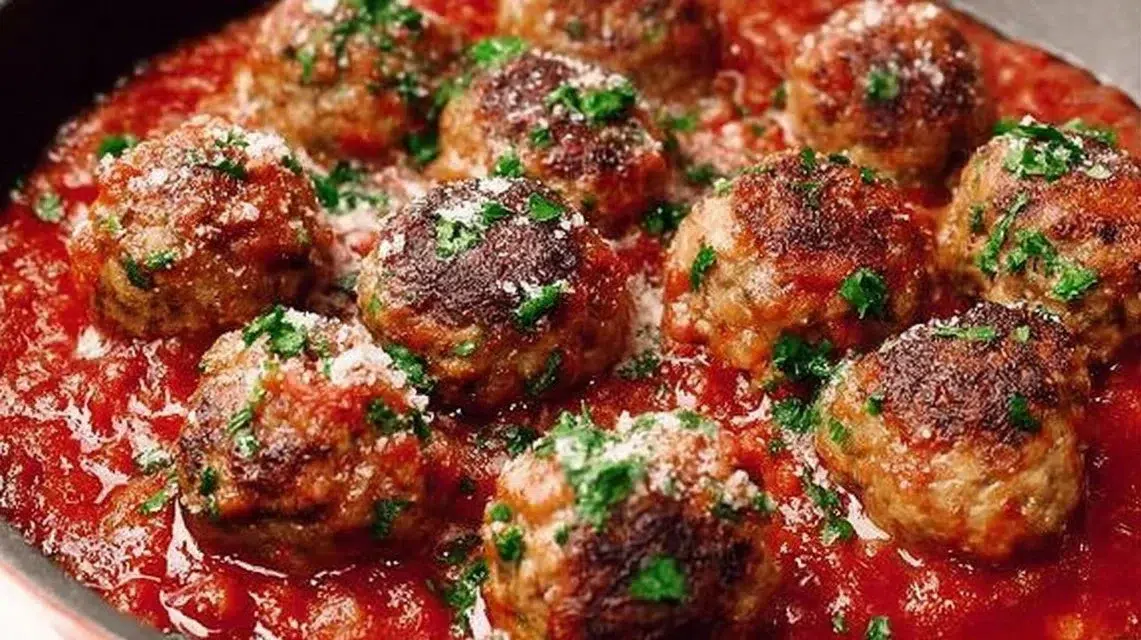
These Classic Italian-American meatballs are a warm, savory comfort food: tender, browned beef meatballs studded with Parmesan and parsley, simmered gently in jarred marinara until saucy and rich. The texture is soft inside with a lightly crisped exterior from pan-browning, and the flavor is a simple, familiar mix of garlic, oregano, basil, and salty cheese. This recipe is easy because the meatball mix is mixed just enough to hold together, browned on the stove, then finished in sauce — minimal hands-on time and one skillet to watch. Serve them over hot pasta, tuck them into toasted sub rolls, or place them beside a green salad for a lighter meal. If you want a baked finish, you can adapt to a casserole like a baked meatball pasta similar to baked spaghetti and meatballs for a family-style dinner.
Why You’ll Love This Classic Italian-American Meatballs
- Simple, pantry-friendly ingredients you likely already have.
- Fast prep: mix, roll, brown, simmer — weeknight ready.
- Balanced texture: tender inside with browned crust for bite.
- Bold, familiar flavor from Parmesan, garlic, oregano, and basil.
- One-jar marinara finish keeps cleanup low and speeds the process.
- Flexible serving options: pasta, subs, or a salad for lighter meals.
- Kid-friendly and easy to scale up for guests.
- Works well for leftovers, make-ahead meals, or freezing.
What Is Classic Italian-American Meatballs?
Classic Italian-American meatballs are seasoned ground beef balls made with breadcrumbs, Parmesan, parsley, milk, and an egg to bind, then browned and simmered in a jarred marinara sauce. They taste savory and comforting — the cheese and parsley brighten the beef while garlic and dried herbs give familiar Italian-American notes. The cooking method is stovetop browning to create a crust and then a gentle simmer in sauce to cook through and absorb flavor. The overall vibe is cozy comfort food perfect for family dinners, weeknight meals, and casual gatherings where you want something hearty and satisfying.
Ingredients for Classic Italian-American Meatballs
For the Base
- 1 pound ground beef
- 1/4 cup bread crumbs
- 1/4 cup grated Parmesan cheese
- 1/4 cup chopped parsley
- 1/4 cup milk
- 1 egg
- 2 cloves garlic, minced
- 1 teaspoon salt
- 1/2 teaspoon black pepper
- 1/2 teaspoon dried oregano
- 1/2 teaspoon dried basil
For the Sauce
- 1 jar marinara sauce
To Serve (optional)
- Pasta, sub rolls, or a salad
Ingredient Notes (Substitutions, Healthy Swaps)
- Ground beef: Use lean ground beef (90/10) for less rendered fat, or substitute ground turkey or chicken for a lighter option. These swaps will change the flavor slightly but keep the method the same.
- Bread crumbs: Regular plain breadcrumbs work best for texture. For lighter crumbs, use panko, but reduce to 3 tablespoons as panko holds air. For gluten-free, use gluten-free crumbs.
- Milk and egg: Both bind and keep meatballs tender. For dairy-free, use a non-dairy milk substitute (almond or oat), but keep the egg unless you want a looser texture — replace egg with a flax “egg” (1 tbsp ground flax + 3 tbsp water) if needed.
- Parmesan: Freshly grated Parmesan gives the best salt and umami. Pre-grated works, but use fine grate to mix evenly.
- Herbs and seasonings: Dried oregano and basil create the classic profile. Swap in 1 tsp Italian seasoning if you prefer a single herb blend. Increase parsley for a fresher finish.
- Marinara: Use any jarred tomato sauce you like; choose a plain marinara or one with basil/garlic, depending on your taste. If you have homemade marinara, it works perfectly.
Step-by-Step Instructions
Step 1 – Combine the meatball mix
In a large bowl add the ground beef, bread crumbs, grated Parmesan, chopped parsley, milk, egg, minced garlic, salt, black pepper, dried oregano, and dried basil. Mix gently with your hands or a spoon until just combined — do not overwork.
Visual cue: The mixture should hold together when squeezed but still feel soft and tender.
Step 2 – Form the meatballs
Shape the mixture into meatballs about 1 inch in diameter. Place them on a plate or tray, spacing them so they don’t touch. You should get roughly 20–24 small meatballs depending on exact size.
Visual cue: Smooth, compact balls with no large cracks.
Step 3 – Brown the meatballs
Heat a skillet over medium heat. Add a thin layer of oil if your beef is very lean; otherwise the fat in the beef often suffices. Add the meatballs and brown on all sides, turning gently with tongs or a spoon, about 6–8 minutes total. Work in batches if needed so the pan isn’t crowded.
Pro cue: Aim for a golden crust — this adds flavor and helps the meatballs keep their shape in the sauce.
Step 4 – Simmer in marinara
Once the meatballs are browned, pour the jar of marinara sauce over them in the skillet. Reduce the heat to low, cover the pan, and let simmer for 20 minutes until cooked through. Stir gently once or twice to coat meatballs with sauce.
Visual cue: Sauce should bubble gently, not boil hard.
Step 5 – Check doneness and serve
Confirm the internal temperature reaches 160°F (71°C) or cut one open to make sure it’s cooked through with no raw center. Serve hot over pasta, in sub rolls, or with a salad.
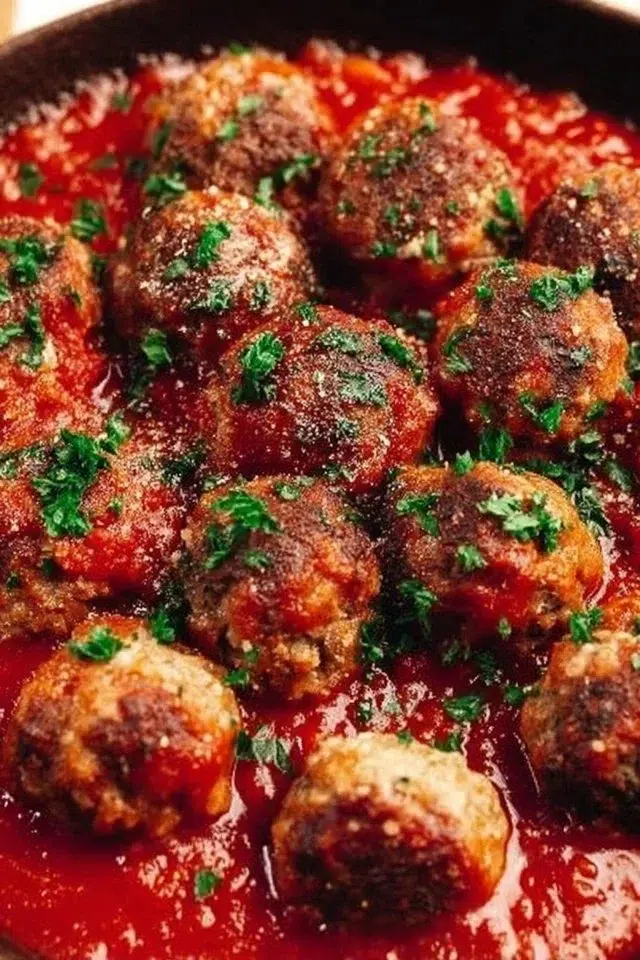
Pro cue: If serving on subs, toast rolls under the broiler for 1–2 minutes with cheese on top to finish.
Pro Tips for Success
- Measure bread crumbs by volume (1/4 cup) to keep texture consistent. Too many crumbs makes dry meatballs.
- Mix gently: over-mixing compresses meat and makes meatballs dense. Stop when ingredients are evenly distributed.
- Uniform size: roll meatballs the same size so they cook at the same rate. Use a small scoop or spoon for consistency.
- Brown first: don’t skip browning — it locks flavors and prevents meatballs from falling apart in sauce.
- Low simmer: keep sauce at a gentle simmer; high heat will toughen the meat.
- Doneness check: use an instant-read thermometer set to 160°F (71°C) for safety and best texture.
- Rest before serving: let meatballs sit in sauce for 5 minutes off heat so juices redistribute.
Flavor Variations
- Optional: Add 1/4 cup finely chopped onion to the base for extra sweetness and depth. Sauté first if you prefer milder onion flavor.
- Optional: Stir in 1/4 teaspoon red pepper flakes to the sauce for a touch of heat.
- Optional: Swap half the Parmesan for pecorino Romano for sharper, saltier flavor (use modestly as it’s saltier).
- Optional: Mix in 2 tablespoons chopped fresh basil instead of dried for a fresher, brighter finish added at the end of simmering.
- Optional: For a heartier mix, add 1/4 cup cooked rice or soaked leftover breadcrumbs — this makes them more filling and stretches the recipe.
- Optional: Finish with a pat of butter or a splash of heavy cream in the sauce for a richer mouthfeel.
Serving Suggestions
- Over pasta: Serve the meatballs and sauce on top of spaghetti, linguine, or any pasta you prefer; sprinkle with extra Parmesan.
- Sub rolls: Fill toasted sub rolls with meatballs and sauce, top with provolone or mozzarella, and broil until cheese melts.
- Salad plate: For a lighter meal, serve two or three meatballs beside a crisp green salad with a lemon vinaigrette.
- Appetizer skewers: Thread small meatballs on toothpicks and serve with warmed sauce for dipping.
- Family-style bowl: Place meatballs in a large serving dish and set out plates of pasta, bread, and grated cheese for sharing.
- Meal prep bowls: Pair with roasted vegetables and cooked grains for easy lunches.
Make-Ahead, Storage & Reheating
- Make-ahead: Mix the meatball base and form the meatballs up to 24 hours ahead; cover and refrigerate until ready to brown. You can also brown the meatballs ahead, cool, and refrigerate with sauce.
- Fridge storage: Store cooked meatballs in sauce in an airtight container for 3–4 days. Store plain cooked meatballs (without sauce) for 2–3 days.
- Reheating: Reheat gently on the stovetop over low heat until warmed through, covered to keep moisture. Microwave in a covered dish in 30-second intervals, stirring occasionally.
- Texture changes: Refrigerated meatballs will firm up; reheat slowly in sauce to restore tenderness and avoid drying out.
Storage and Freezing Instructions
- Freeze raw meatballs: Place formed raw meatballs on a baking sheet lined with parchment and freeze until solid. Transfer to a freezer bag and freeze up to 3 months. When ready, brown from frozen or bake, then simmer in sauce until cooked through.
- Freeze cooked meatballs in sauce: Cool completely, then portion into airtight containers or freezer bags. Freeze up to 3 months. Thaw overnight in the fridge and reheat gently on low heat.
- Thawing: Thaw frozen cooked meatballs in the refrigerator overnight for best texture. Reheat slowly in sauce rather than direct high heat to avoid drying.
- If you prefer not to freeze, keep leftovers in the fridge and use within 3–4 days. Freezing preserves texture and flavor better than long fridge storage.
Nutrition Facts (Per Serving)
Calories | Protein | Carbs | Fat | Fiber | Sodium
— | —: | —: | —: | —: | —:
Approx. 420 kcal | 26 g | 15 g | 28 g | 1.5 g | 820 mg
Estimates vary by brands and portions.
FAQ About Classic Italian-American Meatballs
- Q: Why are my meatballs falling apart?
A: Likely from under-binding or over-crowding the pan. Make sure you used the egg and breadcrumbs, and brown in a hot pan without crowding so they set. - Q: How do I keep meatballs tender and not dry?
A: Mix gently, use milk and egg, and avoid overbaking. Simmering in sauce keeps moisture and prevents drying. - Q: Can I bake instead of pan-browning?
A: Yes. Bake at 400°F (204°C) for about 12–15 minutes until browned, then finish in sauce for 10–15 minutes. - Q: Is it safe to use jarred marinara?
A: Yes. Jarred marinara is safe and convenient; simmering meatballs in it lets flavors meld. - Q: How can I make these gluten-free?
A: Use gluten-free breadcrumbs and confirm your jarred marinara is gluten-free. - Q: What’s the best way to test doneness?
A: Use an instant-read thermometer; meatballs are done at 160°F (71°C). Cutting one open is a second simple check.
Notes
- Use fresh parsley for the best bright green flavor; chopped small so it blends with the beef.
- If the mixture feels too wet, add a little more breadcrumbs in tablespoons until it holds shape.
- Save extra sauce for dipping bread and to cover any leftover pasta.
- For a nicer presentation, spoon sauce over plated meatballs and finish with a sprinkle of chopped parsley and grated Parmesan.
- Leftover meatballs make great sandwiches—toast the roll and add provolone for a quick, satisfying lunch.
Troubleshooting
- Bland flavor: Add a pinch more salt or a little extra Parmesan; taste sauce and adjust.
- Too dense: You mixed too much. Next time, mix lightly and stop as soon as ingredients are combined.
- Greasy pan: Use leaner beef or drain excess fat before adding sauce.
- Sauce too thin: Simmer uncovered a few minutes to reduce, or add a tablespoon of tomato paste to thicken and deepen flavor.
- Meatballs not browning: Pan may be too cool or overcrowded; increase heat slightly and brown in batches.
- Overcooked and dry: Reduce simmer time and check an internal temperature early; reheat gently in sauce to rehydrate.
Final Thoughts
These Classic Italian-American meatballs are an easy, reliable recipe that delivers comforting flavor and soft texture with minimal fuss. Brown, simmer, and serve—simple steps lead to a crowd-pleasing meal you can adapt for weeknight dinners or make ahead for busy days.
Conclusion
For another tested approach and more ideas on assembling meatballs with pasta, see The Best Italian-American Meatballs Recipe – Serious Eats.