
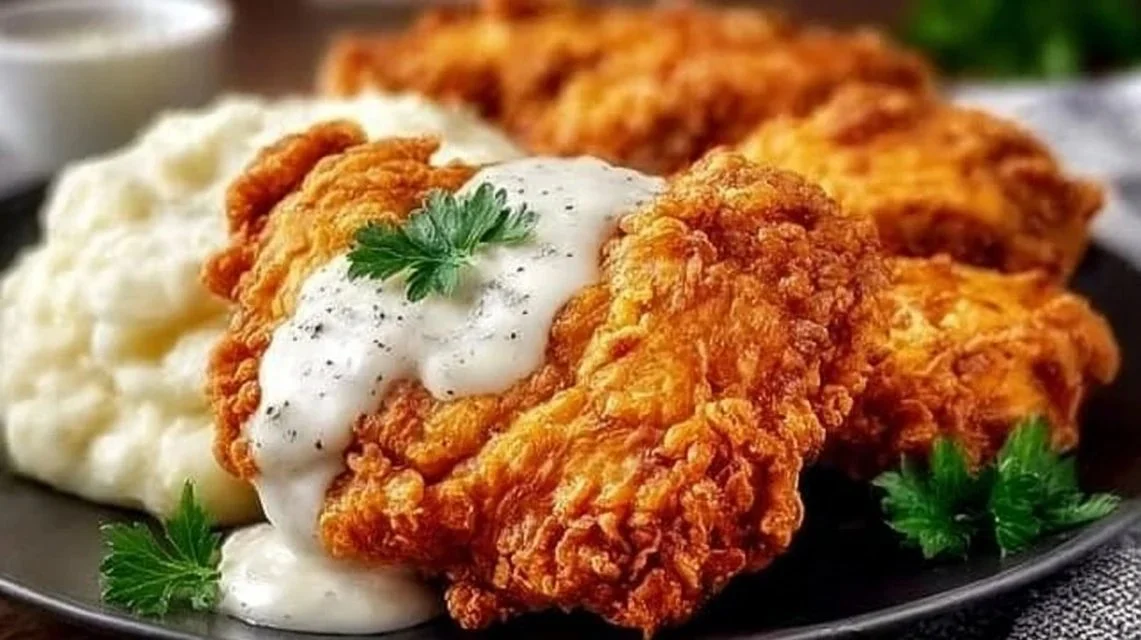
Chicken Fried Chicken is a crisp, savory take on fried comfort food that delivers crunchy golden crust and juicy chicken inside. The coating is seasoned with baking powder and baking soda for a lighter, crisper crust, while a tangy buttermilk dip keeps the meat tender. Make the quick skillet gravy from the pan oil and milk to add creamy, peppered richness on top. It’s simple enough for a weeknight, special enough for company, and pairs well with mashed potatoes or a bright green salad for contrast — see the full recipe details here classic chicken fried chicken recipe.
Why You’ll Love This Chicken Fried Chicken
- Crispy outside with a tender, juicy inside every time.
- Uses a buttermilk soak to lock in moisture and add tang.
- Seasoned dredge is simple but flavorful — no fancy spices needed.
- Quick gravy from reserved frying oil ties the dish together.
- Flexible: works with 6–8 thin-sliced breasts for family or guests.
- Weeknight-friendly: fry time is short (3–5 minutes per side).
- Great for making ahead: bread chicken and prep gravy mix in advance.
- Comfort-food vibe that suits Sunday supper, brunch, or potlucks.
What Is Chicken Fried Chicken?
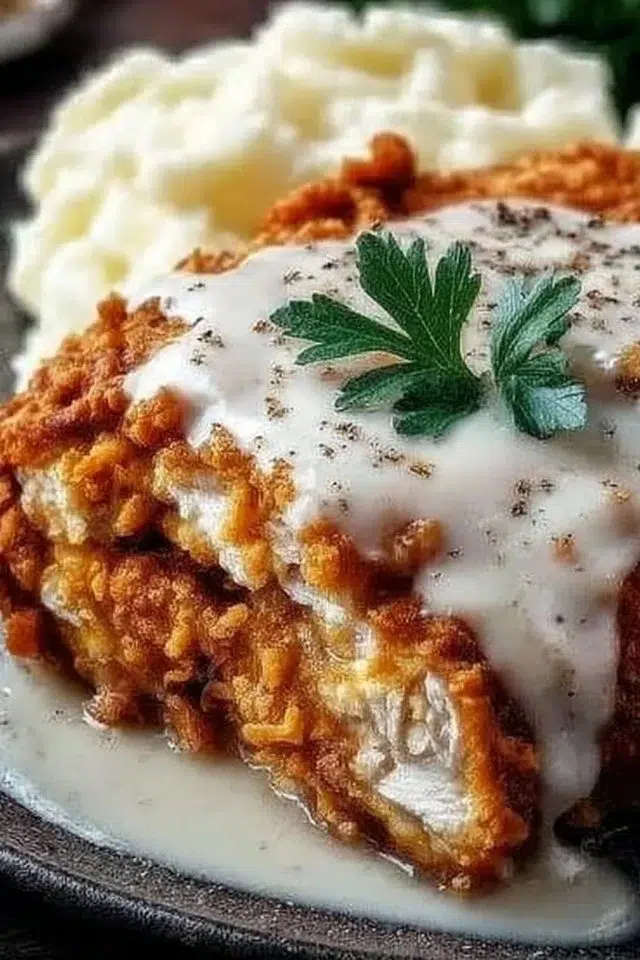
Chicken Fried Chicken is a Southern-style dish where thin-sliced chicken breasts are breaded and fried until golden brown, then often served with a creamy pan gravy. It tastes savory, a little salty, and has a garlic note from the dredge. Texture is all about contrast: a crunchy, well-seasoned crust and a moist, tender interior thanks to the buttermilk dip. The cooking method is shallow-deep frying at a moderate oil temperature, which gives a reliable crisp without burning. The overall vibe is classic comfort food — perfect for hearty dinners, casual Sunday meals, or a home-style restaurant feel at your table.
Ingredients for Chicken Fried Chicken
For the Chicken
- 6–8 thin sliced chicken breasts
- 2 cups flour
- 2 tsp baking powder
- 1 tsp baking soda
- 1 tsp salt
- 1 tsp pepper
- 1 tsp garlic powder
For the Buttermilk Dip
- 1 1/2 cup buttermilk
- 1 egg
- 1 Tbs hot sauce
For Frying & Gravy
- Oil for frying (enough to heat a few inches in a pan)
- 1/4 cup reserved oil from frying
- 1/3 cup flour for gravy
- 2 cup milk for gravy
- Salt & pepper to taste
Ingredient Notes (Substitutions, Healthy Swaps)
- Buttermilk: If you don’t have buttermilk, make a quick substitute by stirring 1 1/2 cups milk with 1 1/2 tbsp lemon juice or vinegar and let sit 5–10 minutes. This keeps the tenderizing effect.
- Hot sauce: Use any mild hot sauce or omit if you want no heat. It adds depth but not strong spice.
- Flour: All-purpose flour works best for both dredging and gravy. For a lighter crust, some cooks mix 1/4 cup cornstarch into the flour (optional).
- Oil: Use a neutral oil with a high smoke point — canola, peanut, or vegetable oil. Olive oil is not recommended for high-heat frying.
- Milk for gravy: Whole milk makes the creamiest gravy. For a lighter version, use 2% milk, but the gravy will be slightly thinner.
- Salt: Adjust salt to taste, especially if you use salted butter or stock in other sides.
Step-by-Step Instructions
Step 1 – Heat the oil
Heat a few inches of oil in a deep fryer or a large, heavy pan to 325°F. Maintain this temperature for even browning.
Visual cue: The oil should shimmer but not smoke.
Step 2 – Make the seasoned dredge
In a large bowl, whisk together 2 cups flour, 2 tsp baking powder, 1 tsp baking soda, 1 tsp salt, 1 tsp pepper, and 1 tsp garlic powder. This is your dry coating. Mix well so the leavening and spices are even.
Step 3 – Make the buttermilk dip
In another bowl, whisk together 1 1/2 cup buttermilk, 1 egg, and 1 Tbs hot sauce until combined. This bath tenderizes and helps the flour stick.
Step 4 – Dredge the chicken
Dredge each thin-sliced chicken breast in the flour mixture, then dip into the buttermilk-egg mix, and back into the flour mixture. Ensure each piece is fully coated and press the flour onto the meat so it clings.
Visual cue: The chicken should have a dry, even coating before it hits the oil.
Step 5 – Fry the chicken
Fry the chicken in the hot oil for 3–5 minutes per side, until golden brown. Do not overcrowd the pan; fry in batches if needed. Remove to a wire rack to rest and drain excess oil. Reserve 1/4 cup of the strained frying oil for the gravy — measure it while still warm.
Pro cue: Use a thermometer to keep oil at 325°F; dropping temperature will make the crust soggy, and too hot will overbrown before the inside cooks.
Step 6 – Make the gravy
In a large pan over medium-high, heat 1/4 cup reserved oil, then stir in 1/3 cup flour and cook about 1 minute to remove raw flavor. Slowly whisk in 2 cups milk until smooth. Heat until thickened, stirring often. Season with salt & pepper to taste. If it gets too thick, whisk in a little more milk. Pour over the chicken or serve on the side.
Pro cue: If gravy has lumps, whisk briskly or strain through a fine sieve.
Pro Tips for Success
- Use thin-sliced breasts: They fry faster and cook through without overbrowning.
- Keep oil steady at 325°F: Use a thermometer and adjust heat to avoid soggy or burnt crust.
- Press the coating on: After the final dredge, press the flour onto the meat to prevent it from falling off in the oil.
- Don’t overcrowd: Give pieces room so oil temperature stays steady and crust forms properly.
- Rest on a wire rack: This keeps the bottom crisp instead of steaming on paper towels.
- Reserve oil carefully: Strain the oil after frying to remove burnt bits, then measure 1/4 cup for gravy for the best flavor.
- Taste the gravy: Salt and pepper amounts will vary; season at the end to avoid overseasoning.
- Cook gravy low and slow: Rapid boiling can make gravy grainy.
Flavor Variations
- Optional: Add 1 tsp smoked paprika to the dredge for a smoky twist.
- Optional: Mix 1/2 tsp cayenne into the flour for a spicier crust.
- Optional: Substitute 1 tsp onion powder for half the garlic powder for a different savory profile.
- Optional: Use a splash (1 tsp) of Worcestershire in the buttermilk dip for deeper umami.
- Optional: Stir 1–2 tbsp chopped fresh herbs (parsley or chives) into the finished gravy for brightness.
- Optional: For a peppered gravy, add 1/2 tsp cracked black pepper while cooking the roux.
Serving Suggestions
- Serve over creamy mashed potatoes and ladle gravy on top for a classic plate.
- Offer on a toasted brioche bun with pickles for a hearty sandwich.
- Pair with buttery corn, green beans, or roasted Brussels sprouts for balance.
- A crisp green salad with a vinaigrette cuts the richness nicely.
- Serve with mac and cheese for an indulgent comfort meal.
- For brunch, place atop warm biscuits and spoon gravy over for a country-style plate.
Make-Ahead, Storage & Reheating
- Make-ahead: You can dredge the chicken up to a day ahead and keep it covered in the fridge on a tray. Do the final flour coat just before frying if you want the crispiest finish. The buttermilk dip can be mixed a few hours ahead.
- Storage: Store cooked chicken and gravy separately in airtight containers in the refrigerator for up to 3–4 days.
- Reheating best practices: Reheat chicken in a 350°F oven on a wire rack for 10–12 minutes until hot to help re-crisp the coating. Warm gravy gently on the stove, whisking or adding a splash of milk if it has thickened.
- Texture changes: Breading will soften in the fridge. Reheating on a rack or in an air fryer helps bring back some crispness but it won’t be exactly the same as fresh.
Storage and Freezing Instructions
- To freeze: Place cooled, cooked chicken in a single layer on a tray and freeze until firm, then transfer to a freezer-safe bag or container. Freeze up to 2 months.
- Thawing & reheating: Thaw overnight in the fridge, then reheat in a 350°F oven on a rack until warm through (about 15–20 minutes). Finish under the broiler briefly if you need extra crisping.
- Freezing gravy: Gravy can be frozen in a sealed container for up to 2 months. Reheat slowly on the stovetop and whisk in a little milk to refresh texture.
- If you prefer not to freeze: Freeze only the raw coated chicken (not cooked) for best texture; fry from frozen but add a few minutes to cook time and monitor temperature.
Nutrition Facts (Per Serving)
Calories | Protein | Carbs | Fat | Fiber | Sodium
—|—:|—:|—:|—:|—:
Approximately 680 kcal | 48 g | 36 g | 36 g | 1 g | 950 mg
Estimates vary by brands and portions.
FAQ About Chicken Fried Chicken
Q: My crust falls off during frying — what went wrong?
A: Press the final flour layer onto the meat so it adheres. Make sure oil is hot enough and don’t overcrowd the pan.
Q: The outside browned too fast but the chicken inside was underdone — help.
A: Lower the oil temperature slightly and fry a bit longer. Thin slices cook fast, so steady moderate heat (325°F) is key.
Q: My gravy is lumpy — how do I fix it?
A: Whisk vigorously while adding milk slowly. If lumps remain, strain the gravy through a sieve or blend briefly.
Q: Can I use bone-in chicken for this recipe?
A: Optional but not recommended for this exact timing — bone-in pieces need longer frying time and careful temperature control.
Q: How can I make the recipe lower in fat?
A: Use an air fryer for the chicken (still follow dredging steps) and make gravy with 2% milk instead of whole milk.
Q: Is there a gluten-free option?
A: Optional: Use a 1:1 gluten-free flour blend for dredging and gravy, but texture may vary.
Notes
- Let fried chicken rest 3–5 minutes before serving so juices redistribute.
- Keep a thermometer handy to monitor oil temp instead of guessing.
- For even cooking, pound very thick spots in the breast thin before dredging.
- If reusing skillet oil, strain and store in a jar for future frying (label and refrigerate).
- Slice one piece to test doneness rather than cutting larger pieces and losing juices.
Troubleshooting
Issue: Crust is soggy.
Fix: Oil was too cool or chicken rested on a flat surface. Reheat on a rack in the oven to help restore crispness.
Issue: Gravy too thin.
Fix: Whisk in a small slurry of 1 tbsp flour mixed with cold milk, heat until thickened. Or simmer a bit longer.
Issue: Gravy too thick.
Fix: Whisk in warm milk a tablespoon at a time until desired consistency.
Issue: Chicken overcooked and dry.
Fix: Use thinner slices and don’t over-fry; fry 3–5 minutes per side and monitor temperature. Consider a quick butter baste after frying (optional) to add moisture.
Issue: Bitter or burned taste in gravy.
Fix: Flour burnt while making roux — start fresh with new oil and flour, cook the roux only until lightly golden.
Final Thoughts
This Chicken Fried Chicken recipe is straightforward and rewarding: crisp golden crust, tender inside, and a creamy gravy that pulls everything together. It’s a dependable dish for family dinners and special meals alike.
Conclusion
If you want another take or extra tips, this Chicken Fried Chicken – Tornadough Alli write-up offers a helpful perspective and variations to try.
Chicken Fried Chicken
Ingredients
For the Chicken
- 6–8 pieces thin sliced chicken breasts
- 2 cups flour All-purpose flour works best
- 2 tsp baking powder
- 1 tsp baking soda
- 1 tsp salt Adjust to taste
- 1 tsp pepper
- 1 tsp garlic powder
For the Buttermilk Dip
- 1 1/2 cups buttermilk Substitute if needed with milk and lemon juice
- 1 piece egg
- 1 Tbs hot sauce Use any mild hot sauce or omit
For Frying & Gravy
- as needed Oil for frying Neutral oil with a high smoke point
- 1/4 cup reserved oil from frying
- 1/3 cup flour for gravy
- 2 cups milk for gravy Whole milk is best for creaminess
- to taste Salt & pepper
Instructions
Preparation
- Heat a few inches of oil in a deep fryer or a large, heavy pan to 325°F.
- In a large bowl, whisk together flour, baking powder, baking soda, salt, pepper, and garlic powder.
- In another bowl, whisk together buttermilk, egg, and hot sauce.
Dredging and Frying
- Dredge each chicken breast in the seasoned flour, dip into the buttermilk mixture, then back into the flour.
- Fry the chicken in hot oil for 3–5 minutes per side until golden brown. Remove and drain on a rack.
Gravy Preparation
- In a large pan, heat reserved frying oil and stir in flour; cook for 1 minute.
- Slowly whisk in milk until smooth, heating until thickened. Season to taste.