
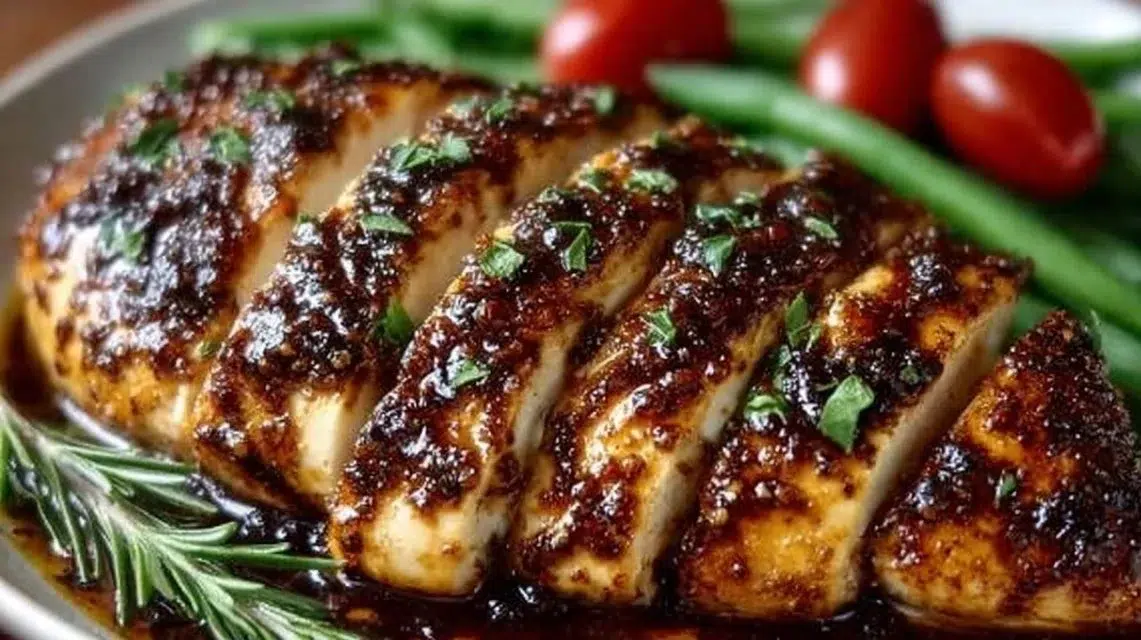
Balsamic baked chicken breast is a simple, flavorful dish with a sweet-tangy glaze and tender, juicy meat. The balsamic vinegar and honey create a sticky, shiny coating that seals in moisture while the garlic and herbs add warm savory notes. The texture is soft and succulent when baked just right — not dry, not rubbery. It’s an easy weeknight main that feels special enough for guests. Try serving it over quinoa or with roasted vegetables for a quick balanced meal, or slice it thin for a salad topping. For a similar baked chicken idea, see this garlic butter baked chicken breast recipe for another simple option.
Why You’ll Love This Balsamic Baked Chicken Breast
- Hands-off once it’s in the oven: marinate, bake, rest — little active time.
- Balanced flavor: tangy balsamic, sweet honey, savory garlic and herbs.
- Juicy texture when cooked to 165°F (75°C): tender slices that stay moist.
- Flexible: works with rice, greens, grains, or as a sandwich filling.
- Quick marinate option: 30 minutes works, but 2–4 hours is ideal.
- Simple pantry ingredients: olive oil, balsamic, honey, garlic, dried herbs, salt and pepper.
- Easy to scale up for family meals or prepare ahead for weeknight dinners.
- Clean-up friendly: line the pan with foil or parchment for fast washing.
What Is Balsamic Baked Chicken Breast?
Balsamic baked chicken breast is a baked chicken dish where boneless skinless chicken breasts soak in a balsamic-based marinade and then roast until cooked through. The balsamic vinegar gives a rich, tangy-sweet flavor that pairs with honey for a glossy finish. Garlic and dried oregano and thyme add herbal depth and warmth. The cooking method — baking at a relatively high oven temperature — seals the outside while keeping the inside tender when timed correctly. The vibe is comforting and homey, perfect for weeknights but refined enough for a simple dinner party. It’s a reliably easy recipe you can turn to whenever you want a tasty, low-fuss main course.
Ingredients for Balsamic Baked Chicken Breast
For the Chicken
- 4 boneless skinless chicken breasts
- Salt and pepper, to taste
For the Marinade / Sauce
- 1/2 cup balsamic vinegar
- 1/4 cup olive oil
- 2 tablespoons honey
- 3 cloves garlic, minced
- 1 teaspoon dried oregano
- 1 teaspoon dried thyme
To Serve (optional)
- Fresh basil leaves for garnish
Ingredient Notes (Substitutions, Healthy Swaps)
- Balsamic vinegar: If you like a milder tang, use a light balsamic or a 3:1 mix of balsamic to apple cider vinegar (optional). Keep the balance of acid to oil.
- Olive oil: Use extra-virgin for flavor, or a neutral oil (canola or avocado) if you want less olive taste.
- Honey: Swap with pure maple syrup or agave for a vegan-friendly option (optional). Expect a slightly different flavor profile.
- Garlic: Use 1/2 teaspoon garlic powder in a pinch, but fresh minced garlic gives the best bright flavor.
- Dried herbs: If you have fresh oregano or thyme, use 1 tablespoon chopped each instead of dried (optional). Reduce salt slightly when using fresh.
- Salt and pepper: Adjust to your taste. For low-sodium diets, reduce salt and boost herbs and garlic for flavor.
- Chicken: Bone-in or skin-on pieces will work but require longer cook time and different finish. This recipe uses boneless skinless breasts as provided.
Step-by-Step Instructions
Step 1 – Make the marinade
In a medium mixing bowl, combine 1/2 cup balsamic vinegar, 1/4 cup olive oil, 2 tablespoons honey, 3 cloves minced garlic, 1 teaspoon dried oregano, and 1 teaspoon dried thyme. Whisk until blended and the honey mostly dissolves. Season the mixture with salt and pepper to taste.
Visual cue: The marinade should look smooth and slightly glossy.
Step 2 – Marinate the chicken
Place the 4 boneless skinless chicken breasts in a large resealable bag or shallow dish. Pour the marinade over the chicken, coating each piece well. Seal or cover and refrigerate for at least 30 minutes; for best flavor, marinate 2–4 hours.
Pro cue: Turn the bag or stir the dish once during marinating so each breast soaks evenly.
Step 3 – Prep for baking
Preheat your oven to 400°F (200°C). Remove the chicken from the fridge and let it sit at room temperature for about 10–15 minutes while you line a baking dish with foil or parchment and lightly grease the surface. Pour any remaining marinade into the baking dish to use as a cooking sauce.
Step 4 – Bake
Place the marinated chicken breasts in the prepared baking dish in a single layer. Pour any leftover marinade from the bag or dish over the breasts. Bake in the preheated oven for 25–30 minutes, or until the internal temperature of the thickest part of the chicken reaches 165°F (75°C). Optionally baste the chicken with pan juices halfway through baking.
Pro cue: Use an instant-read thermometer for accurate doneness. Start checking at 20 minutes if your breasts are thin.
Step 5 – Rest and slice
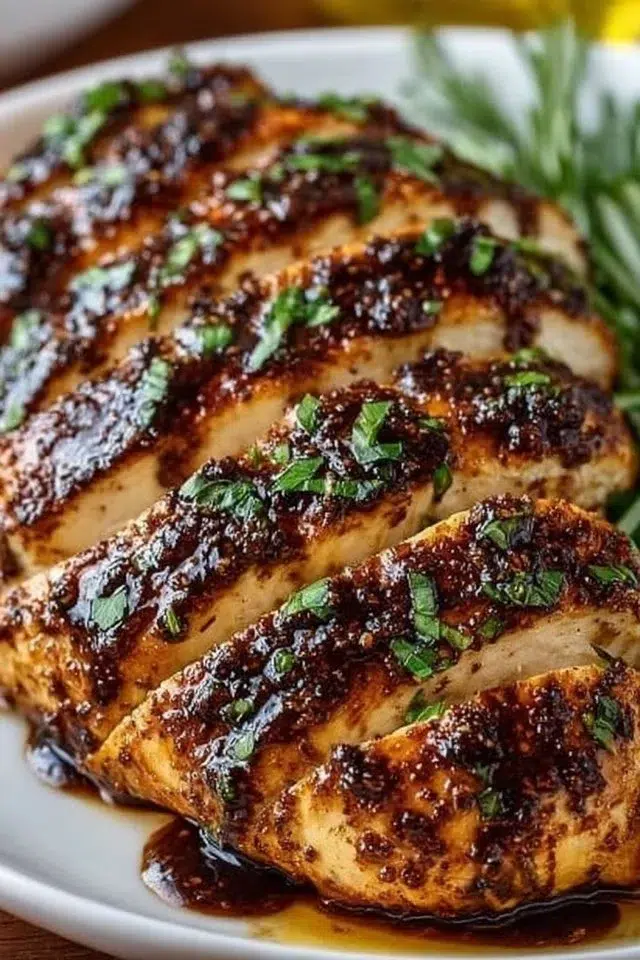
Remove the chicken from the oven and let it rest for 5–10 minutes. Resting helps redistribute juices so slices stay moist. Slice and arrange on a platter. Drizzle with the pan juices and garnish with fresh basil leaves if desired.
Step 6 – Serve or store
Serve hot with sides like roasted vegetables or quinoa. Store any leftovers in an airtight container in the fridge for up to 3 days.
Pro Tips for Success
- Use a thermometer: An instant-read thermometer prevents overcooking; aim for 165°F (75°C).
- Pound if uneven: If breasts are thick on one end, lightly pound them to even thickness so they cook evenly.
- Don’t skip resting: Resting for 5–10 minutes keeps the juices inside the chicken rather than spilling out when you slice.
- Marinate timing: At least 30 minutes helps flavor, 2–4 hours is best. Avoid over-marinating overnight in a very acidic mix, which can change texture.
- Line the pan: Use foil or parchment for easier cleanup and to protect juices from burning.
- Baste once: Brushing pan juices over the chicken halfway through promotes a glossy, caramelized finish.
- Heat consistency: Bake at 400°F (200°C) for a good balance of browning and gentle internal cooking.
Flavor Variations
- Optional — Honey-Mustard Twist: Add 1 tablespoon Dijon mustard to the marinade for a tangy boost.
- Optional — Spicy Kick: Stir in 1/4 to 1/2 teaspoon crushed red pepper flakes or a dash of hot sauce to the marinade.
- Optional — Herb Swap: Use 1 teaspoon Italian seasoning instead of separate oregano and thyme for a herby mix.
- Optional — Citrus Brightness: Add the zest of one lemon to the marinade for a fresh, bright note.
- Optional — Balsamic Glaze Finish: In the last 5 minutes of baking, brush the chicken with a reduced balsamic glaze (optional) for extra shine and tang.
- Optional — Garlic Boost: Add an extra clove of garlic or a teaspoon of garlic paste for stronger garlic flavor.
Serving Suggestions
- Serve sliced over cooked quinoa or couscous with pan juices spooned over.
- Pair with roasted vegetables like asparagus, carrots, or Brussels sprouts.
- Add to a green salad with mixed greens, cherry tomatoes, and a light vinaigrette.
- Make sandwiches: slice and layer on toasted bread with greens and a smear of mayo or pesto.
- Pair with mashed potatoes or cauliflower mash for a cozy meal.
- Offer as part of a simple buffet for guests — it holds well at room temperature.
Make-Ahead, Storage & Reheating
- Make-ahead: Mix the marinade and place the chicken in the marinade up to 4 hours ahead. You can also prepare and store the marinade (without chicken) in the fridge for a day.
- Fridge storage: Store cooked chicken in an airtight container for up to 3 days.
- Reheating: Reheat gently in a 325°F (160°C) oven for 10–15 minutes until warmed through, or slice and reheat briefly in a skillet over medium-low heat with a splash of water or pan juices to keep it moist.
- Texture changes: Reheated chicken will be firmer than freshly baked. Slice thin for sandwiches or salads to reduce dryness.
Storage and Freezing Instructions
- Refrigeration: Keep cooked chicken in the fridge up to 3 days in a sealed container.
- Freezing: You can freeze cooked chicken breasts for up to 2–3 months. Wrap individually in plastic wrap, then place in a freezer bag or airtight container. Thaw overnight in the fridge before reheating.
- Marinated raw chicken: If you want to freeze raw marinated chicken, do so in a freezer-safe bag for up to 1 month. Thaw in the fridge then bring to room temperature 10–15 minutes before baking.
- If you prefer not to freeze: Freeze the sauce separately in an ice cube tray and store chicken in the fridge for up to 3 days for easier flavor refresh when reheating.
Nutrition Facts (Per Serving)
Calories | Protein | Carbs | Fat | Fiber | Sodium
— | —: | —: | —: | —: | —:
Approx. 320 kcal | 28 g | 6 g | 18 g | 0.5 g | 320 mg
Estimates vary by brands and portions.
FAQ About Balsamic Baked Chicken Breast
Q: My chicken looks pale after baking. Is it done?
A: Check the internal temperature. If it reads 165°F (75°C), it’s safe to eat. A quick broil for 1–2 minutes can brown the top if needed.
Q: The marinade seems thin. Will it brown?
A: The honey and olive oil help with browning. Baste halfway through baking to help the surface caramelize.
Q: Can I use frozen chicken breasts?
A: It’s best to thaw fully before marinating and baking. Frozen meat won’t absorb the marinade well and will need longer oven time.
Q: How long should I marinate for best flavor?
A: At least 30 minutes is fine. For more flavor, marinate 2–4 hours. Avoid very long marinating (over 8–12 hours) in strong acid to prevent texture changes.
Q: My cooked chicken was dry. What went wrong?
A: Likely overcooked. Use an instant-read thermometer and remove at 165°F (75°C), then rest before slicing.
Q: Can I double the recipe for a crowd?
A: Yes. Use a larger baking dish and avoid overcrowding. Cook time may increase slightly if breasts are layered or thickly packed.
Notes
- Slice across the grain for the most tender bite.
- Save pan juices: spoon them over the sliced chicken for extra flavor and moisture when serving.
- Garnish with fresh basil for color and a fresh finish.
- For even cooking, choose breasts of similar size or halve very large breasts.
- If you want a thicker sauce, simmer leftover pan juices briefly in a small saucepan to reduce before drizzling.
Troubleshooting
- Bland flavor: Add a pinch more salt, a squeeze of lemon, or a little extra honey to balance acid.
- Overcooked, dry chicken: Lower oven time and use a thermometer next time; try slicing thin and serving with sauce to moisten.
- Watery pan: If the chicken releases a lot of water, drain a bit before baking and bake at full 400°F (200°C) to encourage evaporation.
- Burnt glaze: If pan juices darken too quickly, tent loosely with foil for the last 5–10 minutes.
- Uneven cooking: Pound to even thickness or slice thicker pieces to finish in a covered pan with a splash of broth for gentle heat.
- Not glossy enough: Baste with pan juices halfway through and finish with a quick broil if needed.
Final Thoughts
This balsamic baked chicken breast balances easy prep with bright, layered flavors. It’s a reliable dish for weeknights and simple enough to dress up for guests. With just a few pantry ingredients, you get a main that keeps well, pairs with many sides, and tastes like more effort than it takes.
Conclusion
If you want another take on baked chicken that is simple and crowd-pleasing, check this Baked Balsamic Chicken Breast Recipe – Cooking LSL for additional ideas and serving notes.