
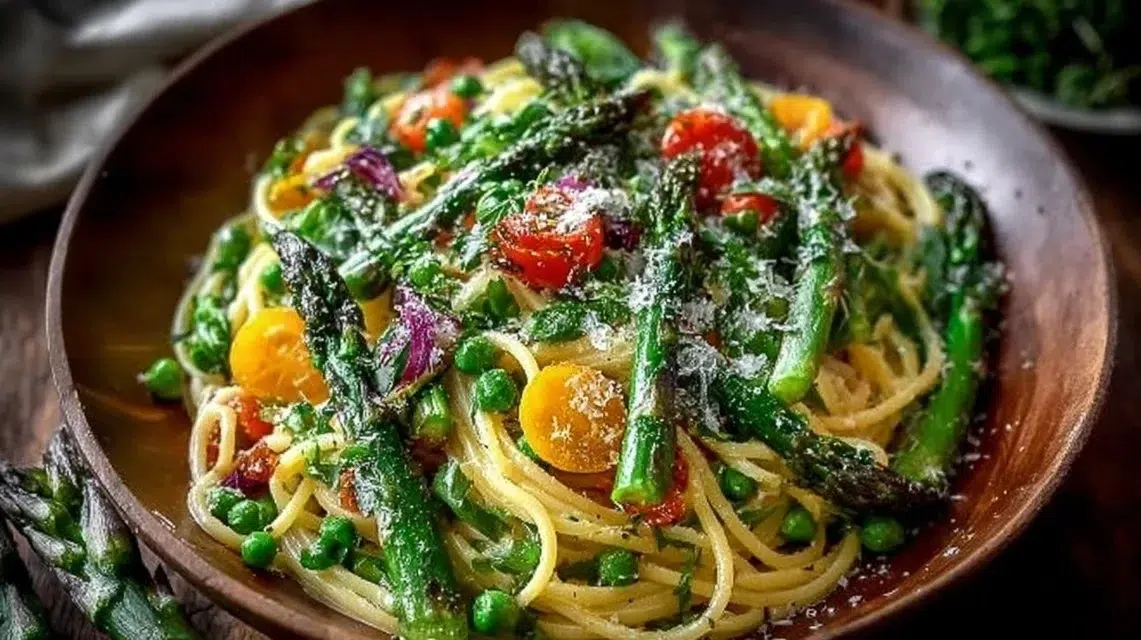
Spring Pasta Primavera is bright, light, and full of fresh spring flavors. The vegetables stay slightly crisp while the pasta is soft and silky, and olive oil brings everything together with a gentle, savory finish. This recipe is quick and simple: pasta cooked al dente and tossed with lightly sautéed asparagus, peas, zucchini, bell pepper, cherry tomatoes, and garlic. It feels like a homey weeknight dinner but also works for a casual lunch or brunch with friends. For a small fresh twist, finish with grated Parmesan and torn basil and serve with a lemon wedge or a light green salad for a ready meal. If you like a citrus note in spring pasta, try a similar idea in this easy spring pasta with lemon, garlic and herbs.
Why You’ll Love This Spring Pasta Primavera
- Uses simple pantry staples and fresh spring vegetables for bright flavor.
- Fast to make: pasta cooks while you sauté the vegetables, so dinner comes together in about 20–25 minutes.
- Light but satisfying: olive oil and fresh veggies keep it fresh, while pasta provides comfort.
- Flexible: use spaghetti or fettuccine and swap in other spring produce as needed.
- Easy to scale for a family dinner or a small gathering.
- Minimal hands-on time and no heavy sauce—great for warm nights.
- Optional Parmesan adds a nutty finish without changing the core recipe.
- Easy to plate for a casual or slightly fancier presentation with basil garnish.
What Is Spring Pasta Primavera?
Spring Pasta Primavera is a simple pasta dish that highlights seasonal vegetables. It tastes bright and fresh from the mix of sweet peas, crisp asparagus, mellow zucchini, and juicy cherry tomatoes. The texture balances tender pasta with slightly firm vegetables for a lively bite. The cooking method is quick sautéing in olive oil, then tossing everything with drained pasta—no cream, no heavy sauce. The overall vibe is easy, fresh comfort food perfect for weeknights, light dinners, or weekend lunches when spring produce is at its best.
Ingredients for Spring Pasta Primavera
For the Base
- 1 lb pasta (spaghetti or fettuccine)
For the Vegetables
- 2 cups asparagus, trimmed and cut into 2-inch pieces
- 1 cup peas, fresh or frozen
- 1 bell pepper, sliced
- 2 cloves garlic, minced
- 1 medium zucchini, sliced
- 1 cup cherry tomatoes, halved
For the Sauce
- 1/4 cup olive oil
- Salt and pepper to taste
To Serve
- Parmesan cheese, grated (optional)
- Fresh basil, for garnish
Ingredient Notes (Substitutions, Healthy Swaps)
- Pasta: Use whole-wheat or gluten-free pasta if you need a swap. Cooking time may change slightly—check the package.
- Asparagus and peas: Fresh are best for texture, but frozen peas work well. Frozen asparagus can be used in a pinch but may be softer when cooked.
- Bell pepper: Any color works. Red or yellow peppers add more sweetness.
- Zucchini: Swap with yellow squash if preferred.
- Garlic: Use 1 teaspoon garlic powder if you’re out of fresh garlic, but fresh is better.
- Olive oil: Use extra-virgin for flavor. For a lower-fat option, reduce oil to 2 tablespoons and add a splash of pasta cooking water for a looser toss.
- Parmesan: Omit for dairy-free or vegan; add a splash of nutritional yeast or a squeeze of lemon for extra flavor instead (optional).
- Salt & pepper: Season to taste; add salt in stages to avoid over-salting.
Step-by-Step Instructions
Step 1 – Cook the pasta
- Bring a large pot of salted water to a boil. Add 1 lb pasta and cook according to package instructions until al dente. Drain and set aside.
- Visual cue: Pasta should be tender but still a little firm in the center when you bite it.
Step 2 – Heat the oil
- In a large skillet, heat 1/4 cup olive oil over medium heat.
Step 3 – Sauté the garlic
- Add 2 cloves minced garlic to the skillet and sauté for about 1 minute until fragrant. Do not brown it.
- Visual cue: Garlic should smell fragrant and look slightly glossy but not browned.
Step 4 – Cook the firmer vegetables
- Add 2 cups asparagus (trimmed and cut into 2-inch pieces) and 1 sliced bell pepper. Cook for about 3–4 minutes, stirring occasionally, until they start to soften.
Step 5 – Add remaining vegetables
- Stir in 1 sliced zucchini and 1 cup peas (fresh or frozen). Cook until all vegetables are tender, about 2–3 more minutes. Then add 1 cup cherry tomatoes and cook until just softened.
- Pro cue: Keep the heat medium so vegetables cook quickly but stay bright and slightly crisp.
Step 6 – Toss with pasta and finish
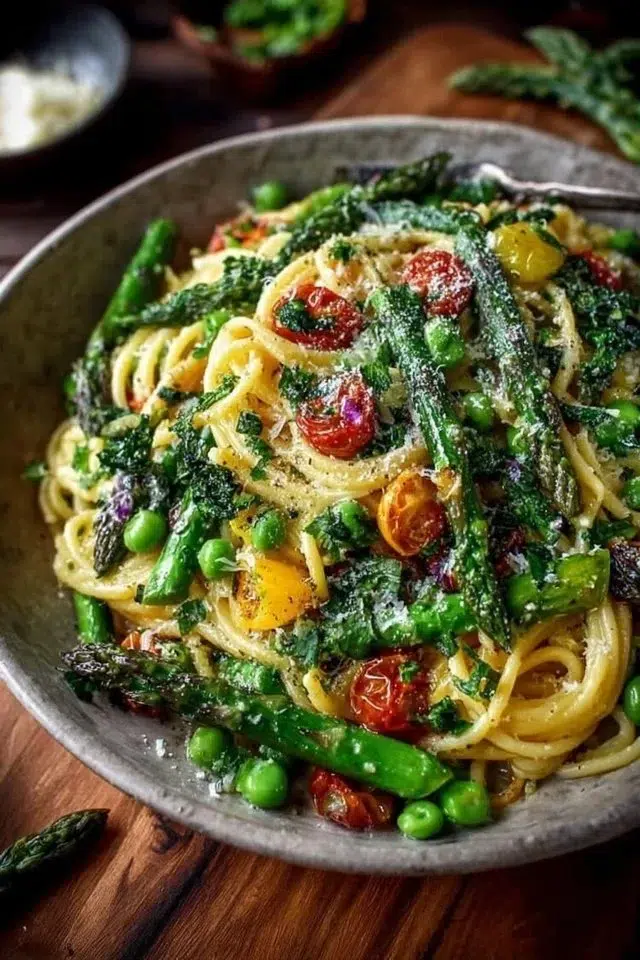
- Toss the cooked pasta into the skillet with the vegetables. Mix well to coat in olive oil. Season with salt and pepper to taste. Serve warm, topped with grated Parmesan and fresh basil.
- Visual cue: Pasta and veggies should look glossy from the oil and hold their shape without excess liquid.
Pro Tips for Success
- Salt the pasta water well: it’s the main chance to season the pasta itself.
- Don’t overcook vegetables: aim for tender-crisp to keep color and texture.
- Save a little pasta water: if the dish seems dry, add a tablespoon or two to loosen the sauce.
- Use medium heat for vegetables to avoid burning the garlic or wilting the tomatoes too fast.
- Add cherry tomatoes last to avoid making the pan watery from released juices.
- Taste and season at the end: you may need a final pinch of salt or a twist of pepper.
- Warm your serving bowl: this keeps the pasta hot when plated.
- If using frozen peas, add them in near the end—no need to thaw.
Flavor Variations
- OPTIONAL – Lemon and herb: Add a teaspoon of lemon zest and a tablespoon of chopped fresh herbs (basil, parsley) at the end for brightness.
- OPTIONAL – Red pepper flakes: Sprinkle red pepper flakes while cooking garlic for a mild heat.
- OPTIONAL – Add protein: Stir in cooked chicken, shrimp, or white beans to make it heartier (cook separately and fold in).
- OPTIONAL – Butter finish: Stir in 1 tablespoon cold butter off heat for a richer finish.
- OPTIONAL – Nutty crunch: Top with toasted pine nuts or chopped almonds for texture (add at serving).
- OPTIONAL – Vegan swap: Skip Parmesan and add a drizzle of olive oil plus extra basil for flavor.
Serving Suggestions
- Plate with grated Parmesan and a scatter of fresh basil leaves.
- Serve with a simple green salad and a light vinaigrette.
- Pair with crusty bread to soak up any oil and juices.
- Offer roasted lemon wedges on the side for guests to squeeze over individual portions.
- Pair with a light white wine or sparkling water with lemon for a casual dinner.
- Serve warm for dinner or allow to cool slightly for a tasty spring pasta salad at room temperature.
Make-Ahead, Storage & Reheating
- Make-ahead: Cook and cool the pasta and vegetables separately, then store in separate airtight containers for up to 24 hours. Reheat and toss together before serving.
- Storage: Store leftovers in an airtight container in the refrigerator for 3–4 days.
- Reheating best practice: Reheat gently in a skillet over medium-low heat with a splash of water or a drizzle of olive oil to loosen the pasta. Heat just until warmed through to avoid overcooking the vegetables.
- Texture changes: Vegetables will soften after refrigeration and reheating. For best texture, reheat gently and avoid long cooking.
Storage and Freezing Instructions
- Freezing is not recommended for best quality because the vegetables (especially zucchini and tomatoes) become mushy after freezing and thawing.
- If you must freeze: toss pasta and vegetables with a little olive oil, cool completely, place in freezer-safe containers, and freeze up to 2 months. Thaw overnight in the fridge and reheat gently; expect softer texture.
- Better option: Freeze leftover olive oil–coated pasta separately from any added fresh toppings and refresh with fresh basil and grated Parmesan when reheating.
Nutrition Facts (Per Serving)
Calories | Protein | Carbs | Fat | Fiber | Sodium
— | —: | —: | —: | —: | —:
560 kcal | 18 g | 78 g | 18 g | 6 g | 320 mg
Estimates vary by brands and portions.
FAQ About Spring Pasta Primavera
Q: My pasta is too dry. What can I do?
A: Add 1–2 tablespoons of reserved pasta cooking water or a little olive oil and toss to coat.
Q: The vegetables are too soft. How do I avoid that?
A: Cook vegetables over medium heat and reduce time. Remove them from the pan as soon as they are tender-crisp.
Q: Can I use frozen peas and asparagus?
A: Frozen peas are fine—add them near the end. Frozen asparagus is okay but will be softer; add carefully to avoid mushiness.
Q: How do I keep the tomatoes from making the dish watery?
A: Add cherry tomatoes last and cook just until they soften. Avoid pressing them while they cook.
Q: Can I make this dairy-free or vegan?
A: Yes. Omit Parmesan or use a vegan cheese or nutritional yeast for a similar umami note.
Q: How long will leftovers keep?
A: Stored in the fridge in an airtight container, leftovers keep for 3–4 days.
Notes
- Finish with fresh basil after plating to keep its color and flavor bright.
- Break long pasta (spaghetti) in half only if needed for pot size, but whole strands look nicer when served.
- If you like a glossy finish, stir a small knob of butter into the warm pasta off heat.
- Taste for salt at the end; the amount needed can vary by pasta brand and how much Parmesan you add.
- Use a large skillet so you can toss the pasta and vegetables without spilling.
Troubleshooting
- Bland taste: Add a pinch more salt or a final drizzle of olive oil. A small squeeze of lemon (optional) can lift the flavors.
- Overcooked pasta: Cook pasta to al dente and stop cooking when you drain it. If it’s already soft, use it quickly and avoid extra heat.
- Watery pan: Cook tomatoes last and keep heat moderate. Drain excess liquid before adding pasta if needed.
- Burned garlic: Lower the heat and add vegetables quickly; garlic burns fast and turns bitter.
- Vegetables too raw: Cut vegetables into smaller pieces and cook a bit longer, or cover the pan briefly to trap steam.
- Clumpy pasta: Toss pasta with a little oil after draining or mix immediately with the vegetables and oil to prevent sticking.
Final Thoughts
This Spring Pasta Primavera is a simple, bright, and flexible dish that lets fresh vegetables shine with minimal fuss. It’s fast enough for weeknights and pretty enough for a relaxed weekend meal—easy to tweak and easy to scale. Enjoy the clean flavors, and use the tips here to keep the vegetables crisp and the pasta perfectly coated.
Conclusion
For another take on fresh spring pasta with herbs and garlic, see this Pasta Primavera Recipe – Love and Lemons.
Spring Pasta Primavera
Ingredients
For the Base
- 1 lb pasta (spaghetti or fettuccine)
For the Vegetables
- 2 cups asparagus, trimmed and cut into 2-inch pieces
- 1 cup peas, fresh or frozen
- 1 bell pepper, sliced Any color works; red or yellow peppers add more sweetness.
- 2 cloves garlic, minced Fresh is preferred, can use garlic powder in a pinch.
- 1 medium zucchini, sliced Can swap with yellow squash.
- 1 cup cherry tomatoes, halved
For the Sauce
- 1/4 cup olive oil Use extra-virgin for flavor.
- Salt and pepper to taste Season to taste; add in stages to avoid over-salting.
To Serve
- Parmesan cheese, grated (optional) Omit for dairy-free or vegan; sprinkle nutritional yeast instead.
- Fresh basil, for garnish Finish with fresh basil after plating.
Instructions
Cook the pasta
- Bring a large pot of salted water to a boil. Add pasta and cook according to package instructions until al dente. Drain and set aside.
Sauté the vegetables
- In a large skillet, heat olive oil over medium heat.
- Add minced garlic to the skillet and sauté for about 1 minute until fragrant.
- Add asparagus and sliced bell pepper. Cook for about 3–4 minutes until they start to soften.
- Stir in sliced zucchini and peas. Cook until all vegetables are tender, about 2–3 minutes. Then add cherry tomatoes and cook until just softened.
Combine and serve
- Toss the cooked pasta into the skillet with the vegetables. Mix well to coat in olive oil. Season with salt and pepper to taste. Serve warm, topped with grated Parmesan and fresh basil.