
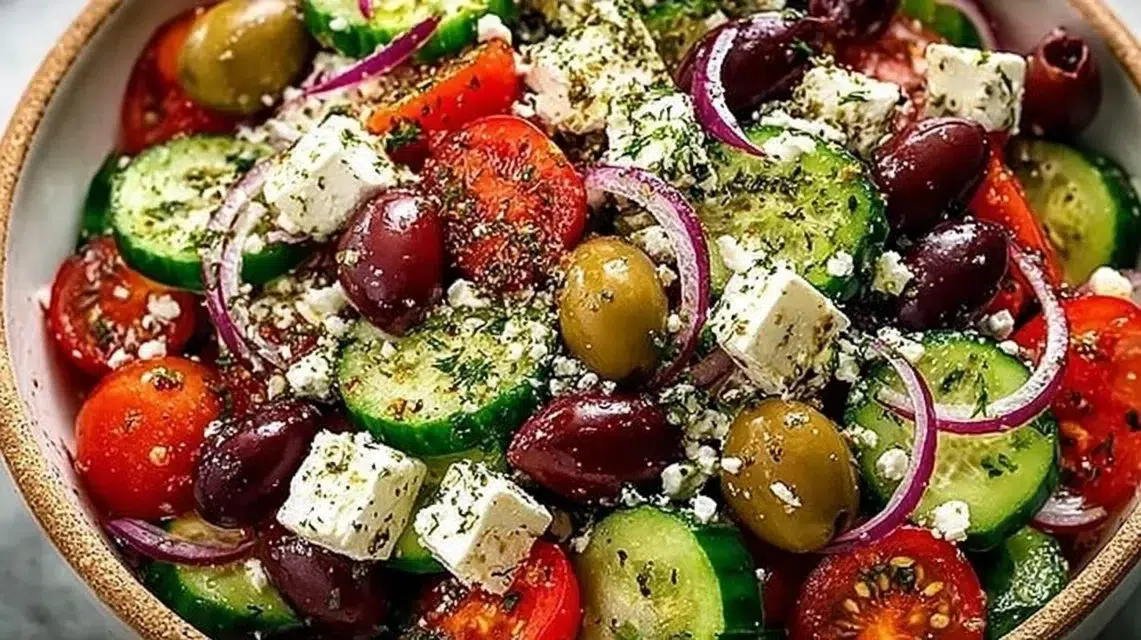
This Best Greek Salad Recipe is bright, salty, and fresh with crisp cucumber, juicy grape tomatoes, crunchy green pepper, sharp red onion and briny Kalamata olives balanced by tangy red apple vinegar and lemon. The crumbled feta and olive oil give it a rich, silky mouthfeel while dried oregano and garlic add classic Mediterranean notes. It’s simple to make in one bowl and ready in minutes, which makes it perfect for weeknights, picnics, or a light lunch. For a full meal, try pairing it with a warm pasta or grilled chicken — see this take on 4 secret ingredients for the best Marry Me Chicken Pasta for a satisfying match.
Why You’ll Love This Best Greek Salad Recipe
- Quick to make: toss-ready in about 10–15 minutes with no cooking required.
- Classic balance: salty feta and olives meet crisp veggies and bright acid.
- Hands-off dressing: whisked in a small bowl and emulsified for a stable coat.
- Flexible: works as a side, light main, or part of a mezze spread.
- Fresh texture contrast: crunchy cucumber and pepper, soft tomatoes, creamy feta.
- Pantry-friendly: uses staples like olive oil, dried oregano, and Dijon mustard.
- Crowd-pleaser: familiar flavors that suit many diets and plates.
- Easy to scale: double or halve the ingredients without changing the method.
What Is Best Greek Salad Recipe?
Best Greek Salad Recipe is a fresh vegetable salad from Mediterranean tradition, focused on raw produce and bold, simple seasonings. It tastes bright and tangy from the red apple vinegar and lemon, salty and savory from Kalamata olives and crumbled feta, and slightly herbaceous from oregano and garlic. The texture is lively — crisp cucumber and bell pepper, tender halved grape tomatoes, and creamy feta pieces.
There is no cooking involved unless you warm a main to serve it with; the method is mixing and whisking. The vibe is casual and comforting — ideal for quick weeknight dinners, light lunches, backyard barbecues, or as part of a Mediterranean-style brunch.
Ingredients for Best Greek Salad Recipe
For the Base
- 1 large cucumber, diced
- 1 pint grape tomatoes, halved
- 1 green bell pepper, diced
- ½ red onion, thinly sliced
- ½ cup Kalamata olives, halved
- 4 ounces feta cheese, crumbled
For the Sauce
- ⅓ cup red apple vinegar
- Juice of 1 lemon
- 1 teaspoon Dijon mustard
- 2 garlic cloves, minced
- ½ teaspoon dried oregano
- ¼ teaspoon salt
- ¼ teaspoon black pepper
- ½ cup olive oil
To Serve
- Salt and pepper, to taste
Ingredient Notes (Substitutions, Healthy Swaps)
- Cucumbers: Use English cucumber to reduce seeds and bitterness. Peel if skin is waxed.
- Tomatoes: Cherry or small plum tomatoes work if you don’t have a pint of grape tomatoes.
- Bell pepper: Red or yellow bell pepper add sweetness; keep the same volume.
- Red onion: Swap for thinly sliced sweet onion or shallot if you want a milder bite.
- Kalamata olives: Use other brined olives in a pinch, but Kalamata adds the classic salty, fruity note. Rinse briefly for lower sodium.
- Feta cheese: For a lighter salad, use reduced-fat feta or a small amount of shaved Parmesan (optional). For a vegan option, use a firm plant-based feta alternative (label optional).
- Red apple vinegar: Red wine vinegar or white wine vinegar are fine swaps; keep the acid level similar.
- Olive oil: Use extra-virgin olive oil for flavor. For a lower-calorie option, reduce oil by half and add a tablespoon of water to the dressing while whisking.
- Dijon mustard: Adds emulsifying power; use yellow mustard only if needed but the flavor will change.
Step-by-Step Instructions
Step 1 – Prep the vegetables
Wash and dry the cucumber, tomatoes, and bell pepper. Dice the cucumber and bell pepper into bite-size pieces, halve the grape tomatoes, and thinly slice the red onion. Place all prepared vegetables in a large mixing bowl with the halved Kalamata olives and crumbled feta cheese.
Visual cue: The bowl should be full of bright, colorful pieces with feta scattered on top.
Step 2 – Make the dressing
In a separate small bowl, add ⅓ cup red apple vinegar, juice of 1 lemon, 1 teaspoon Dijon mustard, 2 minced garlic cloves, ½ teaspoon dried oregano, ¼ teaspoon salt, and ¼ teaspoon black pepper. Whisk these together until combined.
Visual cue: The vinegar and mustard mix will look smooth and slightly viscous before oil is added.
Step 3 – Emulsify the dressing
While whisking constantly, slowly drizzle in ½ cup olive oil. Continue whisking until the dressing is emulsified and slightly thickened. Taste and adjust salt and pepper if needed.
Pro cue: If the dressing separates later, whisk a splash of lemon juice or a small spoon of mustard to bring it back together.
Step 4 – Dress the salad
Drizzle the dressing over the salad mixture. Using a large spoon or salad tongs, gently toss to coat all ingredients evenly. Aim to lightly coat rather than soak the vegetables.
Visual cue: Feta and olives will glisten and the veggies will look evenly dressed.
Step 5 – Serve or chill briefly
Serve immediately at room temperature or chill for 10–15 minutes for a colder salad. Adjust final seasoning with salt and pepper to taste. 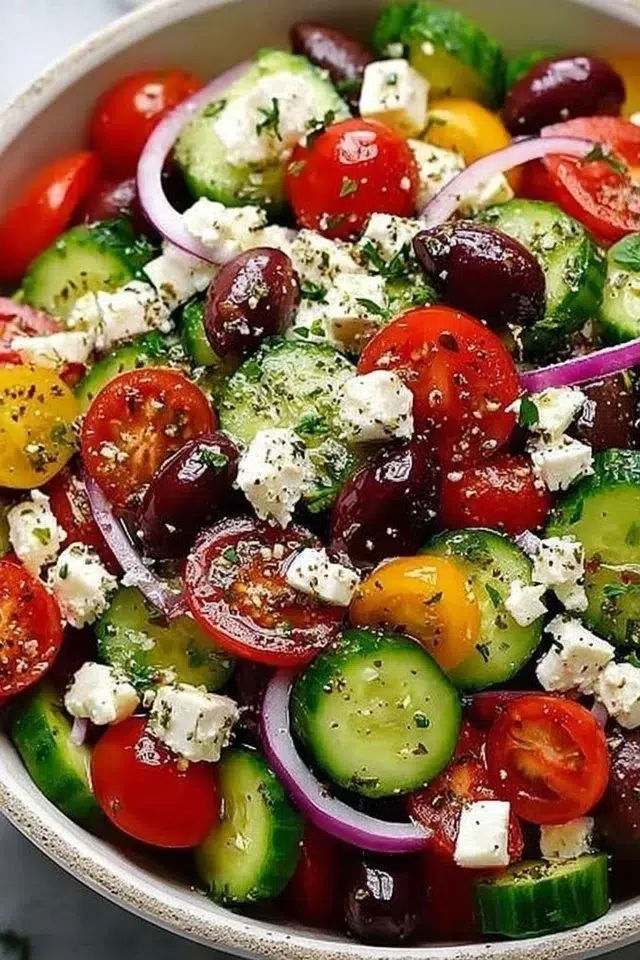
Pro cue: For best texture, do not sit the dressed salad for more than a few hours — cucumbers release water over time.
Pro Tips for Success
- Use ripe tomatoes for sweetness and color; avoid underripe green tomatoes.
- Slice the onion very thin to avoid overpowering sharpness; soak in cold water for 5 minutes if you want milder onion flavor.
- Dice vegetables to a similar size for an even bite and easy serving.
- Whisk oil slowly into the vinegar mix to form a stable dressing.
- Taste the dressing before adding to the salad; adjust lemon or vinegar for more brightness.
- If making ahead, keep the dressing separate and toss right before serving.
- Use a large bowl so tossing doesn’t crush ingredients.
- If the salad tastes too salty, add a few extra tomatoes or cucumber to dilute the salt.
Flavor Variations
- OPTIONAL — Add capers: Throw in a tablespoon of capers for extra briny bite without changing the base.
- OPTIONAL — Fresh herbs: Add a handful of chopped parsley, dill, or oregano for a green lift.
- OPTIONAL — Add protein: Top with grilled chicken, shrimp, or chickpeas to make it a main.
- OPTIONAL — Add crunch: Toss in toasted pine nuts or slivered almonds for texture.
- OPTIONAL — Smoky twist: Add a small pinch of smoked paprika to the dressing for a subtle warmth.
- OPTIONAL — Citrus boost: Replace part of the lemon with orange juice for a sweeter citrus note.
Serving Suggestions
- Serve as a side with grilled lamb, chicken, or fish for a balanced plate.
- Spoon over toasted pita or crusty bread for a quick, open-faced salad sandwich.
- Offer as part of a mezze platter with hummus, tzatziki and warm pita.
- Use as a topping for baked potatoes or bowls to add freshness.
- Bring to picnics or potlucks; keep dressing separate if you need it to travel.
- Plate in shallow bowls so the dressing spreads evenly and the feta sits on top for visual appeal.
- Serve chilled on a hot day to refresh guests.
Make-Ahead, Storage & Reheating
- Make-ahead: You can chop the vegetables up to 24 hours ahead and store them in an airtight container in the fridge. Keep the dressing in a separate jar. Combine just before serving.
- Storage: Once dressed, store the salad in an airtight container in the refrigerator for up to 2–3 days. Expect some water release from the cucumber and tomatoes after the first day.
- Reheating: This salad is best served cold or at room temperature. Do not reheat. If you want a warm element, serve the salad alongside a warm grain or grilled protein rather than heating the salad itself.
- Texture changes: Dressed salad will soften over time; crispness is best within the first few hours.
Storage and Freezing Instructions
- Freezing not recommended: Freezing will damage the texture of fresh vegetables and feta, creating a mushy salad when thawed.
- Instead of freezing the full salad, you can freeze unopened feta or olives separately if needed, but flavor and texture may change.
- Best plan: Prepare vegetables and keep dressing sealed in the fridge. Toss just before serving to preserve crisp texture.
Nutrition Facts (Per Serving)
Calories | Protein | Carbs | Fat | Fiber | Sodium
— | —: | —: | —: | —: | —:
390 kcal | 6 g | 8 g | 35 g | 2 g | 550 mg
Estimates vary by brands and portions.
FAQ About Best Greek Salad Recipe
Q: Why is my salad watery after sitting?
A: Cucumbers and tomatoes release water when dressed. To avoid this, salt cucumbers lightly and drain on paper towels before adding, and toss salad right before serving.
Q: How do I make the dressing thicker?
A: Emulsify slowly by adding oil in a thin stream while whisking. A small extra teaspoon of mustard helps stabilize the emulsion.
Q: Can I use regular white vinegar instead of red apple vinegar?
A: Yes. The flavor will be slightly different; red wine or white wine vinegar are closer matches for a Mediterranean taste.
Q: How long will leftovers keep?
A: Dressed salad keeps 2–3 days in the fridge, but texture softens. Keep dressing separate if you want longer freshness.
Q: Is there a vegan version?
A: Yes. Skip the feta or use a plant-based feta substitute. All other ingredients are plant-based.
Q: Can I add cooked grains to make it a full meal?
A: Yes. Pair with warm quinoa or farro and a protein for a hearty main. Add grains when serving to avoid sogginess.
Notes
- Use a shallow serving bowl so the dressing covers ingredients evenly.
- Warm the lemon a bit in your hand before juicing to get more juice.
- If olives are very salty, rinse them and pat dry before adding.
- Crumble feta with your hands for rustic chunks rather than fine crumbles.
- Serve with lemon wedges for guests who want extra brightness.
Troubleshooting
- Bland flavor: Add a pinch more salt, a squeeze more lemon, or a splash more vinegar to brighten the salad.
- Too oily: Whisk in a teaspoon of lemon juice or mustard to re-emulsify and balance the oil. Reduce oil next time.
- Over-salty: Add more cucumber or tomato to dilute, or rinse olives/feta lightly before using.
- Mushy vegetables: Dice to similar sizes and avoid over-stirring; dress later to keep veggies crisp.
- Dressing separates: Vigorously whisk or shake in a jar; add a small spoon of mustard to help re-emulsify.
Final Thoughts
This Best Greek Salad Recipe is fast, fresh, and dependable. It brings bright acid, salty depth, and crisp texture to any meal and works well as a side or light main. Keep your dressing separate if prepping ahead, and toss just before serving for the best crunch and flavor.
Conclusion
For another take on a lively, fresh Mediterranean-style salad and ideas to pair with mains, see this Greek Salad Recipe – Love and Lemons.