
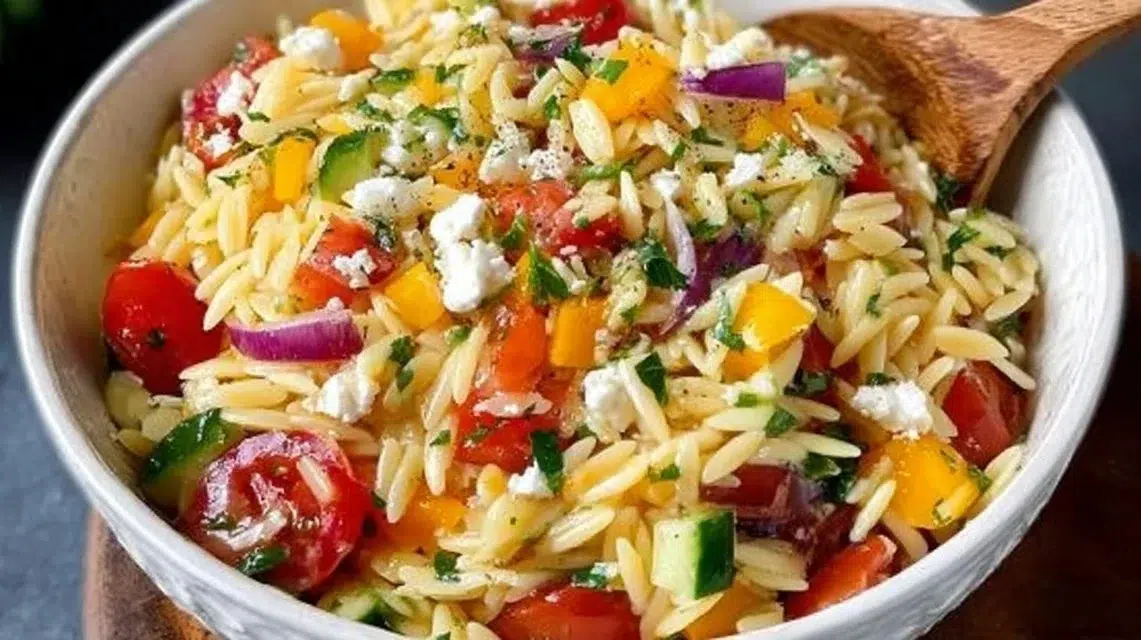
Orzo salad is bright, chewy, and fresh — a small pasta with big flavor. The bite-sized orzo cooks to a tender, slightly firm texture and soaks up a simple lemon-olive oil dressing that ties cherry tomatoes, cucumber, red onion, and bell pepper together. Crumbled feta adds creaminess and a salty finish. This recipe is quick to make, easy to scale, and holds well chilled, so it’s perfect for quick weeknight dinners, potlucks, or packing for lunch. Try it topped with extra parsley and a lemon wedge for an easy serving idea, or pair it with grilled chicken for a fuller meal. For another crunchy salad idea you might like, check this Asian chicken cranberry salad with cabbage.
Why You’ll Love This Orzo Salad
- Fast to make: cook the orzo while you chop the vegetables.
- Bright, balanced flavors: lemon and olive oil cut through the salty feta.
- Great texture contrast: tender orzo, crisp cucumber, juicy tomatoes, crunchy peppers.
- Hands-off dressing: simple whisk, no blender needed.
- Flexible for meals: serve as a side, light main, or bring-to-share dish.
- Refrigerator-friendly: tastes even better after a few hours when flavors meld.
- Easy to scale up for guests without adding complexity.
- Vegetarian and easy to adapt for dietary swaps.
What Is Orzo Salad?
Orzo salad is a cold pasta salad that uses orzo, a rice-shaped pasta. It tastes fresh and lively — citrusy from lemon, fruity from olive oil, and lightly salty from feta. The textures are key: the small, toothsome orzo contrasts with crunchy chopped vegetables and soft, crumbly cheese. You cook the orzo in boiling water, drain and cool it, then toss it with raw vegetables and a simple dressing. The vibe is casual and versatile — great for weeknight dinners, picnic spreads, potluck tables, or as part of a brunch buffet.
Ingredients for Orzo Salad
For the Base
- 1 cup orzo pasta
- 1 cup cherry tomatoes, halved
- 1 cup cucumber, diced
- 1/2 cup red onion, diced
- 1/2 cup bell peppers, diced
- 1/4 cup fresh parsley, chopped
For the Dressing
- 1/4 cup olive oil
- 2 tablespoons lemon juice
- Salt and pepper to taste
To Finish
- 1/4 cup feta cheese, crumbled
Ingredient Notes (Substitutions, Healthy Swaps)
- Orzo: swap for another small pasta (ditalini, small shells) if needed. Cook time may change slightly.
- Cherry tomatoes: grape tomatoes work the same; halved Roma tomatoes are fine but remove seeds if watery.
- Cucumber: English cucumber keeps the salad less watery; you can peel regular cucumber if skins are thick.
- Red onion: swap for shallot for a milder flavor. Rinse diced onion under cold water if you want a softer bite.
- Bell peppers: mix colors or use only one color; roasted peppers (optional) add a smoky note but change texture.
- Parsley: cilantro, basil, or dill are optional swaps; use sparingly so herbs don’t overwhelm.
- Feta: goat cheese or ricotta salata can replace feta for milder or creamier options.
- Olive oil and lemon: swap lemon for white wine vinegar or red wine vinegar for a tangier dress.
- Salt and pepper: use kosher salt for even seasoning; adjust to taste after tossing.
Step-by-Step Instructions
Step 1 – Cook the orzo
- Bring a pot of salted water to a boil. Add 1 cup orzo and cook according to package instructions until al dente. Drain and run under cold water or spread on a tray to cool.
Visual cue: orzo should be tender with a slight bite, not mushy.
Step 2 – Prepare the vegetables
2. While orzo cools, halve 1 cup cherry tomatoes, dice 1 cup cucumber, dice 1/2 cup red onion, and dice 1/2 cup bell peppers. Chop 1/4 cup fresh parsley. Combine all in a large bowl with the cooled orzo.
Step 3 – Make the dressing
3. In a small bowl, whisk together 1/4 cup olive oil, 2 tablespoons lemon juice, salt, and pepper to taste until slightly emulsified.
Step 4 – Toss the salad
4. Pour dressing over the orzo and vegetables. Toss well to coat every piece evenly.
Step 5 – Add the feta and chill
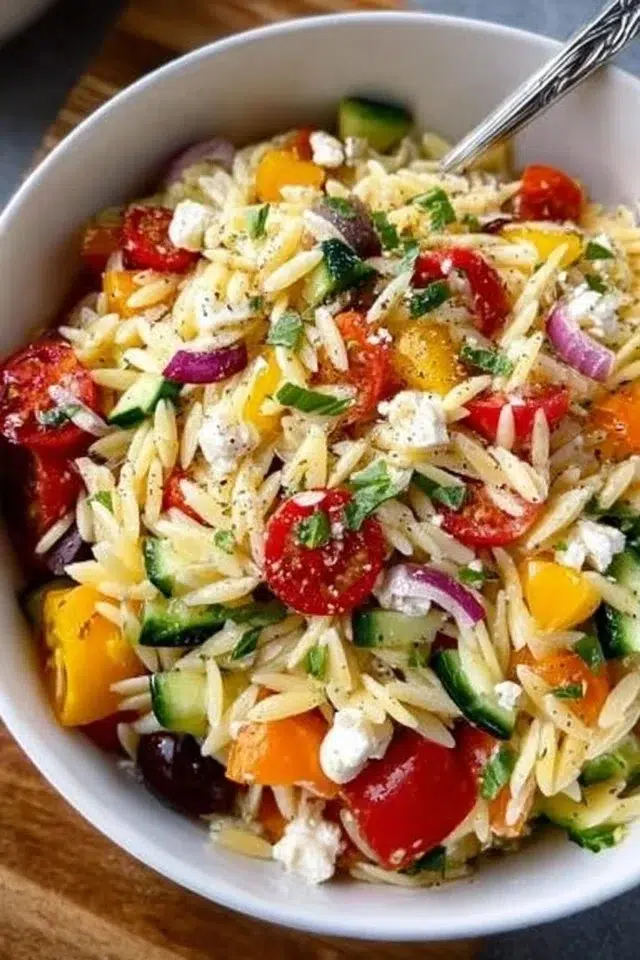
5. Add 1/4 cup crumbled feta and gently mix. Taste and adjust salt, pepper, or lemon as needed. Chill before serving for best flavor.
Pro cue: let the salad rest 30 minutes to an hour so flavors meld; chilling also firms the texture for clean scoops.
Pro Tips for Success
- Salt the cooking water well so the orzo has base seasoning.
- Rinse cooked orzo briefly under cold water to stop cooking and prevent sticking. Spread on a tray to cool faster.
- Dice vegetables roughly the same size as the orzo for even bites.
- Add dressing while the orzo is just warm for better absorption, but cool fully before adding feta if you prefer crisper cheese.
- Taste and adjust seasoning only after the dressing is mixed in — flavors develop as it rests.
- Use fresh lemon juice, not bottled, for brighter flavor.
- If making ahead, wait to add feta until just before serving to keep it from getting soggy.
- Reserve a little olive oil to drizzle on the top when serving for a glossy finish.
Flavor Variations
All of these are optional and keep the base recipe intact.
- Mediterranean boost: add 1/4 cup chopped Kalamata olives and a pinch of dried oregano.
- Herby green: replace parsley with a mix of basil and dill for a fresher, fragrant profile.
- Spicy kick: stir in 1/4 teaspoon red pepper flakes or a splash of hot sauce to the dressing.
- Lemon-garlic: add one small minced garlic clove to the dressing for a punch of garlic.
- Creamy swap: fold in 2 tablespoons plain Greek yogurt to the dressing for a creamier coat; reduce oil by 1 tablespoon.
- Protein add-on (optional): top servings with grilled chicken or chickpeas for a heartier main.
Serving Suggestions
- Serve chilled as a side with grilled fish, chicken, or tofu.
- Make it the main: add roasted chickpeas or sliced grilled chicken on top.
- Pack it for lunch: spoon into containers and add a lemon wedge for freshness.
- Potluck perfect: place in a large bowl with extra parsley and feta on top for guests to serve.
- Pair it with warm bread or pita to round out the meal.
- Plate on a bed of mixed greens for a composed salad presentation.
Make-Ahead, Storage & Reheating
- Make-ahead: cook the orzo and chop vegetables up to 24 hours in advance. Store separately in airtight containers. Mix and dress the salad 1–2 hours before serving for best texture.
- Storage duration: keep the dressed salad in the refrigerator for up to 3 days. Un-dressed components (orzo and vegetables) last 3–4 days when stored separately.
- Reheating: this salad is best served cold or at room temperature. If you prefer warm, lightly microwave a single portion for 20–30 seconds, then add a splash of lemon or olive oil to refresh the flavors.
- Texture changes: after extended storage the vegetables will soften and feta may lose some texture. For best crunch, add extra diced cucumber or fresh herbs before serving.
Storage and Freezing Instructions
- Freezing is not recommended because the vegetables and feta will change texture and become watery when thawed.
- Instead of freezing, store components separately: cooked orzo in one container, chopped vegetables in another, and dressing in a small jar. Combine when ready to serve. This maintains the best texture and flavor.
Nutrition Facts (Per Serving)
Calories | Protein | Carbs | Fat | Fiber | Sodium
—|—:|—:|—:|—:|—:
340 | 8 g | 38 g | 16 g | 2 g | 250 mg
Estimates vary by brands and portions.
FAQ About Orzo Salad
Q: How long does orzo take to cook?
A: Follow the package directions. Typically 8–10 minutes for al dente, but check early to avoid overcooking.Q: My salad is too dry — what should I do?
A: Add a little more olive oil or a splash of lemon juice and toss. Mix well and let sit 15 minutes to absorb.Q: It’s too oily — how can I fix it?
A: Add more orzo or vegetables to balance, or toss with a squeeze of lemon and a pinch of salt to cut the oiliness.Q: Can I make it dairy-free?
A: Yes — omit the feta or replace with a dairy-free cheese alternative or toasted nuts for crunch.Q: How can I prevent the salad from becoming watery?
A: Use firm-ripe tomatoes, drain overly moist vegetables, and add cucumbers last or use English cucumber. Toss gently and chill uncovered for a short time to let excess moisture settle.Q: How many servings does this make?
A: This recipe generally serves 3–4 as a side or 2-3 as a light main, depending on portions.
Notes
- Toast a few pine nuts and sprinkle on top for texture and a nutty finish.
- Use a glass or ceramic bowl for mixing to avoid metallic taste from prolonged contact with lemon.
- If you plan to store the salad, keep a little extra dressing on the side to refresh before serving.
- Garnish with extra chopped parsley and a lemon wedge for a fresh look.
- Warm the orzo slightly rather than using fully cold pasta if you want the dressing to absorb better.
Troubleshooting
- Bland flavor: add more lemon juice, a pinch of salt, or a little grated lemon zest to brighten.
- Overcooked orzo: rinse with cold water immediately to stop cooking and use as chilled salad; add extra texture with crunchy veggies.
- Watery salad: drain tomatoes and cucumbers on paper towels before adding, or hollow out cucumber seeds.
- Too salty: add more orzo or chopped cucumber to dilute salt, or mix in a tablespoon of plain yogurt if appropriate.
- Sticking orzo: toss cooked orzo with a teaspoon of olive oil after draining to keep it separate.
- Feta too soft after storage: add fresh feta just before serving to keep crumbles distinct.
Conclusion
If you want a quick, flavorful salad that’s easy to adapt and share, this orzo salad delivers. It’s bright, textural, and stores well when planned properly. For another simple and crunchy salad idea that complements this style, you can explore this Orzo Salad Recipe – Love and Lemons.
Final Thoughts
This orzo salad is an easy, reliable dish that balances fresh vegetables, tangy lemon, and salty feta. It works for weeknights, lunches, and gatherings — and small changes let you tailor it to what you have on hand. Enjoy it chilled, and don’t be afraid to make it your own.