
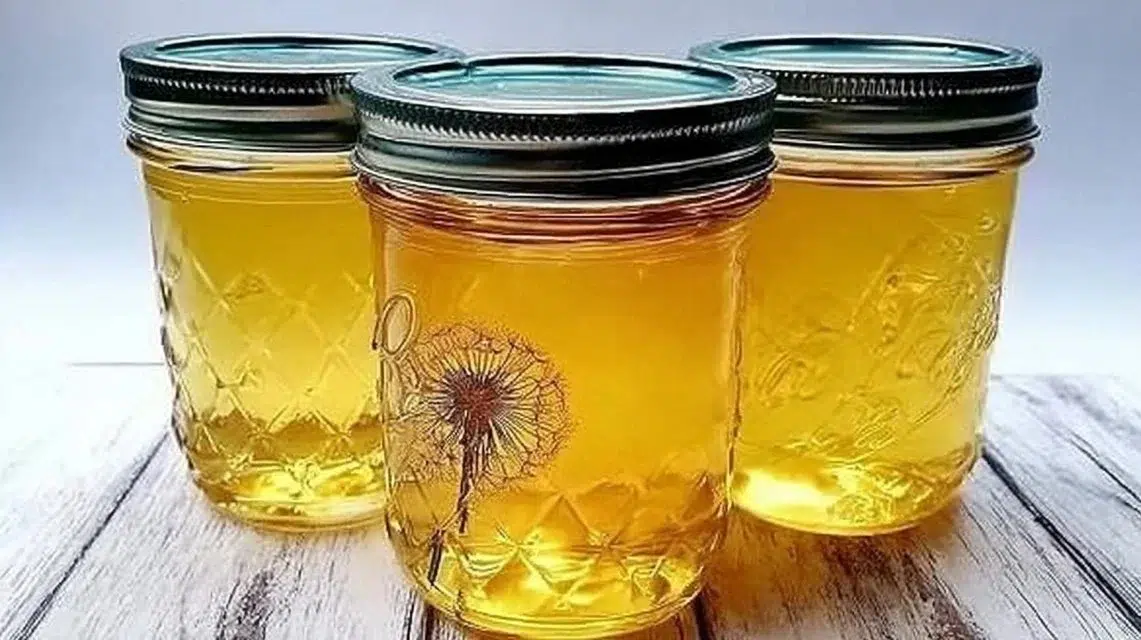
Dandelion jelly tastes like a bright, honeyed floral jam with a smooth, spreadable texture that feels light on the tongue.
This recipe turns a field weed into a special pantry staple that is surprisingly simple to make and truly unique to serve.
It uses just dandelion flowers, water, lemon juice, pectin, and sugar, so the flavors stay clean and focused.
You’ll enjoy subtle floral notes balanced by lemon brightness and jammy sweetness — not overpowering, just pleasantly floral.
Try it on warm toast, stirred into yogurt, or paired with a mild cheese for a fresh, springtime bite.
For a quick reference on making floral jellies and similar recipes, see this helpful quick-pepper jelly appetizer guide: quick pepper jelly appetizer recipe.
Why You’ll Love This Dandelion Jelly
- Bright floral flavor that’s not overly sweet — the lemon juice keeps it lively.
- Simple, short ingredient list: flowers, water, lemon juice, pectin, and sugar.
- Hands-off simmer and strain steps make it easy to manage while you do other tasks.
- Fast set time once pectin and sugar are added — ready to jar the same day.
- Versatile: spread, pair with cheese, glaze meats (optional), or spoon over desserts.
- Uses foraged dandelions turn a common spring weed into something special and sustainable.
- Long shelf-life when processed properly in a water bath; great for gifts.
- Beginner-friendly — no advanced canning skills required for the refrigerator version.
What Is Dandelion Jelly?
Dandelion jelly is a clear, floral jam made from the yellow petals of dandelion flowers. It captures the delicate floral scent and a gentle honey-like flavor without being cloying. The jelly’s texture is smooth and spreadable, similar to fruit jellies, with a bright finish from added lemon juice. The cooking method is simple: steep the flowers in boiling water to extract flavor, strain, then add pectin, lemon juice, and sugar before a short boil to set. The vibe is homely and fresh — perfect for spring breakfasts, casual brunches, and cozy afternoons when you want a bit of seasonal charm.
Ingredients for Dandelion Jelly
For the Jelly
- 2 cups dandelion flowers (petals only, loosely packed)
- 4 cups water (about 950 ml)
- 1/4 cup lemon juice (fresh is best)
- 1 package (1.75 oz) fruit pectin
- 5 cups sugar (about 1,000 g)
Ingredient Notes (Substitutions, Healthy Swaps)
- Dandelion flowers: Use freshly picked, pesticide-free dandelions. If you can’t forage, ask a trusted friend or source local wild greens suppliers. Do not use flowers that have turned brown.
- Water: Filtered or tap water both work; filtered water can give a cleaner flavor if your tap is very mineral-heavy.
- Lemon juice: Fresh lemon juice gives the best bright flavor and helps the pectin set. Bottled lemon juice will work in a pinch.
- Fruit pectin: Use the exact “fruit pectin” package listed (1.75 oz). Low-sugar pectin is not a direct substitute; it may change the set and require a different sugar ratio.
- Sugar: White granulated sugar is required for a reliable set and clear color. For a slightly less sweet jelly, you can reduce sugar a little, but this may affect gel strength and shelf-life — see troubleshooting.
- Diet swaps (optional): If you need low-sugar options, consider making a refrigerator-style jelly with less sugar and a tested low-sugar pectin recipe instead.
Step-by-Step Instructions
Step 1 – Clean the flowers
Rinse the dandelion flowers gently in cold water to remove dirt and any tiny insects. Pick off the green parts if you want a clearer color. Drain well.
Visual cue: Flowers should look bright yellow and clean, not brown or wilted.
Step 2 – Steep the flowers
Bring 4 cups of water to a boil in a pot, then add the dandelion flowers. Reduce heat and simmer gently for about 30 minutes to extract the flavor and color.
Pro cue: The water will turn a pale gold to deep amber depending on how many flowers and how long you steep.
Step 3 – Strain the liquid
After simmering, strain the mixture through a fine mesh sieve or cheesecloth to remove the flowers. Press gently to extract liquid but avoid forcing plant bits through. Return the clear strained liquid to the pot.
Visual cue: The strained liquid should be free of petals and relatively clear, not cloudy.
Step 4 – Add lemon juice and pectin
Stir in 1/4 cup lemon juice and the full package (1.75 oz) of fruit pectin until completely dissolved. Heat gently and stir to combine.
Pro cue: Mix pectin with a little of the hot liquid first to prevent clumping if needed.
Step 5 – Boil and add sugar
Bring the mixture to a full, rolling boil, then add 5 cups sugar. Stir constantly until the sugar dissolves. Once dissolved, boil the mixture hard for an additional 1–2 minutes to activate the pectin and reach gel point.
Visual cue: A rolling boil that does not stop when stirred indicates readiness; bubbles will be large and vigorous.
Step 6 – Jar and seal
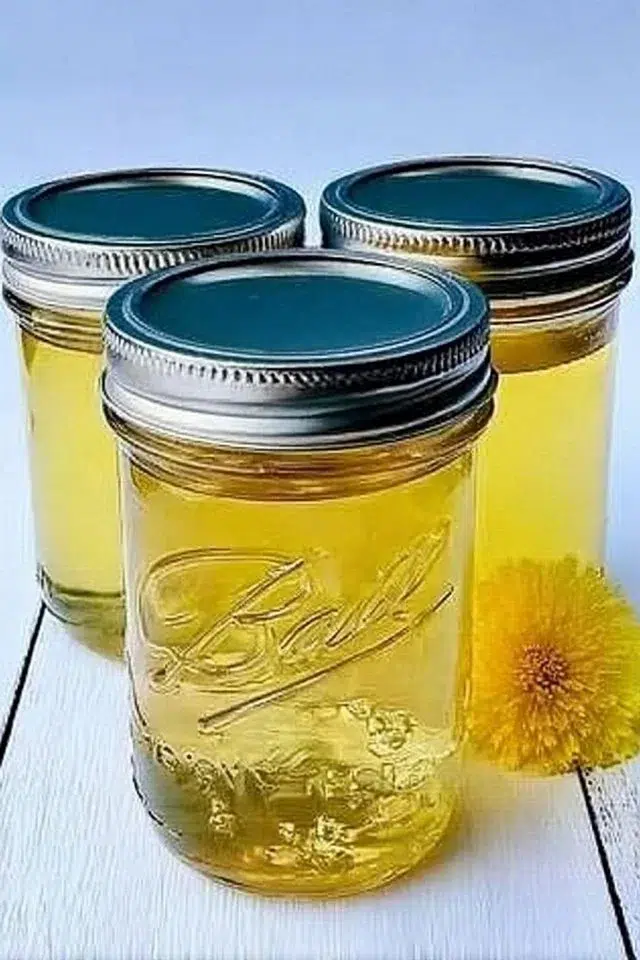
Remove from heat and ladle the hot jelly into sterilized jars, leaving headspace as recommended by your jar type. Seal with lids. For short-term storage, allow to cool and refrigerate. For long-term shelf-stable jars, process in a water bath according to safe canning times for your altitude.
Pro cue: Wipe jar rims clean before sealing to ensure a good vacuum.
Pro Tips for Success
- Use only bright yellow dandelion petals for the best color and flavor; discard stems and green bits to avoid bitterness.
- Keep heat medium-high when boiling after adding sugar — a short, vigorous boil helps pectin set properly.
- Stir constantly when you add sugar to prevent scorching and ensure sugar dissolves evenly.
- Test for set: place a small spoon of jelly on a chilled plate; if it wrinkles when pushed, it’s set.
- Work quickly when filling jars; hot jelly seals better and reduces contamination risk.
- Sterilize jars and lids in hot water or a dishwasher cycle before use to improve vacuum reliability.
- If you want a clearer jelly, strain through cheesecloth twice or let the steeped liquid settle and decant the clearer top portion.
Flavor Variations
- OPTIONAL: Lavender boost — add a small pinch (1/8 tsp) of culinary lavender when steeping for a layered floral profile. Strain well.
- OPTIONAL: Honey swap — replace up to 1 cup of the sugar with mild honey for a honeyed note (may darken color and slightly affect set).
- OPTIONAL: Citrus twist — add 1 tsp finely grated lemon zest with the lemon juice for more citrus aroma.
- OPTIONAL: Ginger warmth — stir in 1/2 tsp grated fresh ginger during the boil for a subtle warming background.
- OPTIONAL: Mixed floral — combine a few tablespoons of rose petal or chamomile petals with the dandelions during steeping for a complex floral blend.
- OPTIONAL: Reduced-sugar refrigerator version — use half the sugar and a tested low-sugar pectin, then refrigerate and consume within a few weeks.
Serving Suggestions
- Spread on warm buttered toast or English muffins for a bright breakfast.
- Serve with mild cheeses like Brie or cream cheese on a simple cheese board for brunch.
- Spoon over plain yogurt, oatmeal, or ricotta for a floral breakfast boost.
- Use as a glaze on roasted carrots or sweet potatoes (brush on near the end of roasting).
- Stir a spoonful into sparkling water or tea for a light floral drink.
- Pack small jars as homemade gifts for neighbors or friends during dandelion season.
Make-Ahead, Storage & Reheating
- Make-ahead: Steep the flowers and strain the liquid a day ahead and refrigerate the clear liquid. Finish with pectin and sugar the next day.
- Refrigerator storage: Properly sealed jars kept in the fridge will last about 3–4 weeks. Opened jars should be used within that window.
- Reheating: Gently warm jelly in a saucepan over low heat if you want a loose spreadable texture; avoid boiling again or you risk altering the set and flavor.
- Texture change: Refrigeration will firm the jelly; gentle warming restores spreadability without damaging flavor when done slowly.
Storage and Freezing Instructions
- Long-term shelf storage: For pantry-safe shelf life, process filled jars in a boiling water bath following your local canning guidelines and the jar manufacturer’s recommendations. This converts the jars to shelf-stable storage for up to 12–18 months if processed correctly.
- Refrigerator storage: If you skip the water bath, sealed jars will last in the fridge for 3–4 weeks.
- Freezing: Freezing is not recommended for long-term quality because the jelly’s texture can change and become grainy or separate on thawing. If you must freeze, use freezer-safe containers leaving headspace and use within 6 months; thaw gently in the fridge and stir before serving.
Nutrition Facts (Per Serving)
Calories | Protein | Carbs | Fat | Fiber | Sodium
—|—:|—:|—:|—:|—:
60 kcal | 0.1 g | 15 g | 0 g | 0 g | 1 mg
Estimates vary by brands and portions.
FAQ About Dandelion Jelly
Q: Why is my jelly too runny?
A: It likely didn’t reach a full rolling boil after adding sugar or pectin. Boil hard for the full 1–2 minutes and test on a chilled plate.
Q: Why is the jelly cloudy or has bits?
A: Small bits of petals or pith may have passed through the sieve. Re-strain through cheesecloth to clarify.
Q: Can I use whole flowers including greens?
A: Avoid green parts and stems; they can add bitterness. Use petals only for the best flavor and color.
Q: Can I reduce the sugar?
A: You can slightly reduce sugar, but pectin needs sugar to set properly. For larger reductions, use a low-sugar pectin and follow its tested directions.
Q: How long does it last canned?
A: Properly processed in a water bath and stored in a cool, dark place, it can last up to 12–18 months. Refrigerated jars (not water-bath processed) last about 3–4 weeks.
Q: Can I use store-bought dried dandelion petals?
A: Fresh petals give the best flavor. Dried petals may be used but will yield a different strength and color; you may need to adjust steeping time.
Notes
- Pick dandelions from areas free of pesticides and away from roads. Rinse well.
- Remove all green sepals and the stem base for a cleaner taste and color.
- Label jars with date and contents; floral jellies are seasonal gifts and a clear label helps recipients.
- If gifting, include a note suggesting serving ideas like cheese pairings and toast.
- For a clearer jelly, cool the steeped liquid in the refrigerator and decant the top clearer layer before proceeding.
Troubleshooting
Issue: Jelly won’t set.
Fix: Return to a boil and boil hard for an extra minute, then test again. Check your pectin is fresh and was added correctly.
Issue: Jelly tastes bland.
Fix: Increase lemon juice slightly for brightness next time, or use more flowers during steeping for a stronger infusion.
Issue: Bitter or off-flavors.
Fix: You may have included green parts of the flower or over-steeped; remove any brown or green plant bits and shorten steep time.
Issue: Sugar crystallizes or texture is gritty.
Fix: Ensure sugar fully dissolves before the final boil and avoid stirring when reducing heat; if crystallization occurs, gently reheat and stir until dissolved.
Issue: Burned bottom or scorched smell.
Fix: Use a heavy-bottomed pot and stir continuously when sugar is added. Discard any burned portions — don’t mix burnt jelly into jars.
Final Thoughts
This dandelion jelly is a simple, seasonal way to transform common blossoms into something special that brightens toast, cheese boards, and desserts. The method is straightforward, forgiving, and perfect for home cooks who want to try a gentle floral preserve.
Conclusion
For a clear, step-by-step visual and alternative tips from a dedicated source, see this guide on how to make dandelion jelly: How to Make Dandelion Jelly – Lonely Pines Farm.
Dandelion Jelly
Ingredients
For the Jelly
- 2 cups dandelion flowers (petals only, loosely packed) Freshly picked, pesticide-free flowers. Remove green parts.
- 4 cups water Filtered is preferred for cleaner flavor.
- 1/4 cup lemon juice Fresh gives the best flavor.
- 1 package fruit pectin (1.75 oz) Use the specific package listed.
- 5 cups sugar White granulated sugar required for clear color.
Instructions
Preparation
- Rinse the dandelion flowers gently in cold water to remove dirt and insects. Drain well and remove green parts for clearer color.
- Bring 4 cups of water to a boil, then add the dandelion flowers. Reduce heat and simmer for about 30 minutes.
- Strain the mixture through a fine mesh sieve or cheesecloth into a pot, discarding the flowers.
- Stir in 1/4 cup lemon juice and the pectin until fully dissolved. Heat gently.
- Bring the mixture to a full boil, add 5 cups sugar, and stir constantly until dissolved. Boil hard for 1-2 minutes.
- Remove from heat and ladle into sterilized jars, sealing them appropriately.